Valentine’s Day and White Day in Japan: Who Gives, What to Give, and How Brands Prepare

- 1. How Valentine’s Day Works in Japan
- 1-1. Women Give, Men Receive: The Basic Rule
- 1-2. Four Kinds of Chocolate: Honmei, Giri, Tomo, and Jibun
- 1-3. How the Custom Started
- 2. How Valentine’s Day Is Changing
- 2-1. The Decline of Obligation Chocolate
- 2-2. Buying for Yourself and for Friends
- 3. What Is White Day?
- 3-1. March 14: The Return-Gift Day
- 3-2. What People Give on White Day
- 3-3. Where White Day Came From
- 4. Where and When People Shop for Both Days
- 4-1. Department Store Chocolate Fairs
- 4-2. Online, Convenience Stores, and Last-Minute Buying
- 5. What Brands Can Do With Two Gift Dates
- 5-1. Categories Beyond Chocolate
- 5-2. Limited Editions and Gift Packaging
- 5-3. The Planning Timeline: From Autumn to March 14
- 6. Influencer Campaigns for Valentine’s Day and White Day
- 6-1. Gift Guides, Unboxing, and “What I Got” Content
- 6-2. Choosing Creators: Audience Gender and Country Breakdown
- 6-3. Disclosure Rules for Gift Content
- 7. FAQ
- 7-1. What is White Day in Japan?
- 7-2. When is White Day?
- 7-3. Who gives chocolate on Valentine’s Day in Japan?
- 7-4. What is giri choco?
- 7-5. What do you give on White Day?
- 7-6. Is White Day celebrated outside Japan?
- 7-7. Can non-chocolate brands take part in Valentine’s Day in Japan?
- 7-8. When should brands start planning for Valentine’s Day in Japan?
- 8. Methodology and Data Sources
Pricing, past campaigns, and how contracts and ad-disclosure compliance are handled from start to finish. Ask us anything before you commit to a budget.
Overseas brands welcome. We work in English, Japanese, Chinese, and Korean.TL;DR: In Japan, Valentine’s Day (February 14) is mainly a day when women give chocolate to men, friends and themselves. White Day, one month later on March 14, is when the people who received gifts give something back. Because the buyer switches from women in February to men in March, brands need two separate plans.
In February, Japanese department stores turn whole floors into chocolate fairs for mostly female shoppers. A month later the same stores fill with cookies and gift boxes for men working out what to give back.
The first half of this guide covers the customs; the second is for brands planning around the two dates. It is part of our seasonal series, from the year-end sales in our guide to Black Friday and fukubukuro in Japan to the full Japan marketing calendar for 2027. For working with Japanese creators in general, see our overview of influencer marketing in Japan.
How Valentine’s Day Works in Japan

Valentine’s Day in Japan is mainly a day when women give chocolate. They give it to partners and crushes, to male colleagues, to friends and, increasingly, to themselves. Men’s turn comes a month later, on White Day.
The chocolate is named by who receives it, and four names are common enough to appear on store signs and in surveys.
| Kind | Given to | The feeling behind it | Often chosen |
|---|---|---|---|
| Honmei choco (“true feeling”) | A partner, spouse or someone you are in love with | Romantic; sometimes a confession | Premium boxes, imported chocolatiers, handmade chocolate |
| Giri choco (“obligation”) | Male colleagues, bosses, clients | Courtesy and workplace custom | Inexpensive multi-packs, individually wrapped pieces |
| Tomo choco (“friend”) | Friends, usually other women | Fun and sharing | Cute packaging, small treats, homemade sweets |
| Jibun choco (“myself”) | Yourself | A reward | Limited and imported chocolate from department store fairs |
Women Give, Men Receive: The Basic Rule
In much of Europe and North America, couples exchange gifts on Valentine’s Day, often flowers, cards or a dinner. Japan split the exchange in two. Women give on February 14, and men answer on March 14. A smaller, newer pattern has men giving chocolate to women in February as well, but the basic rule still shapes how stores stock their shelves.
In 2027, February 14 falls on a Sunday. Workplace chocolate is usually handed over on a working day, so it is likely to move to Friday, February 12. Thursday, February 11 is a public holiday (National Foundation Day), so that Friday sits between a holiday and the weekend.
Four Kinds of Chocolate: Honmei, Giri, Tomo, and Jibun
Giri choco belongs to the workplace. It is given out of courtesy, often to every man in a team, and it carries an expectation of a return on White Day. Tomo choco and jibun choco are the opposite: given by choice, to friends or to oneself, with no return expected. The next section looks at how the balance between them is moving.
How the Custom Started
The Japanese form of Valentine’s Day is generally said to have spread through promotions by confectioners and department stores, and there is more than one account of how it began. Morozoff, the Kobe confectioner, says it introduced chocolate as a Valentine’s gift in its catalog in 1932, and it ran Valentine’s advertisements in the English-language Japan Advertiser in the mid-1930s. Mary Chocolate says it held its first Valentine’s sale at a Tokyo department store in February 1958.
These are the companies’ own accounts, and neither is accepted as the single origin. What both show is that the custom grew out of retail, which is one reason brands still treat it as their season.
How Valentine’s Day Is Changing
The custom is shifting away from obligation and toward personal choice. This section is the part of the guide we revise every December with the latest survey results.
The Decline of Obligation Chocolate
Workplace giri choco is losing support. In market research firm Intage’s survey of 5,000 people, conducted 14 to 19 January 2026, 85.4% of working women said they would rather not take part in workplace giri choco, the highest level since the question was first asked in 2022. The same survey found 42.8% of women had no plans to give chocolate personally, up 4.0 points on the year, with rising chocolate prices a major factor.
The debate is not new. On 1 February 2018, Godiva Japan ran a full-page advertisement in the Nikkei newspaper headlined “Japan, let’s stop giri choco.” The ad described the custom as a source of stress and expense for the women expected to buy it. For brands, the lesson is simple: workplace volume is shrinking, and messaging that leans on obligation now reads as out of date.
Buying for Yourself and for Friends
While giri choco falls, buying for yourself is holding up. In the same Intage survey, 21.3% of women planned to buy chocolate for themselves in 2026, flat on the previous year, while chocolate for family, friends and colleagues fell. Intage read this as consumers protecting their own enjoyment even on a tighter budget.
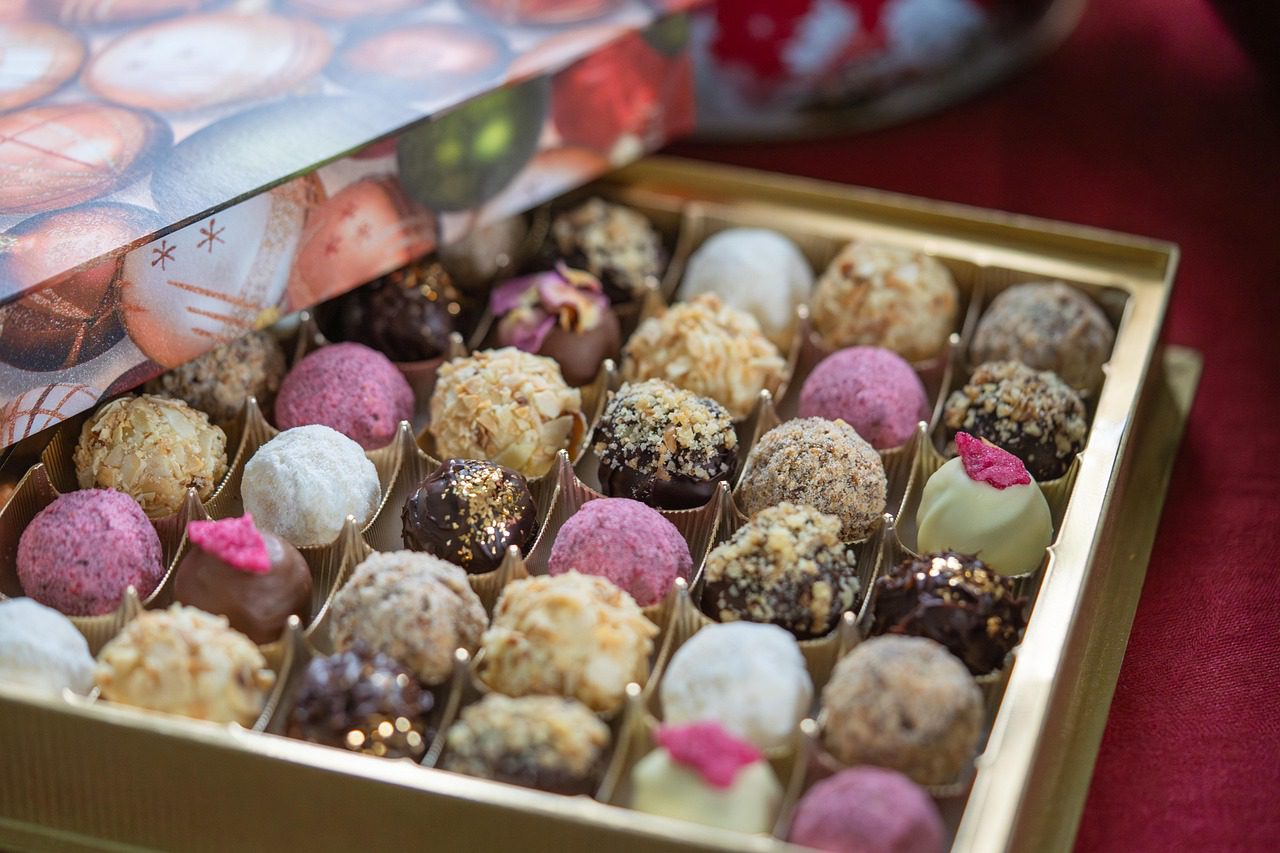
Department store chocolate fairs suit this buyer well, with limited editions and imported chocolatiers that are hard to find the rest of the year. In 2027, with February 14 on a Sunday, buying for yourself and for friends may concentrate on the weekend of February 13 and 14.
What Is White Day?

White Day is March 14, one month after Valentine’s Day, when people who received gifts on February 14 give something back. In practice, it is mainly men returning gifts to women. It is a Japanese custom that has also spread to South Korea.
The return gift is usually sweets, but not always.
| Return gift | Usually given to | Why people choose it |
|---|---|---|
| Cookies and baked goods | Colleagues and friends (giri choco givers) | Easy to share, often individually wrapped for a whole team |
| Candy and marshmallows | Anyone; the classic choice | The original White Day gifts, sold in decorative jars and tins |
| Premium chocolate and macarons | A partner or someone special (honmei) | Feels special; a well-known brand shows effort |
| Accessories | A partner (honmei) | Lasts beyond the day; personal |
| Cosmetics and body care | A partner or close friend | A treat the recipient might not buy for herself |
| Handkerchiefs and small goods | Colleagues and acquaintances | Practical, modest and safe for a work relationship |
March 14: The Return-Gift Day
White Day falls on March 14 every year. It is a Japanese custom, and South Korea’s Ministry of Culture, Sports and Tourism describes men there giving candy or white chocolate on March 14 to those who gave them something on Valentine’s Day.
In 2027, March 14 is a Sunday. Workplace returns are therefore likely to happen on Friday, March 12, while couples will have the whole weekend of March 13 and 14.
What People Give on White Day
You may hear of sanbai gaeshi, the idea that a man should return three times the value of what he received. Treat it as a popular saying rather than a rule. For workplace giri choco, the usual practice is a single shared return, such as a box of individually wrapped cookies for the whole team.
There is also a well-known piece of folklore that each sweet carries a message: marshmallows mean “I don’t like you,” cookies mean “let’s be friends,” and candy means “I like you.” Versions differ: Takashimaya gives its cookie meaning only as one theory, and calls marshmallows the original White Day gift. Many people ignore all this, but some buyers do not.
Where White Day Came From
White Day is generally said to have begun as a confectionery promotion in the late 1970s, and there are competing accounts. The National Candy Confectionery Cooperative says it decided at its general meeting in June 1978 to make March 14 a day for giving candy, and that its Kanto branch held the first White Day in March 1980.
Ishimura Manseido, a confectioner in Fukuoka, says White Day grew out of the “Marshmallow Day” it proposed in 1978. Other confectioners tell their own stories, and no single company is accepted as the origin.
Where and When People Shop for Both Days

Valentine’s buying runs through department store fairs from mid-January, online shops, and convenience stores in the final days. White Day buying is shorter and later. The timeline follows the 2026 season.
| Period | What happens | Note for 2027 |
|---|---|---|
| December to early January | Department store online Valentine’s shops and catalogs open; pre-orders begin | Varies by store |
| Mid to late January | In-store chocolate fairs open. In 2026, Isetan Shinjuku’s Salon du Chocolat opened on 15 January, and Takashimaya’s stores opened between 17 and 30 January | Expect a similar window |
| Late January | Retailers start publishing White Day gift guides; Takashimaya posted its 2026 guides on 21 January | Expect the same |
| Early February to February 14 | Peak Valentine’s buying; last-minute purchases at convenience stores and supermarkets | Workplace giving on Friday, February 12; personal buying over the weekend |
| After February 14 to March 14 | Stores switch their gift space to White Day; most buying happens in the final weeks | Workplace returns on Friday, March 12; couples over the weekend |
Department Store Chocolate Fairs
The center of the Valentine’s season is the department store chocolate fair. The best-known is Isetan’s Salon du Chocolat, which began in Paris in 1995 and came to Isetan Shinjuku in January 2003; Isetan says the 2027 edition will be the 25th in Japan. Takashimaya runs Amour du Chocolat across its stores, with a special box of chocolates from six French chocolatiers in 2026, and other department stores hold their own fairs.
For overseas chocolatiers, these fairs are the main showcase in Japan, and many sell there for only a few weeks a year.
Online, Convenience Stores, and Last-Minute Buying
Outside the fairs, people buy online, at supermarkets and at convenience stores. Online seasonal shops open before the fairs, and the cut-off for delivery by February 14 becomes a deadline of its own. Our guide to the Japan e-commerce market covers which platforms carry this seasonal demand.
White Day buyers tend to act later, so convenience stores and fast delivery matter more in March. In 2027, with March 14 on a Sunday, last-minute buying is likely to fall on the days before Friday, March 12 for workplace returns, and on the weekend for partners.
What Brands Can Do With Two Gift Dates

From here, this guide is about running a campaign. The key fact for any Valentine’s Day marketing plan in Japan is that the buyer changes between the two dates. In February, the main buyers are women choosing for partners, friends, colleagues and themselves. In March, the main buyers are men returning gifts, many of them unsure what to choose. A single campaign for “the Valentine’s season” misses one of the two.
hotice is a cross-border influencer marketing agency helping overseas brands enter Japan. We handle casting, negotiation, Japanese-language contracts, and ad-disclosure compliance.
Tell us your category, budget range, and timing. We will take it from there.| Category | On Valentine’s Day | On White Day |
|---|---|---|
| Confectionery | The core of the day: premium, limited and imported chocolate | Cookies, candy and baked goods; sets that are easy to share at work |
| Beauty | Limited editions bought as a self-treat | Gift sets bought by men as a return gift |
| Accessories | A smaller role; gifts for partners | A strong choice for partners |
| Experiences and dining | Dinners and outings for couples | Dinners and outings for couples, often booked by men |
Categories Beyond Chocolate
Brands outside confectionery can take part, and White Day is where they fit most easily. Men looking for a return gift for a partner often move beyond sweets to accessories and cosmetics. Beauty brands can also reach women in February with limited editions bought as a reward. Our guide to J-beauty marketing covers how beauty brands plan around Japan’s gift seasons.
Because the White Day buyer is often a man who does not know what to buy, make the choice easy: clear gift sets, a stated price band and a plain explanation of who the gift suits.
Limited Editions and Gift Packaging
Limited editions and seasonal packaging do much of the work in both seasons. They give a reason to buy now, signal a gift, and photograph well. Our guide to Japanese marketing techniques explains how limited editions work in Japan more generally.
The catch is lead time: limited products and packaging depend on production schedules, so decide long before the season.
The Planning Timeline: From Autumn to March 14
Work backwards from March 14. The table is a planning template, not an industry standard; timing depends on your category and retail partners.
| Task | Typical window | Still possible if you start in December? |
|---|---|---|
| Concept and budget | Summer to early autumn | Yes, if the plan is simple |
| Limited products and packaging | Decided by early autumn or earlier | Usually not; use existing products in seasonal sets |
| Department store fair or retail space | Autumn or earlier | Unlikely for Valentine’s Day; ask about White Day space |
| Online store pages and gift sets | Ready by December to January | Yes |
| Creator campaigns | Book in December; posts from late January and from early March | Yes, especially for White Day |
If you are reading this in December, a new limited product for February is probably out of reach, but creator campaigns and online offers are not. White Day gives you an extra month. In 2027, aim workplace-oriented messages at Friday, February 12 and Friday, March 12, and personal and couple-oriented messages at the weekends of February 13 and 14 and March 13 and 14. For the rest of the year, see our Japan marketing calendar for 2027.
Influencer Campaigns for Valentine’s Day and White Day

Because the buyer changes between the two dates, the right creators change too. Creators followed by women in February will not automatically reach the men buying in March, so plan two waves.
| Period | Main buyer | Campaign goal | Formats that fit | Creators that fit |
|---|---|---|---|---|
| Late January to February 14 | Women | Get on her shopping list | Gift guides, chocolate fair hauls, tasting reviews | Food, beauty and lifestyle creators with a mainly female audience |
| February 15 to March 14 | Men | Solve the “what do I give back?” problem | Return-gift guides, unboxing | Lifestyle, gadget, fashion and couple creators who reach men |
Gift Guides, Unboxing, and “What I Got” Content
Switch the format with the season. Before Valentine’s Day, gift guides and fair hauls help women choose. Before White Day, guides for men unsure what to give back do the same job. After each day, “what I got” posts extend the season.
Schedule posts for early February, early March and just after each date. Our guide to social media in Japan explains which platforms suit each format, and our collection of influencer marketing examples in Japan shows how other brands have run creator campaigns.
Choosing Creators: Audience Gender and Country Breakdown
Use creators with mostly female audiences in February and creators who reach men in March. Check both the gender split and the audience country breakdown before you book: a creator based in Japan can still have a large share of followers outside Japan. Our guide on how to discover influencers covers where to find them.
Many established Japanese creators work through talent agencies, so requests go through the agency; contact them early in a busy season. Costs follow the usual structure of fee, usage rights, production and agency handling; see our guide to influencer marketing costs in Japan for what drives a quote and how estimates are built.
Disclosure Rules for Gift Content
Since 1 October 2023, undisclosed advertising has been regulated under Japan’s Act against Unjustifiable Premiums and Misleading Representations. If you send a product to a creator with a request or an expectation that they post about it, including telling them you hope to hear what they think or enclosing your hashtag or account name, the post counts as your advertising and needs a clear PR label. Only a post the creator makes entirely on their own, with no request or involvement from you, may fall outside the rule. In practice almost all gifting falls into the first group, so ask every creator to label gift posts as “PR” or as a provided product.
The responsibility for disclosure sits with the advertiser, not the creator, and gift and unboxing posts are where labels are most often missed. Our guide to Japan’s stealth marketing regulation explains what counts.
FAQ
What is White Day in Japan?
White Day is March 14, one month after Valentine’s Day, when people who received gifts on February 14 give something back. In Japan that mostly means men returning gifts to women who gave them chocolate, from partners to colleagues. Typical return gifts are sweets, accessories and cosmetics. White Day began in Japan as a confectionery promotion in the late 1970s, though accounts of its exact origin differ. See the section on what White Day is for the full explanation.
When is White Day?
White Day is on March 14 every year. In 2027, March 14 falls on a Sunday. Because workplace gifts are handed over on working days, returns to colleagues are likely to move to Friday, March 12, while couples will celebrate over the weekend of March 13 and 14. The section on March 14 as the return-gift day has more detail.
Who gives chocolate on Valentine’s Day in Japan?
Mainly women. They give chocolate to partners and crushes, to male colleagues, to friends and to themselves, while men usually return the favor on White Day. A smaller, newer pattern has men giving to women in February too. Chocolate for friends and for yourself is now a large part of the season. The section on the basic rule of women giving and men receiving explains how the custom works.
What is giri choco?
Giri choco, or “obligation chocolate,” is chocolate women give to male colleagues, bosses or clients out of courtesy rather than romance. It is usually inexpensive and given to a whole team. It is declining: in a January 2026 Intage survey, 85.4% of working women said they would rather not take part in workplace giri choco. Honmei choco, by contrast, goes to someone you love. The section on the decline of obligation chocolate covers the trend.
What do you give on White Day?
Most people give sweets: cookies, candy, marshmallows, macarons or premium chocolate. For a partner, accessories or cosmetics are common; for colleagues, a shared box of wrapped cookies. You may hear that each sweet carries a meaning, such as candy for “I like you,” but this is folklore that varies by source, and many people ignore it. See the section on what people give on White Day.
Is White Day celebrated outside Japan?
Yes, in South Korea. Korea’s Ministry of Culture, Sports and Tourism describes men there giving candy or white chocolate on March 14 to those who gave them something on Valentine’s Day. White Day began in Japan as a confectionery promotion and is not widely observed in Europe or North America. The section on March 14 as the return-gift day explains how the day works in Japan.
Can non-chocolate brands take part in Valentine’s Day in Japan?
Yes, and White Day is the easier entry point. Men looking for a return gift for a partner often choose accessories, cosmetics or a dinner instead of sweets. In February, beauty brands can also reach women buying limited editions as a treat for themselves, and restaurants and experience brands can serve couples on both dates. The section on categories beyond chocolate compares how each category fits.
When should brands start planning for Valentine’s Day in Japan?
Limited products, special packaging and department store space need decisions in summer or early autumn, so the full plan starts well before the season. If you are starting in December, you can still run creator campaigns and online offers, especially for White Day, which gives you an extra month. In 2027, aim workplace messages at Fridays, February 12 and March 12, and personal ones at the weekends. The planning timeline section has a task-by-task table.
Methodology and Data Sources
Origin stories are reported as each company’s own account. The timeline and planning tables are general patterns, not industry standards. We update this guide every December. Sources accessed 21 October 2026.
| Fact | Source | As of |
|---|---|---|
| 2027 public holidays and weekdays | Cabinet Office, national holidays | 2027 calendar |
| Valentine’s survey | Intage | Released 30 January 2026 |
| Godiva Japan advertisement | SoraNews24 | 2 February 2018 |
| Valentine’s origin accounts | Morozoff; Mary Chocolate | 2026; 2026 |
| White Day origin accounts | National Candy Confectionery Cooperative; Ishimura Manseido | 2026; 2025 |
| White Day in South Korea | Korea Ministry of Culture, Sports and Tourism | 20 February 2022 |
| Chocolate fairs: history and 2026 dates | Isetan Mitsukoshi; Enjoy Tokyo; Takashimaya | 2026 |
| White Day guides and sweet meanings | Takashimaya | 21 January 2026 |
| Stealth marketing rule | Consumer Affairs Agency | In force 1 October 2023 |
If you are deciding whether to run your Valentine’s Day and White Day creator campaigns yourself or with a partner, our comparison of influencer marketing agencies in Japan sets out what to ask before you sign.
Supervised by the hotice Editorial Team, specialists in helping global brands enter the Japanese and Asian markets through influencer marketing. Last updated: December 2026.
Pricing, past campaigns, and how contracts and ad-disclosure compliance are handled from start to finish. Ask us anything before you commit to a budget.
Overseas brands welcome. We work in English, Japanese, Chinese, and Korean.