Success Examples of Influencer Marketing in Japan with hotice

- 1. The Ten Campaigns at a Glance
- 2. Beverage and Alcohol
- 2-1. AB InBev, Corona Beer: Instagram campaign
- 2-2. HITEJINRO, Chamisul: Instagram Reels campaign
- 3. Beauty and Cosmetics
- 3-1. Clinique Laboratories: TikTok campaign
- 3-2. Shiseido: multi-platform inbound campaign
- 4. Fashion and Lifestyle
- 4-1. Lacoste: Instagram Reels product launch
- 5. Software and Technology
- 5-1. Adobe: Instagram and TikTok advocacy campaign
- 6. Apps, Gaming, and Events
- 6-1. GRAVITY: live audio streaming campaign
- 6-2. Turtle Beach: YouTube campaign aligned to retail events
- 6-3. LAF Entertainment, Craft Gyoza Fest: event campaign
- 6-4. MIXI, Monster Strike: TikTok account launch and operation
- 7. What These Campaigns Have in Common
- 8. How We Run a Campaign
- 9. FAQ
- 9-1. Can an overseas brand run influencer marketing in Japan without a local entity?
- 9-2. How long does a campaign like these take from brief to publication?
- 9-3. Which platform should we choose?
- 9-4. Do these campaigns work for brands with no awareness in Japan at all?
- 9-5. How is disclosure handled?
- 9-6. Can we reuse creator content in our own advertising?
- 10. Work With hotice
TL;DR: Ten influencer marketing campaigns hotice ran in Japan, grouped by industry: beverages, beauty, fashion, software, gaming, and events. Each entry explains the casting logic, the platform choice, and the timing decision that made it work. The pattern across all ten is the same: niche-matched creators, native formats, and a launch window tied to a Japanese seasonal or retail moment.
Case studies from other markets rarely transfer to Japan. The platform mix is different, the creative register is different, and the calendar that drives purchasing is different. What overseas brands usually want to see is not a list of logos but the reasoning: which creators were chosen and why, which format the campaign used, and what specifically about Japan shaped the plan.
This page covers ten campaigns hotice has run for brands entering or expanding in Japan, organised by industry so you can find the closest analogue to your own category. Each case sets out what we were asked to do, what we actually did, and the decision that mattered most. A short section at the end draws out the patterns they share.
hotice is a cross-border influencer marketing company that helps overseas brands enter the Japanese and wider Asian markets. We work with a network of more than 25,000 Japanese creators, our team operates in English, Japanese, Chinese, and Korean, and we handle casting, negotiation, disclosure compliance, and reporting inside one contract. Book a free consultation.
The Ten Campaigns at a Glance
If you are scanning for the case closest to your situation, start here.
| Brand | Industry | Platform | Campaign type | The decision that mattered |
|---|---|---|---|---|
| AB InBev (Corona) | Beverage | Themed creator campaign | A single visual theme that Japanese creators could interpret locally | |
| HITEJINRO (Chamisul) | Beverage | Instagram Reels | Market entry campaign | Showing the product inside real Japanese drinking occasions |
| Clinique Laboratories | Beauty | TikTok | Product demonstration | Timing the campaign to Japan’s seasonal dryness period |
| Shiseido | Beauty | Multi-platform | Inbound creator invitation | Bringing creators from three Asian markets to Japan rather than shipping product out |
| Lacoste | Fashion | Instagram Reels | Product launch | Casting videographers rather than fashion accounts, and going text-free |
| Adobe | Software | Instagram and TikTok | Advocacy campaign | Casting only creators who already used the product daily |
| GRAVITY | App | Live audio streaming | App promotion | Demonstrating the app by using it, not describing it |
| Turtle Beach | Gaming hardware | YouTube | Retail-aligned campaign | Synchronising with Black Friday and Rakuten Super Sale |
| LAF Entertainment | Events | Instagram and TikTok | Event promotion | Food creators covering atmosphere as well as product |
| MIXI (Monster Strike) | Gaming | TikTok | Account launch and operation | Building a character account rather than buying creator posts |
Beverage and Alcohol
Alcohol campaigns in Japan live or die on occasion. The product is rarely the subject of the post. The moment it belongs to is.
AB InBev, Corona Beer: Instagram campaign
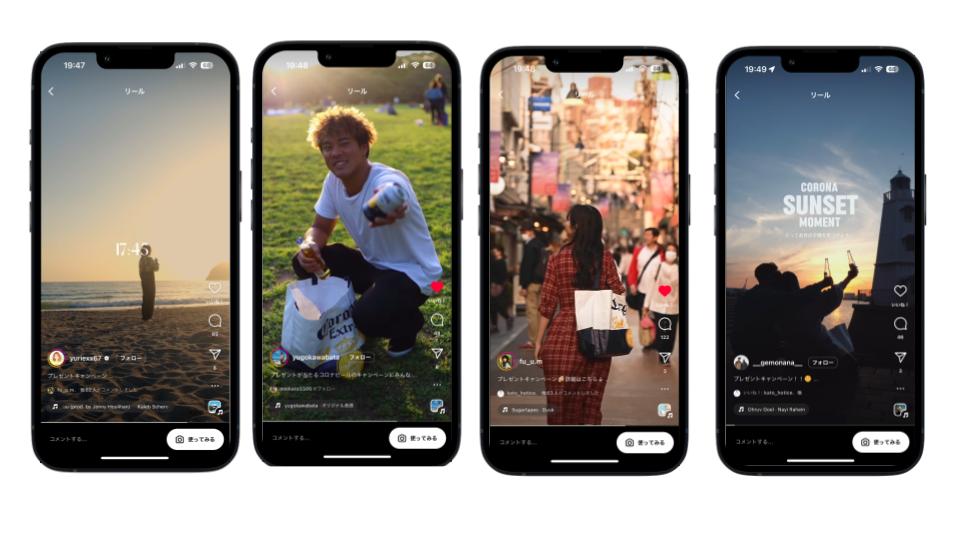
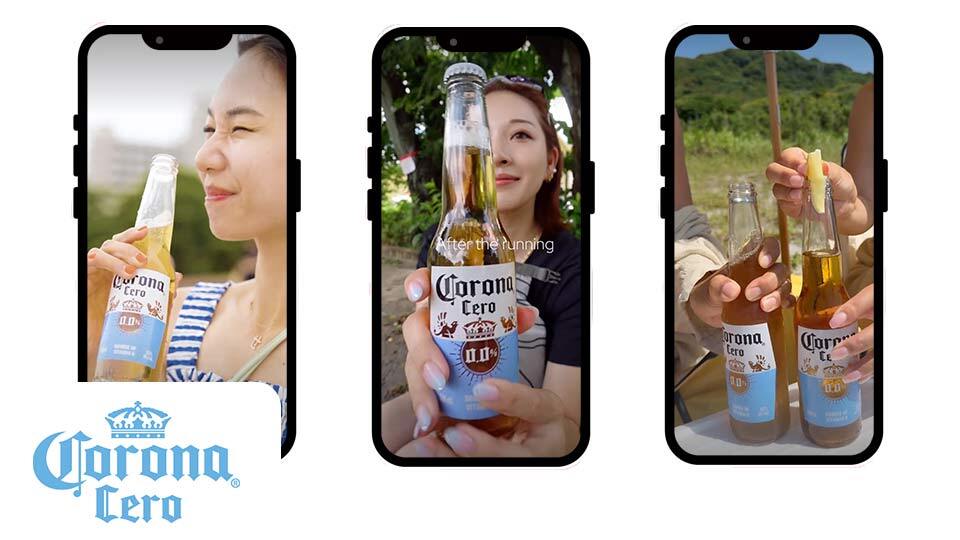
In May 2024 AB InBev asked us to cast creators for a Corona Beer campaign on Instagram built around the theme “SUNSET MOMENT”. Japanese creators posted content featuring Corona against Japanese sunset settings, from coastal locations to city rooftops.
The useful part of this case for other brands is the brief structure. A global campaign theme was kept intact, and the local interpretation was left to the creators. That works better in Japan than either extreme: a fully prescribed global asset reads as imported, and a completely open brief produces content that does not ladder back to the brand. Casting focused on lifestyle and photography accounts whose existing feeds already contained the kind of scene the theme called for, which meant the sponsored posts sat naturally in their timelines.
Pricing, past campaigns, and how contracts and ad-disclosure compliance are handled from start to finish. Ask us anything before you commit to a budget.
Overseas brands welcome. We work in English, Japanese, Chinese, and Korean.HITEJINRO, Chamisul: Instagram Reels campaign
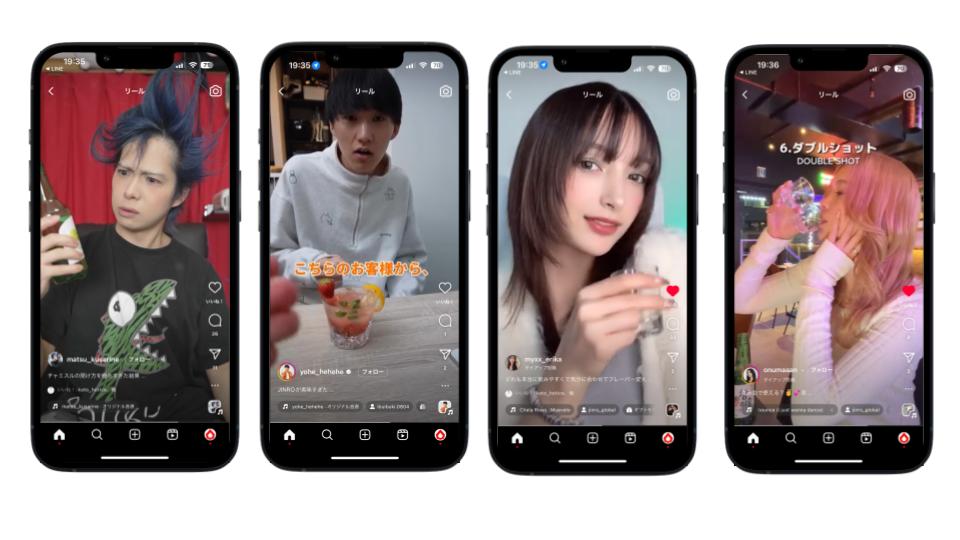
HITEJINRO, the Korean company behind the soju brand Chamisul, was expanding in Japan. Japanese creators produced a series of Reels showing themselves drinking Chamisul in ordinary social settings rather than in staged product shots.
This is a useful reference for any brand entering Japan from another Asian market. The barrier was not awareness of soju as a category, it was the absence of a visible Japanese drinking occasion for it. Rather than explaining the product, the campaign showed where it fits: at home, at a table with friends, alongside food Japanese viewers recognise. Multiple Reels from multiple creators repeated that framing until it read as normal rather than novel.
Alcohol also carries specific advertising restrictions in Japan, including age-related expression rules, which is one reason casting and pre-publication review need to sit with someone working in Japanese. Our overview of the risks of influencer marketing in Japan covers where those checks belong in the process.
Beauty and Cosmetics
Beauty is the most competitive influencer category in Japan and the one where casting precision matters most, because audiences in this vertical are unusually good at spotting a creator who does not normally use the product type.
Clinique Laboratories: TikTok campaign
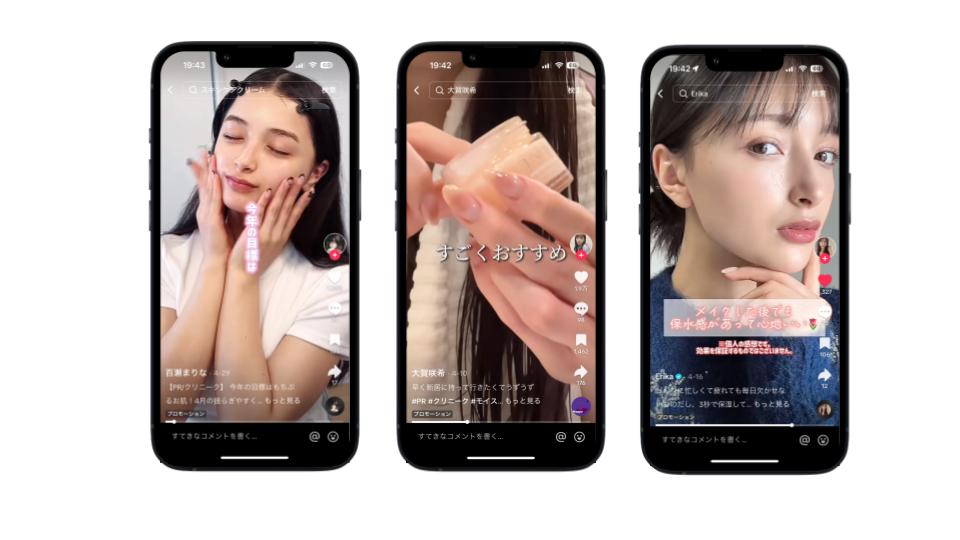
Clinique Laboratories asked us to run a TikTok campaign in Japan. We cast young Japanese beauty creators who filmed themselves using the products as part of their normal routine rather than presenting them.
The decision that shaped this campaign was timing. Japan has pronounced seasonal dryness during the transitions between seasons, and skincare search and purchase behaviour follows that curve closely. Launching into that window meant the content answered a problem viewers were already experiencing, which is a very different proposition from introducing a product in a neutral month.
Cosmetics campaigns also sit under the Pharmaceutical and Medical Device Act, which restricts efficacy claims that are routine in other markets. Creator scripts in this category need a claims check before filming, not after.
Shiseido: multi-platform inbound campaign
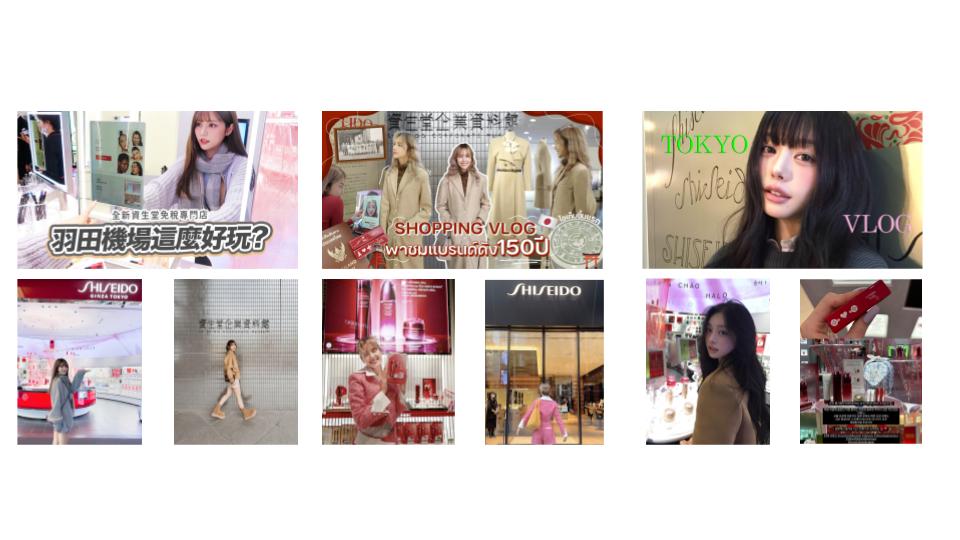
Shiseido wanted to build awareness in Taiwan, Thailand, and Korea. Instead of running three separate in-market campaigns, creators from each country were invited to Japan, visited Shiseido facilities, and produced content on location. The campaign generated around 30 posts across YouTube, Instagram, TikTok, and Facebook, and supported duty-free store visits and purchases in the three source markets.
This case runs in the opposite direction to most of the others on this page, and it is worth including for that reason. For brands whose Japanese origin is part of the proposition, bringing overseas creators to Japan produces content that in-market shooting cannot replicate: the factory, the counter staff, the city. It is also the model that works for inbound tourism-linked retail, where the purchase happens in Japan but the decision is made abroad.
Working in a regulated category like beauty, health, or alcohol? The casting shortlist and the claims check need to happen together, not in sequence. Send us your product and target audience and we will tell you what is workable in a Japanese creator brief and what is not. Get a category review.
Fashion and Lifestyle
Lacoste: Instagram Reels product launch
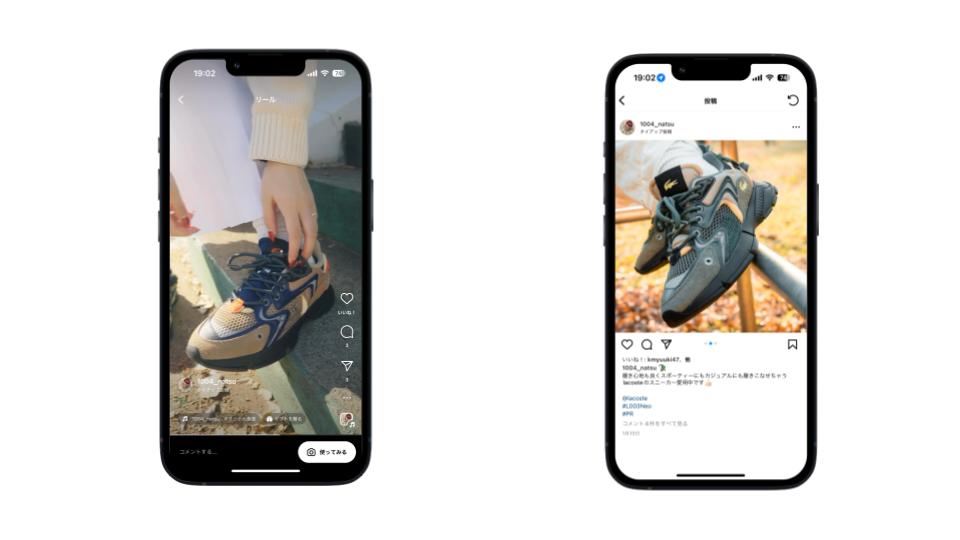
Lacoste was launching new sneakers in Japan. Rather than casting fashion accounts, we worked with videographers and built the campaign around Reels: dynamic, text-free video that carried the product through movement instead of description.
Two things are transferable here. First, the casting question for a design-led product is often “who can shoot this well” rather than “who has the right audience”, because a well-made video travels beyond the creator’s own followers. Second, text-free video removes the language barrier that usually limits how far an overseas brand’s Japanese content can be reused, so the same assets can be repurposed for paid amplification without a rewrite.
Software and Technology
Adobe: Instagram and TikTok advocacy campaign
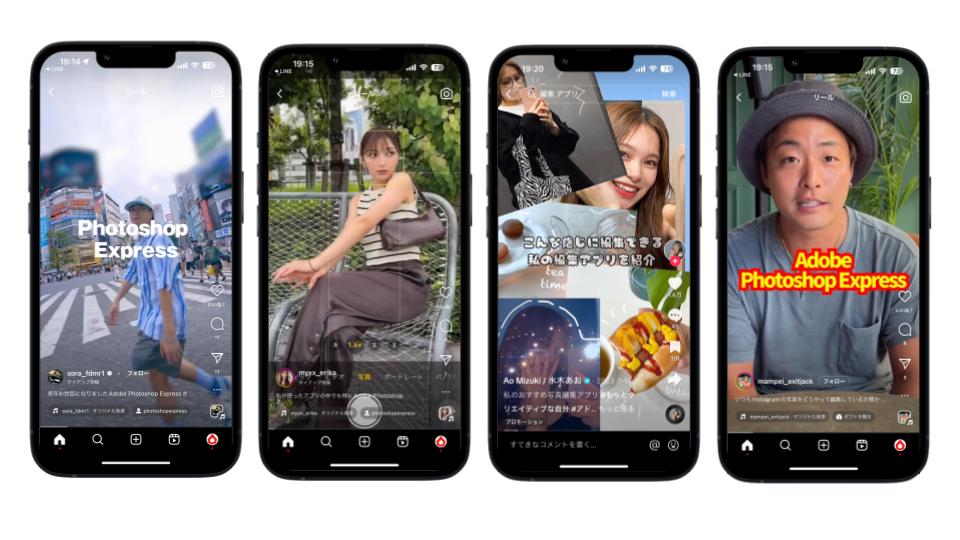
Adobe’s campaign was built on a single casting rule: only creators who already used Photoshop, Illustrator, or the wider Creative Cloud set in their daily work. They showed their actual workflows and explained where the tools sat in them. The campaign supported an increase in downloads in Japan.
For software and subscription products this is close to a default approach in Japan. A creator demonstrating a tool they visibly rely on is credible in a way that a paid endorsement from a general lifestyle account is not, and the audience for professional tools is precisely the audience most likely to notice the difference. It also produces content with a long tail, because workflow videos keep getting found through search long after the campaign window closes.
Apps, Gaming, and Events
GRAVITY: live audio streaming campaign
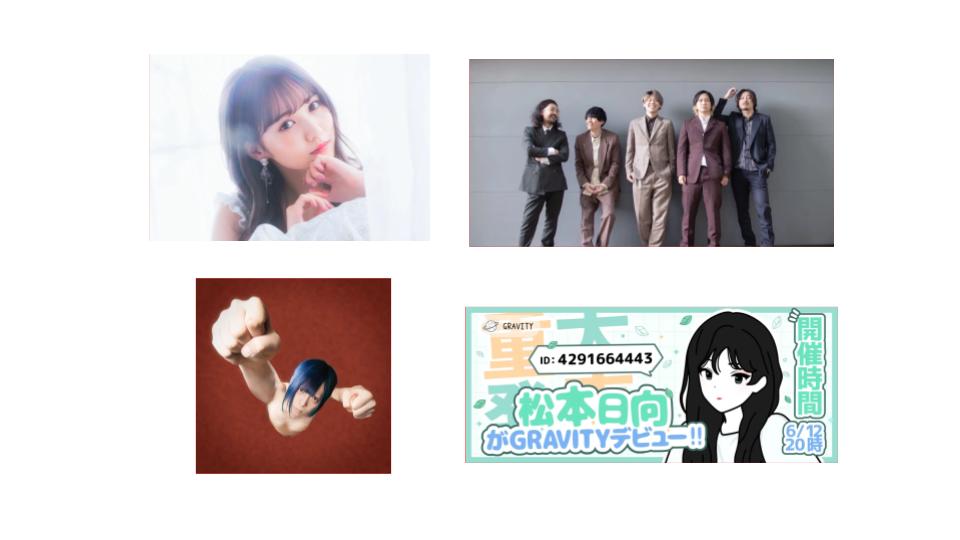
GRAVITY, a lifestyle social app, ran a campaign in which four popular Japanese creators hosted live audio streams inside the product itself. Followers joined, participated, and experienced the app’s core feature as part of the promotion rather than watching a description of it.
For app clients this is usually the highest-converting structure available, because the distance between seeing the promotion and using the product is close to zero. It also suits Japanese audiences, who tend to respond better to demonstration than to assertion.
Turtle Beach: YouTube campaign aligned to retail events
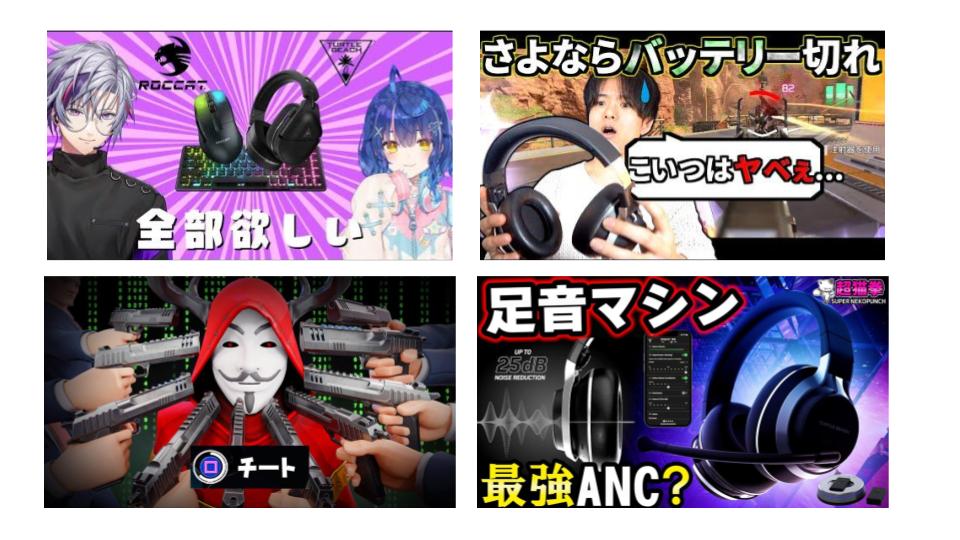
Turtle Beach promoted gaming hardware in Japan through Japanese gaming creators running live streams and videos on YouTube. The campaign was timed to coincide with Black Friday and Rakuten Super Sale, and it produced the strongest click-through rate we had recorded for the account.
The timing decision is the whole case. Gaming hardware is a considered purchase, and Japanese buyers in this category research thoroughly before committing. Running creator content during a period when the audience is already in a buying posture, and when the price is at its most attractive, compresses that research cycle. YouTube was the right platform for the same reason: long-form demonstration is what convinces a buyer comparing headsets on specification.
LAF Entertainment, Craft Gyoza Fest: event campaign
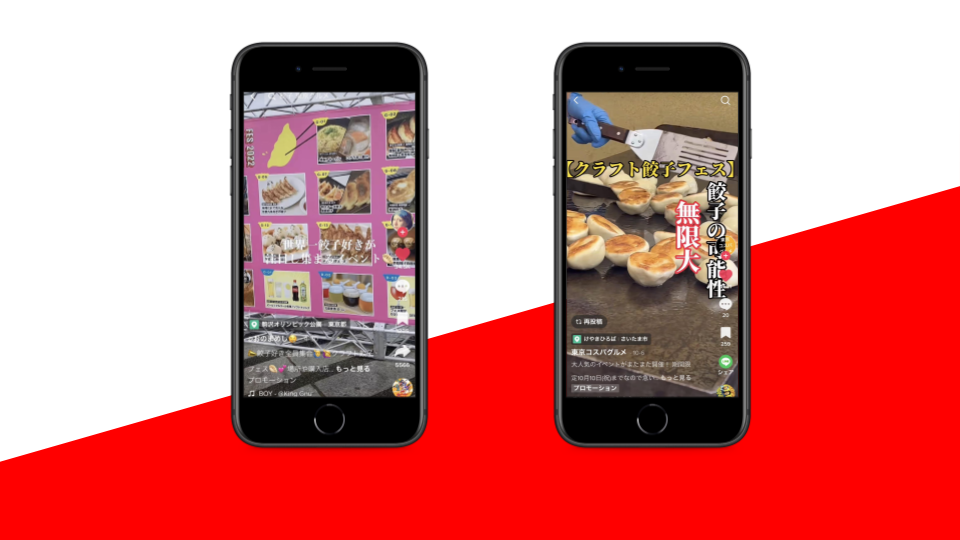
Craft Gyoza Fest is a food event rather than a product. Food creators were invited to cover it on Instagram and TikTok, filming the gyoza, the stalls, and the atmosphere of the venue. Visibility and visitor numbers both rose.
Event campaigns have a constraint that product campaigns do not: the window is fixed and short. That changes casting toward creators who post frequently and quickly, and it changes the brief toward atmosphere rather than product detail, because what persuades someone to attend is the sense that the place will be enjoyable to be in.
MIXI, Monster Strike: TikTok account launch and operation
For the Japanese mobile game Monster Strike, hotice handled planning through execution, including launching and running a TikTok account for the in-game character Ochimusha. One video from the campaign passed 3.5 million views, and the work supported the XFLAG PARK 2022 event.
This case is different in kind from the others. Rather than buying posts from existing creators, the campaign built an owned channel with a character as the presenter. For brands with strong IP, that model compounds: the audience accumulates on an asset the brand controls instead of dispersing after each paid post. It requires a longer commitment and a content operation, which is why it suits games, characters, and brands with a recognisable mascot more than it suits a single product launch.
hotice is a cross-border influencer marketing agency helping overseas brands enter Japan. We handle casting, negotiation, Japanese-language contracts, and ad-disclosure compliance.
Tell us your category, budget range, and timing. We will take it from there.Want to know which of these models fits your product? Account operation, creator casting, and event coverage need very different budgets and timelines. Tell us your category and objective and we will recommend the structure, not just the creators. Talk to our team.
What These Campaigns Have in Common
Across ten campaigns in six industries, four decisions recur. They are worth checking against your own plan.
| Pattern | What it looks like in practice | Where it appears above |
|---|---|---|
| Cast for fit, not for size | Creators whose existing content already contains the scene, product type, or workflow the brief calls for | Adobe, Clinique, Lacoste, Turtle Beach |
| Use the native format | Reels for movement, TikTok for routine, YouTube for demonstration, live for participation | Lacoste, Clinique, Turtle Beach, GRAVITY |
| Anchor to a Japanese moment | Seasonal dryness, Black Friday and Rakuten Super Sale, a festival, an event date | Clinique, Turtle Beach, LAF Entertainment |
| Show the occasion, not the product | The post is about a sunset, a meal, a workflow, or a match, and the product is present inside it | AB InBev, HITEJINRO, Adobe, LAF Entertainment |
The fourth pattern is the one that most often separates campaigns that work in Japan from campaigns that do not. Japanese audiences respond to demonstration and context and tend to disengage from direct assertion, so the strongest creator content puts the product inside a scene the viewer recognises and lets them draw the conclusion.
How We Run a Campaign
The cases above follow the same process. It is worth setting out because the parts overseas teams cannot easily run from abroad are the middle three.
- Objective and role. We agree whether the campaign is there to build awareness, provide local proof, or drive conversion, because that determines everything downstream.
- Casting. Shortlisting from our creator network on category fit, audience overlap, engagement quality, and past brand work, with follower count as a filter rather than a criterion.
- Negotiation and contracting. Conducted in Japanese, covering usage rights, secondary use, exclusivity, and disclosure obligations. Our guide to influencer contracts in Japan sets out the clauses that matter.
- Brief and compliance review. Disclosure labelling specified in the brief, category claims checked before filming, posts reviewed before they go live.
- Publication and reporting. Performance reported against the objective agreed in step one, with the assets cleared for reuse where the contract allows.
If you are earlier in the process and still deciding how creator work fits into a wider entry plan, our complete guide to influencer marketing in Japan is the better starting point, and influencer marketing costs in Japan covers what each tier of campaign actually costs.
FAQ
Can an overseas brand run influencer marketing in Japan without a local entity?
Yes. Every campaign on this page was run for a brand operating in Japan through a partner rather than requiring the brand to have its own local marketing team. What is not optional is a Japanese-language point of contact for casting, negotiation, and approvals, because Japanese talent agencies and creators work in Japanese and on relationship terms.
How long does a campaign like these take from brief to publication?
Casting and negotiation are the variable parts. A single-platform campaign with a clear brief typically moves from kickoff to publication within a few weeks, while campaigns involving travel, event coordination, or regulated category review need longer. Campaigns tied to a retail moment such as Black Friday should be started well before the window, because creator calendars in those periods fill early.
Which platform should we choose?
Match the platform to the buying decision. YouTube suits considered purchases that need demonstration, as in the Turtle Beach case. TikTok and Reels suit products shown through routine or movement, as with Clinique and Lacoste. Live streaming suits products the audience can use immediately, as with GRAVITY. Most campaigns use one primary platform well rather than three thinly.
Do these campaigns work for brands with no awareness in Japan at all?
That is the situation most of them started from. HITEJINRO and Turtle Beach were both building presence in Japan rather than defending an established position. When awareness is at zero the useful adjustment is to plan for repeat exposure across several months rather than a single burst, because Japanese buyers confirm a brand through repeated sightings before acting.
How is disclosure handled?
Disclosure of paid promotion has been mandatory in Japan since October 2023, and liability sits with the advertiser rather than the creator. We write the labelling requirement into the contract and the brief and review posts before publication. Our explanation of the Japanese stealth marketing regulation covers what compliant labelling looks like.
Can we reuse creator content in our own advertising?
Only if the contract provides for it, and secondary usage rights are negotiated separately from the posting fee in Japan. It is worth deciding this before casting rather than after, because the reuse term affects the rate and some agencies restrict it. The Lacoste case is a good illustration of why it matters: text-free video is reusable across markets, but only if the rights were secured up front.
Work With hotice
hotice connects overseas brands with Japanese creators and runs the campaign end to end: casting matched to your category and objective, Japanese-language negotiation and contracting, disclosure and category compliance built into every brief, and reporting you can take back into your own measurement.
Tell us your product, your target audience, and the outcome you need, and we will come back with the closest comparable from our own work and what we would do differently for you.
Supervised by the hotice Editorial Team, specialists in helping global brands enter the Japanese and Asian markets through influencer marketing. Last updated: July 2026.
Pricing, past campaigns, and how contracts and ad-disclosure compliance are handled from start to finish. Ask us anything before you commit to a budget.
Overseas brands welcome. We work in English, Japanese, Chinese, and Korean.