Influencer Marketing on Instagram in Japan
- 1. Instagram in Japan: Reach and Daily Use
- 1-1. What Japanese users follow, and how it changes with age
- 2. How Japanese Users Buy From Instagram
- 2-1. Saving is the behaviour that matters
- 2-2. What triggers the purchase
- 3. Using Reels, Stories, and Feed Properly
- 3-1. User-generated content and the permission step
- 4. Casting Rules for Instagram in Japan
- 5. Compliance: Disclosure Is Not Optional
- 6. Four Campaigns by Japanese Brands
- 6-1. UniBeauty: ambassadors rather than one-off posts
- 6-2. Anessa: solving a specific person’s problem
- 6-3. Nature Conk: before and after, plus the comments
- 6-4. Fashion Center Shimamura: the customer as the creator
- 7. What Overseas Brands Need to Get Right
- 8. FAQ
- 8-1. How many people use Instagram in Japan?
- 8-2. Should we measure Instagram campaigns in Japan on likes or saves?
- 8-3. What size of influencer works best on Instagram in Japan?
- 8-4. How should we use Reels versus feed posts versus Stories?
- 8-5. Is stealth marketing actually enforced in Japan?
- 8-6. Can we repost customer photos of our product?
- 9. Work With hotice
TL;DR: Instagram reaches 52.6% of Japan and over 70% of people in their teens to thirties. In our survey of 534 Japanese users, 51.50% open it almost every day, and close to half buy something prompted by it at least monthly. The behaviour that defines the Japanese market is saving: users build private shortlists and return to them, so a campaign optimised for likes is measuring the wrong thing.
Instagram is the platform overseas brands are most confident about when entering Japan, because the format looks the same everywhere. The mechanics of how Japanese users move from seeing a product to buying it are not the same, though, and the gap shows up in campaigns that generate strong engagement and no measurable outcome.
This guide covers how Japanese audiences use Instagram, based on two surveys we ran with Japanese users, what actually triggers a purchase here, how to use Reels and Stories rather than treating them as extra placements, the casting rules specific to this market, and four campaigns run by Japanese brands.
hotice is a cross-border influencer marketing company that helps overseas brands enter the Japanese and wider Asian markets, with campaign experience for brands such as Turtle Beach and Clinique. The survey data on this page is our own research with Japanese users. Book a free consultation.
Instagram in Japan: Reach and Daily Use
Instagram reaches 52.6% of the Japanese population across all ages and above 70% among people in their teens to thirties. Source: Ministry of Internal Affairs and Communications, Institute for Information and Communications Policy, FY2024 media behaviour survey, published June 2025 (soumu.go.jp).
Frequency matters more than headline reach. In our survey of 534 Japanese Instagram users, over half open the app almost every day.
| Age band | Use Instagram almost every day |
|---|---|
| All respondents | 51.50% (275 of 534) |
| 20s | 71.29% |
| Teens | 62.96% |
| 30s | 54.37% |
| 40s | 44.12% |
Source: hotice survey of 534 Japanese Instagram users. Full results: Japanese Instagram usage survey.
What Japanese users follow, and how it changes with age
| Type of account followed | Share of respondents |
|---|---|
| Celebrities and television personalities | 46.54% (228) |
| Friends and acquaintances | 43.06% (211) |
| Influencers and creators | 39.18% (192) |
| Lifestyle and home accounts | 33.88% |
| Hobby and specialist accounts | 31.43% |
The age split is the part that changes casting decisions. Among teenagers, roughly 60% follow specific influencers, and among people in their twenties about half do, with creators functioning as information sources on a par with television figures. From the thirties onward, attention shifts toward lifestyle and specialist accounts, and users in their forties and above tend to follow accounts for the ideas and knowledge they provide rather than for the person presenting them.
In practice, a campaign aimed at under-thirties can cast on affinity with a creator. A campaign aimed at over-thirties should cast on what the account is about, because that audience follows topics rather than personalities.
How Japanese Users Buy From Instagram
In our survey of 636 Japanese users, close to half take a purchase action at least once a month prompted by Instagram.
| How often they buy or use something prompted by Instagram | Share |
|---|---|
| About once a month | 18.40% |
| Two to three times a month | 17.45% |
| Once a week or more | 11.79% |
| Two to three times a month, users in their 20s | 21.60% |
| Once a week or more, users in their 20s | 17.60% |
Source: hotice survey of 636 Japanese users. Full results: Japanese Instagram purchasing behaviour survey.
Saving is the behaviour that matters
Nearly 40% of respondents save posts to review later, and among women the figure reaches 37.29% as an established habit rather than an occasional action. Japanese users build private shortlists, compare across them, and buy once they feel satisfied with the decision rather than in the moment.
Pricing, past campaigns, and how contracts and ad-disclosure compliance are handled from start to finish. Ask us anything before you commit to a budget.
Overseas brands welcome. We work in English, Japanese, Chinese, and Korean.This has three consequences that most campaign plans miss.
- Optimise for saves, not likes. A like is a reaction. A save is intent to return. If your reporting ranks creators by likes, it is ranking them on the weaker signal.
- Design posts to be worth returning to. Carousels with the price, the specification, and the usage detail included get saved. A single aspirational image does not, because there is nothing to come back for.
- Expect a lag between the post and the purchase. A campaign judged on same-week conversions will understate itself, because the shortlist is reviewed later.
Users also rely heavily on hashtag search within the app and on reviews from ordinary users rather than on advertising copy. The pattern is consistent: an intuitive want, then a deliberate verification, then the purchase.
What triggers the purchase
The strongest driver is visual appeal combined with clarity, specifically the product’s appeal being summarised in an image or video of under a minute. Japanese consumers use the term time performance for getting the point of something quickly, and it operates as a genuine purchase driver here rather than as a stylistic preference.
| Category bought via Instagram | Share |
|---|---|
| Food, drink, and gifts | 33.00% |
| Beauty, cosmetics, and skincare | 29.75% |
| Beauty and cosmetics, women only | 44.07% |
Beauty is the dominant category among women at 44.07%, driven by two things working together: an aspirational world the viewer wants to be part of, and a specific enough description of how the product feels to use that the aspiration seems achievable. Content that has only the first reads as an advertisement, and content that has only the second reads as a manual.
If your Instagram reporting ranks creators by likes, you are ranking them on the weaker signal in this market. We build Japanese campaigns around saves and the shortlist behaviour behind them. Get your measurement reviewed.
Using Reels, Stories, and Feed Properly
The three surfaces do different jobs, and treating them as one campaign delivered three ways wastes most of the budget. This is how we allocate them.
| Surface | What it is good for | What to ask the creator for | What to measure |
|---|---|---|---|
| Reels | Reaching beyond the creator’s followers, since distribution is algorithmic | Movement, transformation, or a how-to. The hook inside three seconds | Reach, plays, shares |
| Feed post or carousel | The considered case. This is what gets saved and returned to | Price, specification, usage detail, before and after. Multiple frames | Saves above all, then comments containing intent |
| Stories | Immediate action within 24 hours | Link sticker, discount code, poll or question sticker | Link taps, code redemption, sticker responses |
| Highlights | Permanence. Stories saved into a labelled category on the profile | Ask for the campaign Story to be kept in a relevant Highlight | Ongoing profile traffic, long after the campaign |
| Live | Complex products, unscripted answers, launch moments | A creator who is comfortable live, and enough product knowledge to answer | Concurrent viewers, questions asked, conversions during the stream |
Two combinations work particularly well in Japan. A Reel for reach followed by a carousel for the detail, from the same creator, gives you discovery and consideration in one booking. And a Story with a code, kept in a Highlight afterwards, converts a 24-hour placement into a permanent entry point on the creator’s profile. The Highlight request costs nothing and is almost never in the brief.
User-generated content and the permission step
Reposting customer content is a cheap way to build credibility, and Japanese consumers weigh ordinary users’ opinions heavily. Permission is not optional, though. Ask before reposting, and get it in writing for anything that will be used in paid media, because Japanese users are noticeably more sensitive about their content being used commercially than the practice in some markets assumes.
Casting Rules for Instagram in Japan
Micro-influencers are the working tier. Creators with 10,000 to 100,000 followers do most of the work in Japanese Instagram campaigns. Rates are manageable, engagement is higher, and the relationship with followers is close enough that a recommendation reads as word of mouth rather than as advertising. Several mid-sized creators generally outperform one large one.
Screen on saves, engagement quality, and audience composition. Follower count is the weakest predictor available. Purchased and inactive followers are a real problem in this market, and an account with a large but dormant audience will produce reach on paper and nothing in the results. Our guide on how to find and vet Japanese influencers sets out the screening order.
Look for creators who show their own difficulties. A distinctive feature of the Japanese Instagram ecosystem is that many creators built their audience by being open about a problem they had, whether that is weight, skin, money, or a small apartment. Their followers are people with the same problem, which makes them an unusually precise match for a product that addresses it. It also means the endorsement carries weight that a general lifestyle account cannot match.
Book repeat placements rather than one-offs. Japanese consumers confirm through repetition, and a creator who mentions a product across a quarter reads as genuine while a single post reads as paid. Ambassador arrangements are common here for exactly this reason.
Match visual standards. Japanese Instagram creators tend to maintain a consistent feed aesthetic, and a brand asset that clashes with it will either be refused or will underperform. Supply guidance rather than finished creative, and let the creator produce something that fits their grid.
Compliance: Disclosure Is Not Optional
Undisclosed paid promotion has been a designated unfair representation in Japan since October 2023, and liability sits with the advertiser rather than the creator. A creator who omits the label creates a problem for your company.
Practically, that means specifying in the contract and the brief that the post carries a paid partnership label or a clear hashtag such as #PR, #広告, or #提供, that the label is visible without tapping more, and that it appears on Stories as well as feed posts. Review before publication rather than after.
The reputational exposure is larger than the legal one. Japanese audiences react strongly to promotion they feel was concealed, and the resulting backlash travels quickly. Our explanation of the Japanese stealth marketing regulation covers compliant labelling in detail, and our overview of the risks of influencer marketing in Japan covers the wider set.
Beauty and skincare brands have a second requirement. These categories fall under the Pharmaceutical and Medical Device Act, which restricts efficacy claims that are routine elsewhere, so creator copy needs a claims check before it is posted rather than after.
Disclosure and category claims are advertiser liabilities in Japan, not creator ones. We write both into the brief and review posts before they go live, in Japanese. Talk through your compliance.
Four Campaigns by Japanese Brands
UniBeauty: ambassadors rather than one-off posts
UniBeauty, a contact lens company, appointed Instagram creators as brand ambassadors rather than booking single posts. Alicia Yamagami, who works in fashion and cosmetics, was among them, and the ambassador content ran alongside a campaign.
hotice is a cross-border influencer marketing agency helping overseas brands enter Japan. We handle casting, negotiation, Japanese-language contracts, and ad-disclosure compliance.
Tell us your category, budget range, and timing. We will take it from there.Coloured contact lenses are a styling decision as much as a vision product, so casting from fashion and beauty rather than from health was the correct read. The ambassador structure matters more, though: repeated appearances over time are what convert a product from something a creator was paid to mention into something they visibly use.
Anessa: solving a specific person’s problem
The sunscreen brand Anessa worked with beauty creators including Tomi, a certified Japanese beauty specialist, with content addressing sun protection for mothers spending time outdoors with their children.
Sunscreen is a category where everyone is a potential customer, which is exactly why generic campaigns underperform. Narrowing to one clearly defined person, with a specific occasion and a specific worry, produced content that the target audience recognised as being about them. The certification also matters in Japan, where credentials carry real weight in beauty.
Nature Conk: before and after, plus the comments
The cosmetics company Nature Conk worked with beauty creator Nako, who posted before-and-after images of her own results and then answered follower questions in the comments.
The comment work is the underrated half. Before-and-after images generate scepticism as well as interest, and a creator who answers the sceptical questions in public converts far more than one who posts and leaves. This is worth writing into the brief, since it is labour the creator is not otherwise obliged to do.
Fashion Center Shimamura: the customer as the creator
The affordable apparel retailer Shimamura worked with young creators including Mahoko Seno, a high school student, who posted outfits assembled from Shimamura products in a catalogue-like format.
Casting an actual customer rather than a professional model is the whole case. For a value retailer, the proposition is that ordinary people can put together a good outfit affordably, and that argument is made by an ordinary person or not at all. The catalogue format also fed the save behaviour directly, giving followers something to return to when shopping.
What Overseas Brands Need to Get Right
Rebuild the brief for saves. The Japanese purchase path runs through a saved shortlist, so posts need the practical detail that makes them worth saving. Aspirational-only creative underperforms here even when it performs elsewhere.
Brief in Japanese. In our survey of 102 Japanese companies, the most cited campaign difficulty was creators not understanding the product, at 42.9%, and the gap widens across a language boundary. Instagram content depends on tone and visual register, neither of which survives translation.
Plan for the lag. Because users compare before buying, conversions arrive later than in markets where the purchase happens in the moment. Set the measurement window around the category’s consideration period.
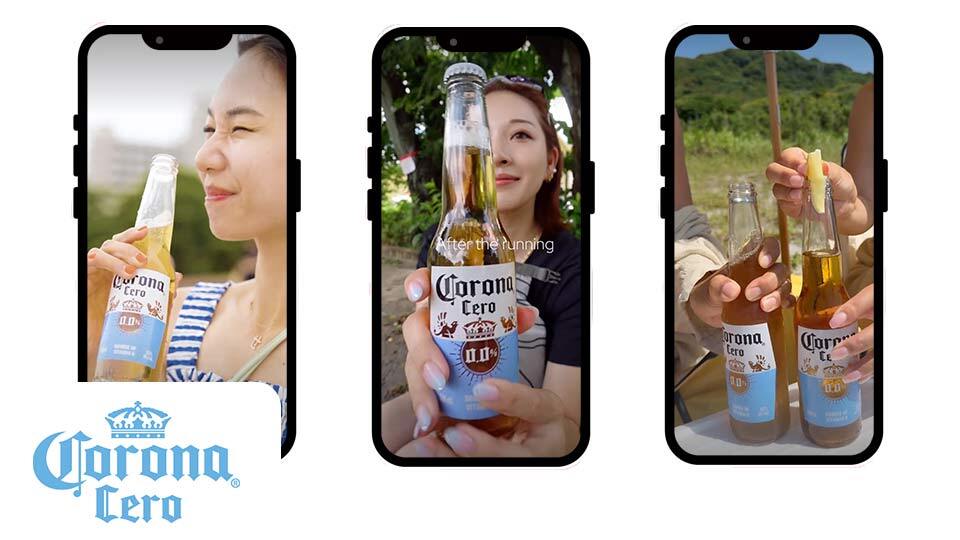
Combine platforms deliberately. Instagram suits the considered visual purchase, TikTok suits discovery at speed, and YouTube suits products needing demonstration. Most first-year entry plans run two of the three rather than all of them thinly. If you are choosing a partner to run it, our comparison of influencer marketing agencies in Japan covers what to look for, and our campaign examples from our own work include Instagram campaigns for Corona Beer and Lacoste.
FAQ
How many people use Instagram in Japan?
52.6% of the population across all ages, rising above 70% among people in their teens to thirties, according to the Ministry of Internal Affairs and Communications FY2024 media behaviour survey published in June 2025. In our own survey of 534 Japanese users, 51.50% said they open the app almost every day.
Should we measure Instagram campaigns in Japan on likes or saves?
Saves. Nearly 40% of Japanese users save posts to compare and return to later, and among women it is an established habit at 37.29%. A like is a reaction in the moment, while a save indicates intent to come back, which is the behaviour that precedes a purchase in this market.
What size of influencer works best on Instagram in Japan?
Micro-influencers with 10,000 to 100,000 followers do most of the work. Rates are manageable, engagement is higher, and the closeness of the relationship means a recommendation reads as word of mouth. Several mid-sized creators generally outperform one large account, and follower count is the weakest available predictor of results.
How should we use Reels versus feed posts versus Stories?
Reels reach beyond the creator’s followers because distribution is algorithmic, so use them for discovery. Feed posts and carousels carry the detail and are what gets saved, so use them for consideration. Stories drive immediate action through link stickers and codes, and asking for the Story to be kept in a Highlight turns a 24-hour placement into a permanent one.
Is stealth marketing actually enforced in Japan?
Yes. Undisclosed paid promotion has been a designated unfair representation since October 2023, and liability sits with the advertiser rather than the creator. The reputational exposure is usually larger than the legal one, since Japanese audiences react strongly to promotion they feel was concealed.
Can we repost customer photos of our product?
Only with permission, and in writing if the content will be used in paid media. User content is valuable in Japan because ordinary users’ opinions carry weight, but Japanese users are noticeably sensitive about commercial use of their posts, so asking first is both the legal and the sensible course.
Work With hotice
hotice runs Instagram campaigns in Japan for overseas brands: creator selection screened on saves, engagement quality, and audience composition rather than follower count, surface allocation across Reels, feed, and Stories, Japanese-language briefing and negotiation, disclosure and category compliance, and measurement built around how Japanese users actually decide.
Tell us your product, target audience, and budget range, and we will propose a creator tier, a surface mix, and how we would measure it.
Supervised by the hotice Editorial Team, specialists in helping global brands enter the Japanese and Asian markets through influencer marketing. Last updated: July 2026.
Pricing, past campaigns, and how contracts and ad-disclosure compliance are handled from start to finish. Ask us anything before you commit to a budget.
Overseas brands welcome. We work in English, Japanese, Chinese, and Korean.