Is Influencer Marketing in Japan Really Effective in 2026? A Data-Driven Deep Dive into Market Size, Social Media Usage, Influence, and Performance

- 1. Is It Really Worth Investing in Japan? — The First Perspective You Should Read
- 1-1. Market Size and Growth Outlook for Influencer Marketing in Japan
- 1-2. Why Japan Is Valuable Even Without “Explosive Growth”
- 1-3. Why the Japanese Market Is Being Re-evaluated in 2026
- 2. How Widely Do Japanese Consumers Use Social Media—and How Much Does It Influence Their Decisions?
- 2-1. Japanese Social Media Usage Is Broadly Multi-Platform, with Strong Concentration on YouTube
- 2-2. Social Media Is Used Almost Daily, but Primarily for Viewing and Entertainment
- 2-3. Japanese Consumers Discover Products on Social Media, but Influence Varies by Platform
- 3. Why the Doubts Persist: Influence in Japan Looks Different from Other Markets
- 3-1. In Japan, Influence Is Built on Trust—Not Reach
- 3-2. The “Expectations” and “Concerns” Japanese Consumers Hold Toward Overseas Brands
- 3-3. How Influencers Help Overcome Psychological Barriers in Japan
- 4. The Reality You Should Understand When Asking, “Can We Do This In-House?”
You may be interested in influencer marketing in Japan.
At the same time, many marketers are asking themselves:
“Is it really effective?” “How widely are social media platforms actually used?” and “Does it still make sense to invest in this market in 2026?”
Even strategies that deliver strong results globally do not always translate directly to the Japanese market.
Viral reach is harder to achieve, consumer responses tend to be more cautious, and clear success cases are often difficult to identify.
As a result, Japan has become a market that feels promising, yet difficult to evaluate with confidence.
In this article, we break down what marketers need to know about influencer marketing in Japan heading into 2026.
Using data on market size, social media usage, consumer trust structures, and real-world campaign insights from the field, we provide a grounded and practical overview.
Rather than relying on assumptions or surface-level impressions, this analysis clarifies why influencer marketing is still relevant in Japan, and how to approach it in a way that minimizes risk and maximizes long-term impact—based on evidence, not hype.
Is It Really Worth Investing in Japan? — The First Perspective You Should Read
While interest in influencer marketing in Japan is growing, many marketers still hesitate.
Common questions include: “How large is the market?” and “Is it already too late to enter?”
Japan is not a hyper-growth market.
However, there are clear reasons why it is once again attracting attention as we approach 2026.
In this section, we move away from intuition and assumptions.
Using concrete data, we outline the true scale of the Japanese market and its position as a viable long-term investment.
Market Size and Growth Outlook for Influencer Marketing in Japan
Japan’s influencer marketing market is not in an explosive expansion phase like the United States or Southeast Asia.
That said, the market has continued to grow steadily year after year.
In 2025, the market was valued at approximately ¥86 billion, representing 116% year-on-year growth.
Projections indicate that it will exceed ¥130 billion by 2027, positioning 2026 as another year of stable expansion within a mature market environment.
According to multiple research sources, influencer marketing in Japan has already reached a hundreds-of-billions-of-yen scale, increasing its presence within the broader advertising ecosystem.
While growth rates are moderate, this is not a sign of declining demand.
Rather, it reflects a market structure that prioritizes long-term trust building over short-term hype, making Japan fundamentally different from trend-driven influencer markets elsewhere.
source : https://www.japanbuzz.info/influencer-marketing-in-japan-statistics-and-facts/
source : https://www.thereportcubes.com/report-store/influencer-marketing-market-report
What truly matters is not whether the market is “large” or “small.”
The real question is whether it is a market that continues to attract consistent investment, and whether it offers enough room to build and compound brand value over time.
Why Japan Is Valuable Even Without “Explosive Growth”
One defining characteristic of the Japanese market is that rapid, short-term performance spikes are relatively rare.
However, once trust is established, brands are far more likely to build long-term, stable relationships with consumers.
This dynamic applies directly to influencer marketing as well.
In many global markets, influencer strategies often prioritize follower count and reach, aiming to generate immediate buzz at scale.
In contrast, Japanese consumers place greater emphasis on who is speaking and the context in which a product or service is introduced, engaging with branded messages more cautiously and selectively.
As a result, influencer marketing in Japan tends to show:
- Lower visibility of short-term ROI, but
- Stronger cumulative impact on brand understanding, trust, and consideration over time
This structural characteristic makes Japan an especially good fit for brands in 2026 that are not seeking one-off viral hits, but rather aiming to cultivate the market through sustained, long-term investment.
source : https://bizpartner.thecoo.co.jp/content/influencer-marketing-prediction-2026
Why the Japanese Market Is Being Re-evaluated in 2026
In recent years, the Japanese market has been undergoing a renewed reassessment among global brands.
One key reason is that SNS-driven information discovery has become deeply embedded in consumer decision-making.
Influencers are no longer functioning merely as advertising channels. Instead, they are increasingly acting as interpreters who help consumers understand:
- How to evaluate overseas brands, and
- How to integrate those brands into their own daily lives
In Japan, where advertising regulations are strict and consumer scrutiny toward promotional messaging is high, well-designed influencer strategies can serve as a powerful point of differentiation from competitors.
As we move into 2026, Japan is once again gaining attention as a market that is:
“Not easy to enter—but capable of delivering cumulative results when approached with the right strategy.”
For brands willing to engage thoughtfully and invest for the long term, the Japanese market offers a uniquely sustainable opportunity rather than short-lived wins.
How Widely Do Japanese Consumers Use Social Media—and How Much Does It Influence Their Decisions?
Understanding the Japanese market requires a clear grasp of how closely consumers engage with social media.
While it is often said that “social media is powerful in Japan,” there is surprisingly little clarity around which platforms are used, to what extent, and for what purposes.
In this section, we analyze the real state of social media usage in Japan based on a 2026 survey of 528 respondents, examining the data to uncover how Japanese consumers actually interact with SNS platforms.
Japanese Social Media Usage Is Broadly Multi-Platform, with Strong Concentration on YouTube
Among the social media platforms used by Japanese consumers, YouTube recorded the highest usage rate at 85.61%.
This was followed by LINE (76.89%), showing that video-based platforms and messaging apps form the core of Japan’s information consumption environment.
Next came X (59.85%), TikTok (58.14%), and Instagram (51.89%), all at relatively similar levels.
Rather than relying heavily on a single platform, a defining characteristic of the Japanese market is the concurrent use of multiple major social media platforms at comparable rates.
In contrast, platforms commonly used overseas for information gathering and discussion—such as Reddit (3.60%) and Quora (3.03%)—see very limited usage in Japan.
LinkedIn also remains low at 3.60%, indicating that business-oriented social networks are not part of everyday information consumption for most Japanese users.
Overall, these results show that social media usage in Japan follows a distributed, purpose-driven structure, rather than a “single dominant platform” model, with users switching platforms based on use case.
Social Media Is Used Almost Daily, but Primarily for Viewing and Entertainment
Next, we examine how deeply social media is embedded in daily life.
In the survey, 71.37% of respondents said they use social media “almost every day, multiple times a day.”
Including those who use it “almost every day, about once a day,” 87.81% of respondents reported daily SNS usage.
For Japanese consumers, social media is no longer a special activity—it is fully embedded in everyday life.
So how is it used?
The most common purpose was “entertainment / passing time” (75.24%), followed by “information gathering” (68.28%), revealing a structure where entertainment and information consumption occur simultaneously.
Meanwhile, “content creation / self-expression” and “work or business use” each remained below 20%.
This indicates that in Japan, social media functions far more as a space for viewing and consuming content than for active posting or self-expression.
Japanese Consumers Discover Products on Social Media, but Influence Varies by Platform
As social media becomes increasingly ingrained in daily life, to what extent are Japanese consumers exposed to products and services through these platforms?
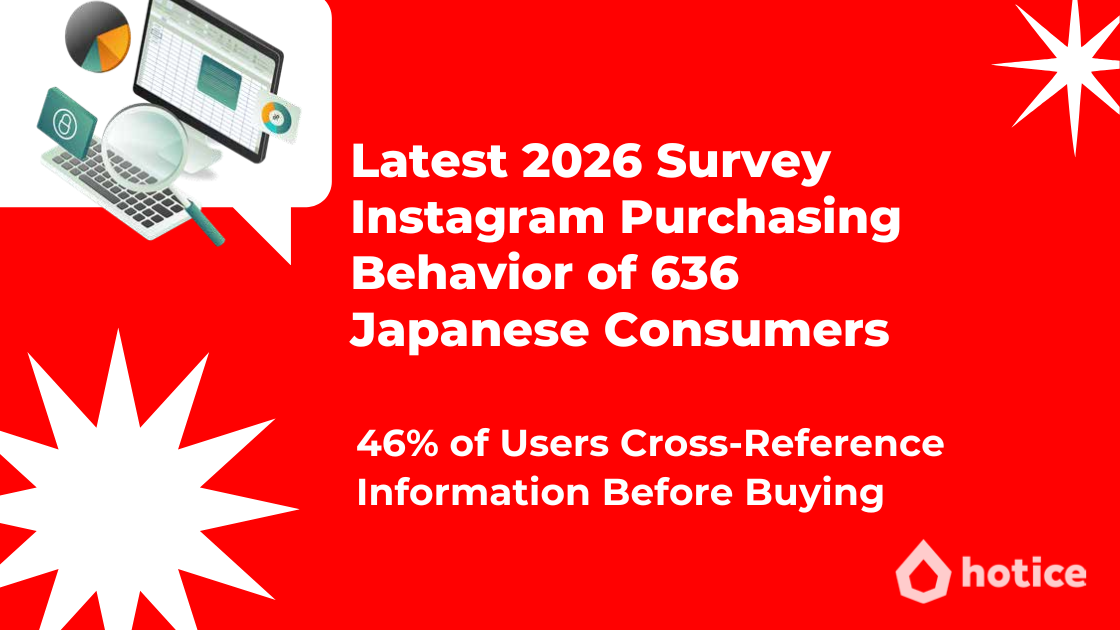
The survey found that 85.10% of respondents said they have discovered products or services on social media.
Importantly, most of this exposure does not come from active product searches, but rather occurs incidentally, as an extension of casual browsing and entertainment.
However, the level of influence varies significantly by platform.
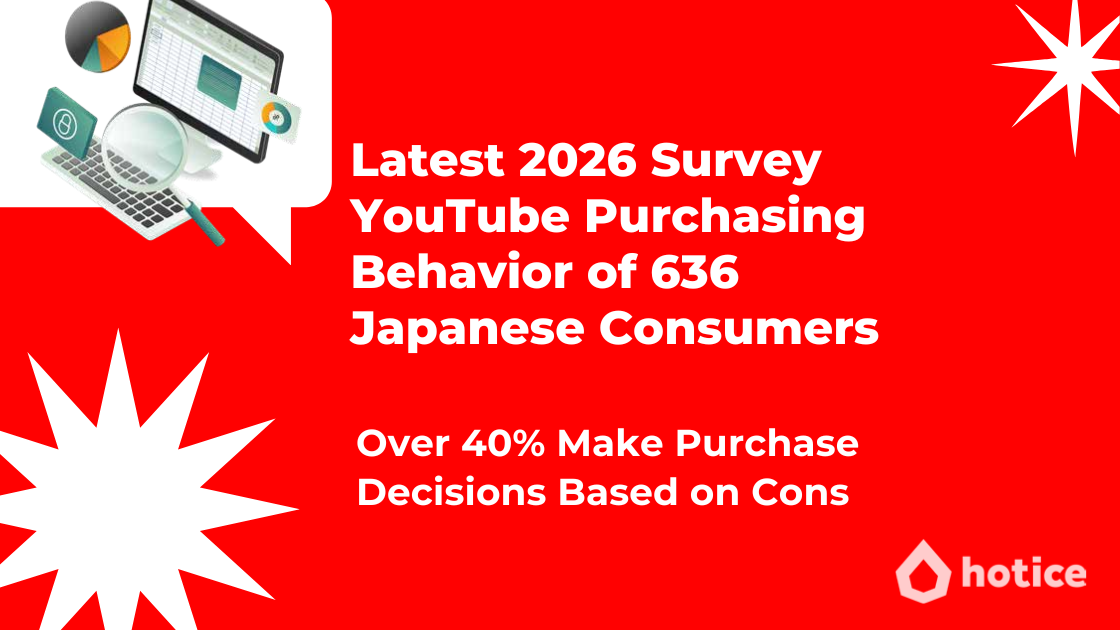
The platform cited most often as influencing purchasing decisions was YouTube (35.20%).
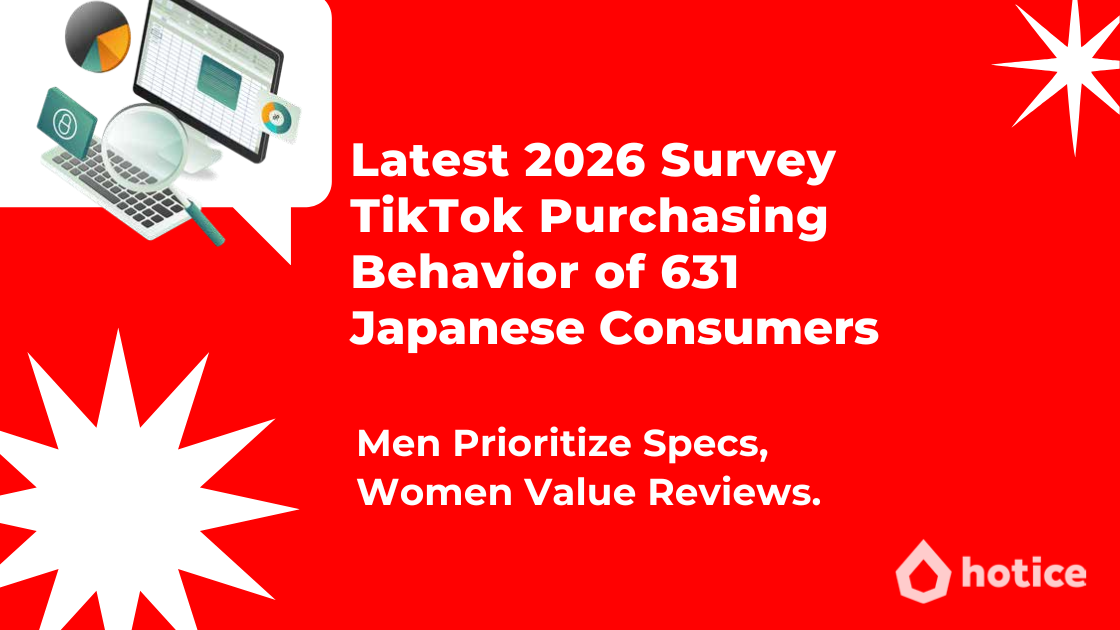
This was followed by Instagram, TikTok, and X at similar levels.
By contrast, despite its high daily usage, LINE recorded a low influence rate of just 5.22%, while Reddit and Quora showed almost no influence at all.
These findings suggest that in Japan, social media functions less as a place to “research” and more as a place to “see, experience, and feel.”
Without understanding this fundamental context, applying influencer marketing models that succeed in overseas markets directly to Japan is unlikely to produce the expected results.
Why the Doubts Persist: Influence in Japan Looks Different from Other Markets
Even when it is clear that social media is deeply embedded in everyday life, many marketers still wonder whether influencer impact is weaker in Japan.
Much of this uncertainty stems from a fundamental difference in how “influence” is defined in the Japanese market compared to other countries.
In this section, we break down the unique structure of influence in Japan and clarify the role influencers actually play within consumer decision-making.
In Japan, Influence Is Built on Trust—Not Reach
In many global influencer marketing markets, follower count and reach are often treated as primary performance indicators.
However, this framework does not always apply to Japan.
Japanese consumers tend to evaluate influencer content based on:
- Who is delivering the message
- The context in which the message is presented
- Whether the influencer communicates consistently over time
As a result, posts that generate short-term attention are often less influential than content created by influencers who have built trust gradually through sustained, coherent communication.
In the Japanese market, influence is less about how widely a message spreads—and more about how deeply it is believed.
source : https://hoticeglobal.com/blog/influencer/inside-influencer-marketing-survey/
Without understanding this difference, designing campaigns using the same metrics applied in overseas markets often leads to a disconnect—where results feel weaker than expected despite proper execution.
The “Expectations” and “Concerns” Japanese Consumers Hold Toward Overseas Brands
Japanese consumers often hold positive expectations toward overseas brands, while simultaneously carrying underlying concerns.
Research shows that foreign products are commonly associated with favorable impressions such as “high quality” and “sophisticated design.”
At the same time, many consumers express uncertainty, saying they “are not sure whether the product suits them” or “lack enough information to make a confident decision.”
This coexistence of expectation and anxiety is a defining characteristic of the Japanese market.
Simply introducing a product is not enough to resolve these concerns.
What becomes essential is the presence of a third-party voice capable of explaining the brand from the consumer’s perspective.
In this role, influencers help translate brands into the context of everyday life in Japan—clearly demonstrating how the product is used, who it is best suited for, and why it fits within local lifestyles.
source : https://hoticeglobal.com/blog/trends/japanese-positive-perception-foreign-products-survey/
source : https://hoticeglobal.com/blog/trends/japanese-negative-perception-foreign-products-survey/
How Influencers Help Overcome Psychological Barriers in Japan
Influencers who hold real influence in the Japanese market are not simply promotional spokespeople.
They function as interpreters positioned between brands and consumers, translating information in a way that feels credible and relatable.
In practice, this influence is built through content that:
- Shows real-world usage scenarios
- Communicates not only benefits, but also limitations or points of caution
- Explains how the product is integrated into the influencer’s own daily life
These approaches help ease consumer anxiety and reduce psychological barriers to consideration.
As a result, audiences are more likely to engage not because “this is an advertisement,” but because “this person’s perspective feels trustworthy and relevant.”
In Japan, influencer impact is less about persuasion—and more about creating genuine understanding and acceptance.
The Reality You Should Understand When Asking, “Can We Do This In-House?”
After reading this far, some of you may be thinking, “Conceptually, this makes sense,” or “It seems like something we could handle internally if we wanted to.”
At the same time, it is likely that a sense of uncertainty still remains.
In fact, a 2025 survey conducted by hotice targeting marketing and PR professionals in Japan revealed a clear pattern:
Those who had attempted to manage influencer marketing in-house were more likely to encounter a set of very practical challenges.
The findings highlight the gap between theoretical feasibility and operational reality when executing influencer marketing within the Japanese market.
source : https://hoticeglobal.com/blog/trends/japanese-influencer-pr-agency-survey/
On-the-Ground Challenges Marketers Face with Influencer Marketing in Japan
Many marketers who have planned or executed influencer marketing campaigns in Japan report facing a similar set of practical challenges.
One of the most significant is influencer selection. In the Japanese market, follower count or apparent visibility alone is not a reliable indicator of performance.
Factors such as past content, the depth of trust with followers, and brand alignment must all be carefully evaluated, often requiring far more time and resources than expected.
Another challenge is performance measurement.
Because Japanese consumers tend to take longer to move from awareness to purchase, campaign success cannot always be judged by immediate post-publication metrics. Short-term KPIs often fail to capture the true impact.
In addition, internal alignment and accountability play a critical role.
Teams must be able to clearly explain why a specific influencer or expression was chosen, both strategically and contextually.
Taken together, these realities show that by 2026, influencer marketing in Japan has shifted from a tactic that “works if you try it” to one that demands careful design, clear rationale, and long-term responsibility.
source : https://hoticeglobal.com/blog/trends/japanese-influencer-pr-agency-survey/
The Risk of Moving Forward Without Fully Understanding Legal and Disclosure Requirements
When executing influencer marketing campaigns in Japan, legal and disclosure risks often require even more careful judgment than performance itself. This reality was also highlighted in a 2025 survey conducted by hotice among marketing and PR professionals in Japan.
The risks associated with influencer marketing extend far beyond short-term backlash or social media controversy. Missteps in disclosure or compliance can directly undermine brand credibility, and once a brand is perceived as engaging in misleading or insincere advertising, that perception can affect all future campaigns and communications.
This risk becomes especially pronounced when campaigns are managed in-house. Companies are responsible for accurately understanding disclosure rules, designing clear instructions for influencers, and reviewing content prior to publication. According to survey respondents, many teams only realized the scope of these responsibilities after campaigns had already been executed, leading to lingering concerns despite successful implementation.
Taking these on-the-ground insights from 2025 into account, it is clear that by 2026, influencer marketing in Japan has entered a new phase. The key question is no longer whether a campaign can be executed, but whether it can be sustained while effectively managing legal and reputational risk.
Even when results are achieved, campaigns that leave uncertainty around compliance and disclosure can become a long-term liability rather than an asset. This is why, in 2026, the critical decision is not simply “Can we do this in-house?”—but rather which responsibilities should be managed internally, and which should be entrusted to specialized expertise.
source : https://hoticeglobal.com/blog/marketing/influencer-marketing-cost-japan/
Making the Right Choice in Japan in 2026—Without Regret
Influencer marketing in Japan is not a strategy that guarantees flashy or immediate success.
However, when market size, social media usage, consumer psychology, and real-world insights are viewed together, it becomes clear that dismissing Japan simply because it is “difficult” would be a missed opportunity.
The Reality Revealed by Market Size, Social Media Usage, Influence, and Performance
Looking back at the insights covered so far, several consistent realities emerge about the Japanese market.
While the market is not experiencing explosive growth, investment continues steadily.
Social media is deeply embedded in daily life and functions as a core space for information discovery and decision-making.
And influencers are not amplification tools—but trust-building agents.
Taken together, influencer marketing in Japan is best understood not as a short-term performance tactic, but as a means of accumulating understanding and trust over time.
Influencer Marketing in Japan Is an Opportunity—But Not an Easy One
Japan is not a low-barrier market.
Consumers are cautious, highly sensitive to messaging and context, and quick to recognize poorly designed campaigns—making superficial executions unlikely to deliver results.
At the same time, this very difficulty creates opportunity.
Well-structured, thoughtfully executed influencer strategies are more likely to stand out and achieve meaningful differentiation from competitors.
Brands that acknowledge this complexity—and engage with the market accordingly—are the ones most likely to leverage influencer marketing strategically in Japan.
Choosing to Move Forward—With Understanding
At this point, some readers may be debating whether to pursue influencer marketing in Japan at all.
But the more important question is not “Should we do it?”—it is “How deeply do we understand what it requires?”
Market dynamics, consumer behavior, influence structures, effectiveness, cost, and risk.
When these factors are clearly assessed, the Japanese market becomes far less opaque.
If you find yourself wanting to:
- Clarify the right approach for your brand
- Reassess decision-making criteria more carefully
- Design a strategy that minimizes risk from the outset
then taking the time to pause and organize your thinking is not hesitation—it is a strategic choice.
For Those Looking to Understand and Succeed with Influencer Marketing in Japan
In Japan, the success of influencer marketing depends heavily on market understanding and strategic design.
hotice has accumulated extensive expertise in influencer marketing specifically tailored to the Japanese market, and continuously shares practical insights and research-driven content through its website.
With Japanese team members on board, hotice is able to deliver communication strategies that reflect local culture, consumer mindset, and contextual nuance—areas that often pose challenges for global brands.
Concerns around “Japan-specific sensitivities,” as well as uncertainties related to messaging, disclosure, and local rules, can be addressed with confidence through hands-on, market-aware support.
If you are considering influencer marketing in Japan and find yourself asking:
- Where should we start?
- What approach makes sense for our brand?
We invite you to leverage hotice’s knowledge and experience to move forward with clarity and confidence.
.png)