Influencer Seeding in Japan: How to Plan, Ship, and Measure Product Gifting
- 1. What Product Seeding Is
- 1-1. Seeding, Gifting, and Paid Posts: Where the Lines Fall
- 1-2. When Seeding Is the Right Tool
- 1-3. Product Seeding Examples Worth Studying
- 2. Why Seeding Works Differently in Japan
- 2-1. Talent Agencies Often Screen Gifts Before Creators See Them
- 2-2. Unboxing, Packaging, and First Impressions
- 2-3. Why a No-Strings Gift Still Needs Clear Expectations
- 3. Planning a Seeding Campaign
- 3-1. Set the Goal: Awareness, Reviews, or Creator Discovery
- 3-2. Choosing Who to Seed
- 3-3. Sizing the List and the Timeline
- 4. Building the Seeding Kit
- 4-1. What Goes in the Box
- 4-2. The Japanese-Language Insert: What to Write and What to Leave Out
- 4-3. When a Gifted Post Needs a PR Label
- 5. Shipping Products to Creators in Japan
- 5-1. Shipping From Overseas: Customs, Duties, and Who Pays
- 5-2. Regulated Categories: Cosmetics, Food, and Supplements
- 6. Following Up and Turning Seeding Into Partnerships
- 6-1. Following Up Without Pressuring
- 6-2. From Gift to Paid Collaboration or Ambassador Program
- 7. Measuring a Seeding Campaign
- 7-1. Post Rate, Reach, and Content Quality
- 7-2. Tracking Sales Without Over-Engineering
- 8. Running Seeding In-House or With an Agency
- 8-1. What You Can Run Yourself
- 8-2. What an Agency Adds in Japan
- 9. FAQ
- 9-1. What is product seeding?
- 9-2. Is influencer seeding the same as influencer gifting?
- 9-3. Do Japanese influencers post about gifted products?
- 9-4. Does a gifted post need a PR label in Japan?
- 9-5. Can I ship products directly to Japanese influencers from overseas?
- 9-6. How many influencers should I send products to?
- 9-7. Should I use an agency for influencer seeding in Japan?
- 10. Methodology and Data Sources
Pricing, past campaigns, and how contracts and ad-disclosure compliance are handled from start to finish. Ask us anything before you commit to a budget.
Overseas brands welcome. We work in English, Japanese, Chinese, and Korean.TL;DR: Product seeding means giving creators your product with no obligation to post, so the product and the list decide the results. In Japan, many creators work through talent agencies, so you ask before you ship. If you ask for a post or signal that you hope for one, treat it as your advertising and request a PR label.
Brands that have run seeding at home usually arrive in Japan with a playbook: message creators, ask for an address, ship the box and wait. In Japan it stalls early. Many creators route brand contact through a talent agency, overseas parcels can arrive with duties for the recipient to pay, and the note in the box matters under Japan’s disclosure rules.
This guide covers what seeding is, why it works differently in Japan, and then planning, packing, shipping, follow-up and measurement. For the wider picture of how brands work with Japanese creators, start with our guide to influencer marketing in Japan.
Planning a seeding round in Japan? hotice is a cross-border influencer marketing agency helping overseas brands enter Japan and wider Asia, with a bilingual Japanese and English team. Brands including Turtle Beach and Clinique have run their Japan campaigns with us. Book a free consultation and we will tell you whether seeding or a paid campaign fits your goal.
What Product Seeding Is
Product seeding, also called influencer seeding, is giving your product to selected creators without requiring them to post about it. The aim is voluntary posts and relationships you can build on. Nothing is guaranteed, so results depend on the product and on who receives it.
Seeding sits next to two other ways of putting product in creators’ hands.
| Model | Post guaranteed? | Control over content | Brand involvement | PR label needed? | Best suited to |
|---|---|---|---|---|---|
| Seeding | No | None: no brief, no approval | Low: recipients and the box | Yes if you ask for or hope for a post, which covers most seeding in practice | Launch buzz, early reviews, creator discovery |
| Paid post | Yes | High: brief plus approval | High: message, timing, format | Always | Fixed dates, set messages, KPIs |
| Seeding plus affiliate | No, but there is an incentive | Low, but the link or code must appear | Medium: a tracked link or code | Yes: asking for a code is a request | Tying gifted posts to sales |
Seeding, Gifting, and Paid Posts: Where the Lines Fall
“Seeding” and “gifting” are often used as synonyms. In this guide, seeding means a gift that carries no obligation to post. A paid post is the opposite: you pay for agreed deliverables. Our guide to collaborating with Japanese influencers explains how paid work is negotiated.
Keep two questions separate. Definition: does the creator owe you a post? Disclosure: did you ask for, hope for or shape the post? A gift with no obligation can still be your advertising under Japanese rules. See “When a Gifted Post Needs a PR Label”.
When Seeding Is the Right Tool
Seeding suits launch momentum, a base of honest early reviews, and testing which creators connect with your brand before you pay anyone. It suits poorly when posts must land on launch day or carry set messages, because you have given up the right to ask for either.
Rule of thumb: if you need to control when posts go live and what they say, use a paid collaboration, not seeding.
Product Seeding Examples Worth Studying
By Rosie Jane, “top-secret” lab samples (US, 2024). Before its fragrance Missy launched at Sephora in March 2024, the brand sent 150 lab samples to creators (50 from the Sephora Squad program, 100 it chose itself), each with a card calling it a top-secret sneak peek, Beauty Independent reported on 5 March 2024. The report called the campaign entirely organic and said 31 recipients had posted so far: one brand’s mid-campaign count, not a benchmark.
Rhode, unbranded cleanser samples (US, 2024). Before Pineapple Refresh went on sale on 25 January 2024, Rhode seeded the cleanser to an influencer testing panel in a plain white bottle with a paper label. Its president told Glossy the brand seeds before launch “to get their feedback”, and many creators posted videos of the sample bottles before the reveal.
Both relied on curiosity, not obligation. Neither report gives sales results.
Why Seeding Works Differently in Japan
The global playbook assumes you can reach creators directly, ship straight to them and let the gift speak for itself. In Japan each assumption can fail.
Talent Agencies Often Screen Gifts Before Creators See Them
Established creators in Japan commonly work through talent agencies or multi-channel networks (MCNs), which handle brand contact, schedules and approvals. For represented creators, even accepting a product can require the agency’s sign-off. An unannounced parcel may be refused, returned or never used, and the brand looks as if it ignored the agency.
Many independent creators handle their own inbox. So first check whether each creator is represented. If so, approach the agency first and ask whether the creator accepts product. If not, approach the creator, but still ask before you ship.
Unboxing, Packaging, and First Impressions
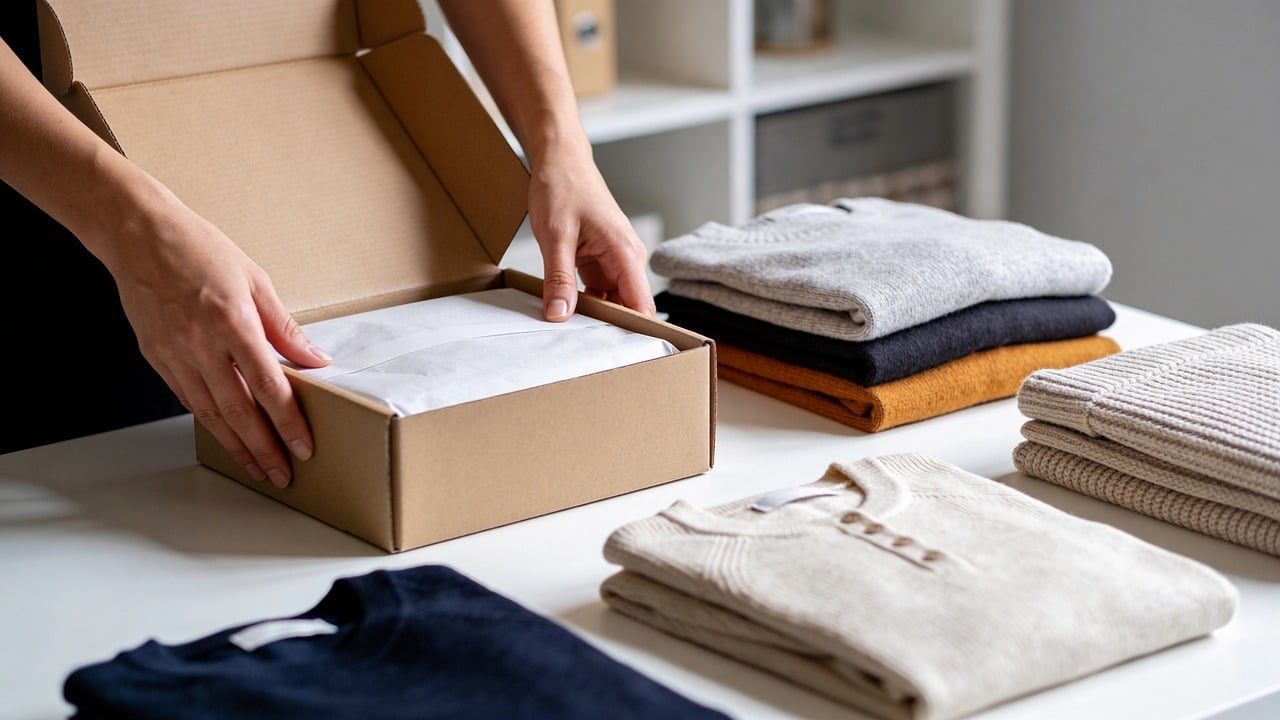
In seeding, the opening of the box often becomes the content. Unboxing videos show the outer box, the packaging and every insert to the creator’s audience. A well-presented box is worth filming; a crushed carton is a reason not to post.
Before shipping, check that a Japanese-language explanation is inside, that overseas labels, customs forms and excess filler will not end up on camera, and that the box is worth opening on video. Film one test box yourself first.
Why a No-Strings Gift Still Needs Clear Expectations
Writing “no obligation” on a card does not remove the sense of obligation. Many creators, in Japan as elsewhere, feel some pressure to respond to a gift, and vague signals make that worse. Saying plainly what you are and are not asking for keeps the relationship healthier. Our guide to communicating with Japanese influencers covers how to build that relationship over time.
Being clear has a regulatory side. Once you tell a creator you hope they will share their thoughts, or include a hashtag or account handle in the box, any post that follows should be treated as your advertising and needs a PR label. There is no middle ground where you signal an expectation but skip the label. So if you express any hope of a post, put the request for a label in the same message: “If you decide to post, please mark it as PR or note that the product was provided by us.”
Planning a Seeding Campaign

From here on, the guide turns to practice. Decide four things before any parcel ships: goal, creators, number of boxes and timeline. Copy the sheet below for each campaign.
| Item | What to decide | Your answer |
|---|---|---|
| Goal | One of awareness, reviews or creator discovery | |
| Target creators | Category, platform, size band, share of audience in Japan, represented or independent | |
| Number of boxes | Posts you hope for divided by the post rate you expect (your own data if you have it) | |
| Timeline | Dates for outreach, acceptance, dispatch, arrival and the posting window you hope for | |
| Success measure | The one number that tells you the goal was met, agreed before launch |
Set the Goal: Awareness, Reviews, or Creator Discovery
The goal changes everything downstream, so pick one. Awareness is about how many posts appear and how far they reach. Reviews are about what the posts say. Creator discovery is about who responded well, because they become your shortlist for paid work.
Write the success measure into the sheet before launch. For awareness: number of posts and combined reach. For reviews: number of usable posts, meaning accurate, on-brand and properly labeled. For discovery: number of creators you want to approach for paid work. Mixed goals produce a report nobody can judge.
Choosing Who to Seed
Choose on fit, not follower count. Look at category match, the quality of past PR posts and the tone of the comments. Then check the audience country breakdown: a Japanese-language account can still have a large share of followers outside Japan, which wastes a box meant to reach Japanese consumers.
Most seeding lists lean toward smaller creators, whose audiences are often more engaged and who are more likely to be independent. Definitions and use cases are in our guide to micro-influencers in Japan. For building the list itself, see our guide on how to discover influencers.
Sizing the List and the Timeline
Work backwards: posts you hope for, divided by the share of recipients you expect to post. The post rate is the hard part. We found no Japan-specific benchmark from a primary source, so measure your own: run a small round, record the rate and size the next round on it.
Plan the timeline in five stages: outreach, acceptance, dispatch, arrival and posting. In Japan, acceptance tends to take longer than brands expect, because a talent agency may check the product and the creator’s schedule first, and customs can slow arrival. Build in buffer, and do not promise that posts will cluster on a set date. That needs paid posts.
Building the Seeding Kit
The kit shapes how the product is understood and how the unboxing looks, and it is where disclosure is often decided by accident.
| Item | Required or optional | What to include | What to leave out |
|---|---|---|---|
| Product | Required | Retail-ready product or a marked sample | Damaged packaging, items not cleared for sale in Japan |
| Japanese-language explanation | Required | What it is, how to use it, key features | Promises of results, medical or efficacy claims |
| Brand card | Required | Who you are, in a few lines | Sales targets, comparisons with competitors |
| Contact details | Required | A named contact, in Japanese if possible | A generic overseas support line only |
| Hashtag or account handle | Optional | If included, a request to mark any post as PR or as a provided product, on the same card | A hashtag with no disclosure request. Including one counts as asking for a post, so a PR label is needed. |
What Goes in the Box
Keep it to the product, a Japanese-language explanation and a short card on who you are. One card reads better on camera than a stack of leaflets. Many brands add a handwritten note; we cannot say it raises posting, but it rarely hurts.
If you add anything that points toward a post, such as a hashtag, your handle or “we would love to hear what you think”, put the PR label request on the same card.
The Japanese-Language Insert: What to Write and What to Leave Out
Write what the product is, how to use it, what makes it different and who to contact. Leave out promised results, pressure to post and phrases you want repeated. For cosmetics, quasi-drugs, health foods and supplements, an insert’s wording can itself fall under Japan’s rules on advertising claims, so have it checked before printing.
If you are listing messages to cover, you are writing a brief, and briefs belong in paid work. Our guide to writing an influencer brief covers that format.
When a Gifted Post Needs a PR Label
Since 1 October 2023, stealth marketing has been a violation of Japan’s Act against Unjustifiable Premiums and Misleading Representations. Under the Consumer Affairs Agency’s guidelines, a creator’s post counts as the brand’s advertising when the brand is involved in deciding its content, judged from what was exchanged (the guidelines name emails, verbal requests and cover letters), what was given and why. If you ask for a post or signal that you hope for one, including by packing a hashtag or account handle, request a “PR” label or a note that the product was provided. Disclosure is the advertiser’s responsibility, not the creator’s. Our guide to Japan’s stealth marketing regulation covers what a compliant label looks like.
Claims about what cosmetics or supplements do are a separate matter under other laws, and some of those rules apply to anyone, including the creator who posts. We cover this in “Regulated Categories: Cosmetics, Food, and Supplements”.
Shipping Products to Creators in Japan
This is where cross-border seeding most often goes wrong. Below is what to check and who to ask, not an interpretation of customs or product law.
| Shipping route | Customs and duties | Delivery predictability | Handling of addresses | Best suited to |
|---|---|---|---|---|
| Individual parcels from your home country | Each parcel clears separately; the recipient may pay duties and tax unless you ship on sender-pays terms | Lowest | You need each address, which many will not share | A few independent creators, unrestricted products |
| Bulk import, then dispatch from a warehouse or partner in Japan | One clearance through an importer; cosmetics need a licensed importer, food an import notification | High | Stay with the partner | Larger lists, regulated categories, repeat rounds |
| Through an agency in Japan | As bulk import, coordinated by the agency | High, timed to each acceptance | You never hold addresses | Represented creators, no team in Japan |
hotice is a cross-border influencer marketing agency helping overseas brands enter Japan. We handle casting, negotiation, Japanese-language contracts, and ad-disclosure compliance.
Tell us your category, budget range, and timing. We will take it from there.Shipping From Overseas: Customs, Duties, and Who Pays
When you mail a gift from overseas, Japan Customs may assess duties and consumption tax on it. In that case, the customs notice goes to the addressee, and the addressee cannot receive the parcel without paying the tax shown on it. A gift that arrives with a bill is a poor first impression, so ship on terms where you cover duties and taxes, or bring stock into Japan and ship domestically. Rates depend on the product and its value; check Japan Customs’ guidance or ask your carrier.
Treat creators’ addresses as personal information. Represented creators often receive parcels through their talent agency, and an agency working for you can hold addresses so they never sit in your spreadsheets.
Regulated Categories: Cosmetics, Food, and Supplements
Cosmetics, quasi-drugs, food and supplements are regulated on import and labeling, mainly under the Pharmaceuticals and Medical Devices Act and the Food Sanitation Act. Confirm your route with a regulatory specialist or import agent before you ship.
Raise two points early. First, according to the Ministry of Health, Labour and Welfare, importing cosmetics and other regulated products for business requires approvals and licenses, and passing personally imported products on to others may breach the law. Promotional samples for creators are therefore unlikely to count as personal imports; the realistic route is usually a licensed importer, such as your distributor or an import agent. Second, food and supplements brought in for sale or business use must be notified at a quarantine station under the Food Sanitation Act.
Separately, Article 66 of the Pharmaceuticals and Medical Devices Act prohibits false or exaggerated claims about the efficacy of cosmetics and other covered products, and it applies to “any person”. A creator who says your cream cures a skin condition can be a party to that breach alongside your brand.
Rather not handle agency outreach and shipping yourself? hotice can contact talent agencies, confirm each creator accepts the product and dispatch within Japan, so recipients never face customs charges. Book a free consultation.
Following Up and Turning Seeding Into Partnerships

What happens after delivery decides whether seeding becomes a creator program or a one-off.
Following Up Without Pressuring
Send one message to confirm arrival and say thank you. Do not chase for a post. If a creator posts, thank them again, and ask before reposting it on your brand’s account: that is a use of their work and needs permission.
Templates for arrival checks and thank-you messages are in our guide to influencer outreach in Japan.
From Gift to Paid Collaboration or Ambassador Program
Creators who post about a gift of their own accord are your strongest candidates for paid work and long-term roles. They have shown they like the product and that their audience responds. Open by thanking them for the post, then make the offer. Our guide to brand ambassadors in Japan covers longer partnerships.
If you want to use a gifted post in paid ads, or run ads through the creator’s account, that needs separate permission and a contract. See our guides to influencer whitelisting in Japan and influencer contracts in Japan.
Measuring a Seeding Campaign

Measure against the goal in your planning sheet, with few metrics.
| Metric | What it tells you | How to get it |
|---|---|---|
| Post rate | How well product and list matched | Posts divided by boxes delivered |
| Reach and impressions | How far the posts traveled | Public views, or shared creator insights |
| Saves and comment content | Whether viewers wanted the product | Comments; saves via creator insights |
| Reuse potential as UGC | How many posts you could reuse with permission | Your review, then a permission request |
| Partnership candidates | Who to approach for paid work | Shortlist from posts and audience fit |
On reusing creator posts, see our guide to UGC marketing in Japan.
Post Rate, Reach, and Content Quality
Use post rate as the baseline, then look past reach to usable posts: how many explained the product accurately and fit your brand.
Check each post for accuracy, the absence of efficacy claims and a PR label where needed. If something needs fixing, ask politely and explain why.
Tracking Sales Without Over-Engineering
Unique links and codes are the simplest way to track sales. But asking a creator to include one is asking for a post, so a PR label is needed (see “When a Gifted Post Needs a PR Label”).
For awareness or discovery, you do not need sales tracking. If sales are the goal, switch to a paid collaboration with a tracked code. Our guide to Japanese influencer analytics explains which data you can get from each platform.
Running Seeding In-House or With an Agency

Most of the work in seeding is outreach and logistics. What you can do yourself depends on your team and list.
What You Can Run Yourself
If someone on your team can write and reply in Japanese, and your list is a small group of independent creators, you can run seeding in-house. Many brands start this way to learn their own post rate.
The minimum setup is three things: someone who handles all creator contact in Japanese, a way to ship from within Japan so recipients face no customs charges, and a routine for checking posts and labels after they go live.
What an Agency Adds in Japan
An agency adds three things that are hard to build quickly: relationships with talent agencies, domestic stock and dispatch that keeps addresses out of your hands, and routine checks of posts and labels. At hotice, this covers building the list, contacting talent agencies, shipping within Japan and checking each post and its label.
The cost structure is an agency fee plus your product and shipping costs. For how each line is built and what moves a quote, see our guide to influencer marketing costs in Japan.
FAQ
What is product seeding?
Product seeding is giving your product to selected creators without requiring them to post about it, in the hope of voluntary posts and future partnerships. The difference from a paid post is the obligation: a paid creator agrees to specific posts on specific dates, while a seeded creator decides whether to post at all. Results depend on the product and how carefully you chose recipients. The comparison table in “What Product Seeding Is” sets out the three main models side by side.
Is influencer seeding the same as influencer gifting?
In practice, yes; the terms are used interchangeably. In this guide, seeding means a gift that carries no obligation to post, as distinct from a paid post with agreed deliverables. Whichever name you use, the disclosure rule is the same in Japan: if you ask for a post or signal that you hope for one, treat any resulting post as your advertising and ask for a PR label. “When a Gifted Post Needs a PR Label” explains where the line falls.
Do Japanese influencers post about gifted products?
Some do and some do not, because there is no obligation. The main levers are the quality of the product and how well it matches the creator’s content and audience. We found no Japan-specific post rate from a primary source, so measure your own in a first round. With represented creators, asking the talent agency beforehand whether the creator accepts product cuts down on parcels that arrive and are never used. See “Talent Agencies Often Screen Gifts Before Creators See Them”.
Does a gifted post need a PR label in Japan?
If you asked for the post or signaled that you hoped for one, treat it as needing one, and that includes packing a hashtag or account handle in the box. Under the Consumer Affairs Agency’s guidelines, a post falls outside the rules only when, judged from the whole exchange, its content reflects the creator’s own free decision, and that is hard to show once you have asked or hinted. Most real gifting involves some request or expectation. The safe default is to ask for a “PR” label or a note that the product was provided. Disclosure is the advertiser’s responsibility. Our guide to Japan’s stealth marketing regulation explains the details.
Can I ship products directly to Japanese influencers from overseas?
You can, but the recipient may be asked to pay duties and consumption tax before the parcel is handed over. To avoid that, ship on terms where you pay those charges, or bring stock into Japan and ship domestically. Cosmetics, quasi-drugs, food and supplements need extra care, because promotional samples are unlikely to count as personal imports and may need to come in through a licensed importer or with an import notification. Confirm with a specialist; see “Shipping Products to Creators in Japan”.
How many influencers should I send products to?
Work backwards from the number of posts you hope for, divided by the share of recipients you expect to post. The difficulty is the post rate, which varies by category, product and list, and for which we found no Japan-specific benchmark from a primary source. Start with a small round, measure your own rate and size the next round on it. “Sizing the List and the Timeline” covers the numbers and the five-stage timeline.
Should I use an agency for influencer seeding in Japan?
If your list includes creators represented by talent agencies, an agency that already works with those companies will usually get answers faster. An agency can also handle domestic shipping, keep creators’ addresses off your systems and check each post and its PR label. If your list is a few independent creators and you have Japanese-speaking staff, you can run it yourself. “Running Seeding In-House or With an Agency” sets out which parts each option covers.
Methodology and Data Sources
Sources below were checked on 21 October 2026. Customs and product rules are points to confirm, not legal advice. We found no primary source for a Japan-specific seeding post rate.
- Consumer Affairs Agency, stealth marketing rules: https://www.caa.go.jp/policies/policy/representation/fair_labeling/stealth_marketing
- Consumer Affairs Agency, guidelines on representations hard to identify as a business’s own (March 2023): https://www.caa.go.jp/policies/policy/representation/fair_labeling/guideline/assets/representation_cms216_230328_03.pdf
- Japan Customs, international mail tax notice (Customs Answer 6103): https://www.customs.go.jp/tetsuzuki/c-answer/kokusaiyubin/6103_jr.htm
- Ministry of Health, Labour and Welfare, personal import of medicines and cosmetics: https://www.mhlw.go.jp/stf/seisakunitsuite/bunya/kenkou_iryou/iyakuhin/kojinyunyu/index.html
- Ministry of Health, Labour and Welfare, food import procedures: https://www.mhlw.go.jp/stf/seisakunitsuite/bunya/0000144562.html
- Pharmaceuticals and Medical Devices Act, Article 66 (e-Gov): https://laws.e-gov.go.jp/law/335AC0000000145
- Beauty Independent, By Rosie Jane lab sample campaign (5 March 2024): https://www.beautyindependent.com/by-rosie-jane-top-secret-lab-sample-campaign-new-fragrance-missy/
- Glossy, Rhode’s first cleanser (17 January 2024): https://www.glossy.co/pop/hailey-bieber-is-launching-and-marketing-rhodes-first-cleanser/
Ready to seed your product in Japan? hotice plans and runs influencer campaigns for overseas brands entering Japan, with a multilingual team covering creator selection, talent agency outreach, domestic dispatch, disclosure checks and reporting.
When seeding turns into paid campaigns, our comparison of influencer marketing agencies in Japan shows who operates in the market and how they differ.
Supervised by the hotice Editorial Team, specialists in helping global brands enter the Japanese and Asian markets through influencer marketing. Last updated: October 2026.
Pricing, past campaigns, and how contracts and ad-disclosure compliance are handled from start to finish. Ask us anything before you commit to a budget.
Overseas brands welcome. We work in English, Japanese, Chinese, and Korean.