Japan Localization: What to Change Beyond Translation
- 1. What Does Japan Localization Actually Cover?
- 1-1. Translation, Localization, and Transcreation
- 1-2. What Japanese Consumers Say About Foreign Brands
- 2. How Should You Adapt Your Message for Japanese Buyers?
- 2-1. Find the Local Reason to Buy
- 2-2. Replace Broad Promises With Specifics
- 2-3. Decide How Foreign Your Brand Should Feel
- 3. How Do You Write Japanese Copy That Sounds Native?
- 3-1. Choose a Register First
- 3-2. Rewrite Headlines Instead of Translating Them
- 3-3. Build a Glossary and a Review Loop
- 4. How Should a Japanese Landing Page Be Different?
- 4-1. Design for the Smartphone First
- 4-2. Set Japanese Type Properly
- 4-3. Answer Questions on the Page
- 5. What Product Information Do Japanese Shoppers Need?
- 5-1. Show Tax-Inclusive Prices
- 5-2. Publish Complete Seller and Order Terms
- 5-3. Localize Specifications, Instructions, and Support
- 6. Which Marketing Claims Must Change Under Japanese Law?
- 6-1. Keep Proof and Conditions Next to Performance Claims
- 6-2. Treat No.1 and Satisfaction Badges With Care
- 6-3. Check Discounts, Comparisons, and Origin Statements
- 6-4. Follow Category Rules for Cosmetics and Health Products
- 7. How Do You Localize Creator Content Without Losing Its Voice?
- 7-1. Brief the Message, Not the Script
- 7-2. Build Disclosure Into the Workflow
- 8. What Is the Right Order for a Japan Localization Project?
- 8-1. What to Localize First When Resources Are Tight
- 9. FAQ
- 9-1. What is Japan localization?
- 9-2. Is translation enough to sell in Japan?
- 9-3. What should a Japanese landing page include?
- 9-4. Do prices in Japan have to include consumption tax?
- 9-5. Can I use “No.1” claims in Japanese advertising?
- 9-6. Should Japanese creators use our translated copy?
- 9-7. What affects the cost of Japan localization?
- 10. Methodology and Data Sources
Pricing, past campaigns, and how contracts and ad-disclosure compliance are handled from start to finish. Ask us anything before you commit to a budget.
Overseas brands welcome. We work in English, Japanese, Chinese, and Korean.TL;DR: Japan localization means adapting your message, landing pages, product information and claims for Japanese buyers, not just translating them. Rebuild the reason to buy, design for smartphones, show tax-inclusive prices and full seller details, and check every claim against Japanese advertising law before launch. Creator content needs the same care.
A translated website can be accurate and still fail in Japan. The sentences are correct, yet the headline makes a promise nobody can verify, the price leaves out tax, the seller is hard to identify, and the page was laid out for a desktop reader in another country.
This guide covers Japan localization from a marketing point of view: what to change in your positioning, copy, landing pages, product information and legal claims, and how the same thinking carries into influencer marketing in Japan. Legal and tax points are general information, so confirm them with qualified advisers in Japan.
What Does Japan Localization Actually Cover?

Japan localization covers everything a Japanese buyer reads, sees or relies on before and after a purchase. Language is one part of it. The message, page design, product details, legal wording and creator content all need their own decisions.
| Layer | What translation leaves unchanged | What localization changes |
|---|---|---|
| Message | The same reason to buy as your home market | A reason to buy grounded in Japanese occasions and concerns |
| Copy | Sentence structure and headlines from the source | Tone, wording and headlines written for the reader |
| Landing page | Layout, type settings and form fields | Smartphone reading flow, Japanese typography and local forms |
| Product information | Foreign price formats and missing terms | Tax-inclusive prices, seller details, returns and local specifications |
| Claims | Superlatives and comparisons written under other rules | Wording and evidence reviewed against Japanese law |
| Creator content | Brand lines pasted into a brief | Facts and limits that creators express in their own voice |
Translation, Localization, and Transcreation
Translation moves meaning from one language to another. Localization adapts the whole experience to a market, including formats, information and legal requirements. Transcreation sits between the two for persuasive copy: a writer keeps the intent of a line and creates new wording that works in Japanese.
Most brands need all three: close translation for manuals, localization for checkout and policy pages, and transcreation for headlines and advertising.
What Japanese Consumers Say About Foreign Brands
Japanese consumers often point to poor fit and unclear information as their concerns about foreign products. In a hotice online survey of 533 respondents published on 21 November 2025, these two concerns ranked first and second for products from four English-speaking countries.
| Products from | “Not optimized for the Japanese market” | “Information and customer support are unclear” |
|---|---|---|
| United States | 45.6% | 33.8% |
| United Kingdom | 39.4% | 28.3% |
| Canada | 31.9% | 28.9% |
| Australia | 31.5% | 25.7% |
The figures reflect general impressions of each country’s products. The pattern differed elsewhere: quality concerns ranked first for China (68.1%), India (49.7%) and South Korea (38.8%), so know which doubt you are answering before deciding what to localize.
How Should You Adapt Your Message for Japanese Buyers?

Start with the reason to buy, then write the copy. No translation can repair a message that answers a question Japanese buyers are not asking.
Find the Local Reason to Buy
KitKat is a well-known example. FoodNavigator reported on 19 May 2026 that Japan is the one market where “Have a break, have a KitKat” is not the marketing slogan. Nestlé Japan confectionery executive Olivier Jakubowicz said sales spiked each January around a major university entrance exam and that the name sounds like kitto katsu, meaning “surely win”. Nestlé responded by positioning KitKat as a way to express encouragement.
Few brands will find a coincidence that neat, but the method transfers: look for the moments, worries and gift occasions attached to your category. Our guide to Japanese marketing culture explains how consumers research and decide, and Japan market research covers how to test demand before you commit to a message.
Replace Broad Promises With Specifics
Broad brand language rarely gives a careful buyer enough to act on. “Premium quality” says little until you add the material, the production process, the test condition or the type of customer the product suits.
List the doubts a first-time buyer might have: who makes this, does it suit me, how do I use it, and what happens if something goes wrong? Each answer should appear in the copy, and specific statements are also simpler to substantiate.
Decide How Foreign Your Brand Should Feel
A foreign origin can be an advantage, so localization should not erase it by default. In a separate hotice survey of 524 people in Japan, published on 24 October 2025, 50.8% associated British products with outstanding design, while 42.4% said the same of American products.
Keep the parts of your identity that carry value, such as heritage or design language, and adapt the parts that create friction. Our overview of Japanese advertising shows how creative conventions differ from those in Western markets.
How Do You Write Japanese Copy That Sounds Native?
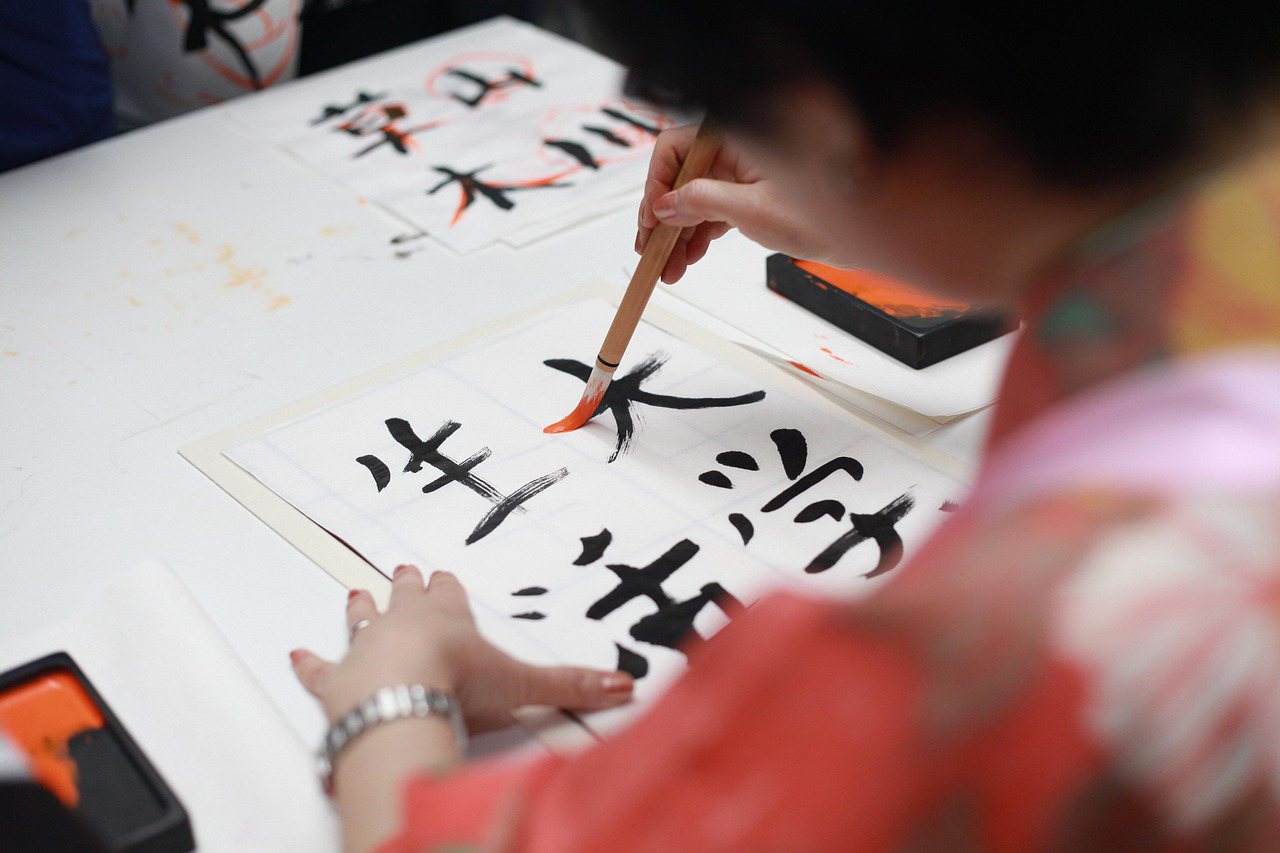
Native-sounding copy comes from setting the voice before translation begins and letting a Japanese marketer rewrite freely.
Choose a Register First
Japanese makes politeness part of the grammar, so one English brand voice can become several Japanese ones. The 2007 guidelines on honorific language issued by Japan’s Council for Cultural Affairs divide keigo into five types: sonkeigo (respectful), kenjogo I and II (humble forms), teineigo (polite) and bikago (refined wording).
Write a short voice guide that sets the register for each channel. Support and B2B pages generally call for formal language, product pages often use the polite desu/masu style, and social posts can be more relaxed. Mixing registers within a page can make copy feel machine-made.
Rewrite Headlines Instead of Translating Them
Wordplay and cultural references seldom survive translation, so brief headlines as new writing. Ask for several options, each with a back-translation so non-Japanese stakeholders can judge the intent.
Test katakana loanwords and decorative English with people who match your buyer, since some terms feel current to one audience and obscure to another. Research the search terms Japanese users actually type rather than translating your English keyword list.
Build a Glossary and a Review Loop
A glossary keeps product names, feature terms and banned expressions consistent across agencies, writers and machine translation tools.
Separate the review stages: a native marketer judges persuasion and tone, a subject specialist checks accuracy, and a legal reviewer checks regulated claims.
How Should a Japanese Landing Page Be Different?

A Japanese landing page should be designed for smartphone reading, set in proper Japanese typography and able to answer a buyer’s questions without sending them elsewhere.
| Page element | Common global default | Japan version |
|---|---|---|
| Hero | One bold promise | A specific benefit with the condition or proof close by |
| Price | Price before tax, added at checkout | Tax-inclusive total, with shipping made clear |
| Proof | Logos and short quotes | Sourced data, Japanese reviews and usage detail |
| Company details | Footer link to a legal page | Clear seller name, address, phone and support route |
| Form | First name, last name, one address line | Family name first, phonetic name field, postal code first |
Design for the Smartphone First
Smartphones are the main way people in Japan go online. Japan’s Ministry of Internal Affairs and Communications reported in its 2025 Communications Usage Trend Survey, published on 29 May 2026, that 74.3% of individuals used a smartphone to access the internet, compared with 45.6% for a computer.
In a Consumer Affairs Agency web survey of 1,000 respondents on smartphone browsing, published on 16 May 2018, 66.5% said they only pick up the information that catches their eye. Put the main benefit, proof and price where a skimming reader will meet them, and review every page on a real phone before approving it.
Set Japanese Type Properly
Japanese text follows layout rules that English templates do not anticipate. The W3C’s Requirements for Japanese Text Layout explains, for example, that closing brackets, full stops and commas should not be placed at the start of a line.
In practice, choose a Japanese web font deliberately, check how headlines break on narrow screens, and redesign any text baked into images.
Answer Questions on the Page
Delivery timing, returns, sizing, compatibility and support hours belong on the page, with the seller clearly identified. Forms should follow local conventions, including family name first, a phonetic name field and an address that starts from the postal code. Confirm which payment methods your audience expects.
If you run several language versions, mark them with hreflang. Google’s documentation says localized versions are only considered duplicates if the main content remains untranslated.
What Product Information Do Japanese Shoppers Need?

Japanese shoppers need the full payable price, clear seller and order terms, and product details presented in local formats. Some of these items are legal requirements, so check the official pages cited here before launch.
Show Tax-Inclusive Prices
Taxable businesses that show prices to consumers in advance must display the total including consumption tax. The Ministry of Finance states that tax-exclusive formats stopped being accepted from 1 April 2021, and the requirement applies across price tags, flyers, catalogs and advertising. A tax-exclusive figure may appear alongside the total as long as the tax-inclusive price is clear.
Food and beverage sellers should watch one pending change. A government bill would cut consumption tax on food and beverages to 1% from 1 April 2027 to 31 March 2029. It passed the House of Representatives on 6 November 2026 and was still before the House of Councillors on 18 November 2026. National Tax Agency guidance, written on the assumption that the bill is enacted, describes a temporary price display rule for the two months on either side of each rate change: a business that genuinely cannot update its prices in time may show the total at either 8% or 1%, provided it takes steps to stop customers mistaking the amount payable. Check the agency’s dedicated site for the final rules.
Publish Complete Seller and Order Terms
Online sales to consumers in Japan generally fall under the Act on Specified Commercial Transactions, which sets out what mail-order advertising must show. The Consumer Affairs Agency lists items including price and shipping, payment timing and method, delivery timing, cancellation and return terms, and the seller’s name, address and phone number. A corporation advertising online must also name its representative or the person responsible for mail-order operations, and a foreign corporation with an office in Japan must show that office’s location and phone number. Some items may be left out of an ad if the seller says it will supply them without delay on request, but return terms may not.
Two details deserve attention. The final confirmation screen must restate key terms such as quantity, price, payment, delivery and cancellation conditions. And if return terms are not displayed as required, a consumer can generally withdraw within eight days of receiving the goods, paying the return shipping. How the Act applies to a cross-border structure is a question for Japanese counsel.
Localize Specifications, Instructions, and Support
Convert units and sizes into local formats, and rewrite instructions so a first-time user can follow them. Japanese-language support matters too, since unclear information and support was the second most selected concern for American, British, Canadian and Australian products in the survey above.
State support hours in Japan time. Labeling requirements for physical products vary by category, and our guide on how to sell in Japan covers the route to market.
Which Marketing Claims Must Change Under Japanese Law?

Performance, ranking, discount, comparison, origin and efficacy claims are the ones most likely to need rewriting for Japan. The main law is the Act against Unjustifiable Premiums and Misleading Representations, and regulated categories face additional rules. These examples are general and do not replace legal advice.
| Global claim | Why it needs review in Japan | Localization action |
|---|---|---|
| “Clinically proven results” | Performance claims can trigger a request for a reasonable basis | Keep test data ready and state only what it supports |
| “Rated No.1 by customers” | Subjective rankings need a properly designed survey | Check competitors, respondents, method and wording |
| “Was X, now 50% off” | Reference prices must reflect actual selling history | Confirm the same product really sold at that price |
| “Better than Brand A” | Comparisons need proof, accurate citation and a fair method | Remove the comparison unless all three conditions are met |
| “Reverses aging” | Cosmetic advertising is limited to a defined range of efficacy claims | Rewrite within the permitted range with specialist review |
hotice is a cross-border influencer marketing agency helping overseas brands enter Japan. We handle casting, negotiation, Japanese-language contracts, and ad-disclosure compliance.
Tell us your category, budget range, and timing. We will take it from there.Keep Proof and Conditions Next to Performance Claims
The Act prohibits representations that make a product’s quality or trading terms appear significantly better than they are. For performance claims, the Consumer Affairs Agency can require a business to submit materials showing a reasonable basis within a set period. Under Article 7(2), a claim is treated as misleading for the purposes of a corrective order if the business cannot provide them.
Conditions must also be easy to notice. The agency’s 2018 smartphone report warns that exceptions placed far from the headline claim, hidden behind a vaguely labeled accordion or set in small type can create problems. Place them beside the claim and keep them readable.
Treat No.1 and Satisfaction Badges With Care
Ranking badges imported from other markets deserve close scrutiny. The Consumer Affairs Agency’s report of 26 September 2024 says a survey behind a subjective No.1 claim must, at a minimum, select comparison products appropriately, select respondents appropriately, use a fair method and match what the ad states.
The report warns against surveying only your existing customers or employees. It also says a “customer satisfaction No.1” based only on impressions of a website may be a problem, even with an explanatory note. If you cannot trace a badge back to a suitable survey, remove it from the Japanese page.
Check Discounts, Comparisons, and Origin Statements
Promotional formats need their own review. The agency’s guidance on double pricing says a past price used as a reference should be one at which the same product was sold for a considerable recent period, unless its timing and duration are stated accurately. Comparative advertising must be objectively substantiated, cite data accurately and use a fair comparison method.
Origin deserves special attention during localization. Under the notice on misleading country-of-origin representations, labeling on a foreign-made product written wholly or mainly in Japanese can be a misleading representation if consumers cannot easily tell where the product was made. Fully Japanese packaging should therefore make the country of origin clear.
Follow Category Rules for Cosmetics and Health Products
Cosmetics, quasi-drugs and health foods need specialist review before any copy is finalized. Article 66 of the Pharmaceuticals and Medical Devices Act prohibits false or exaggerated advertising by any person. The Ministry of Health, Labour and Welfare’s advertising standards limit cosmetic efficacy claims to a defined list of 56 items, while allowing factual makeup effects and descriptions of how a product feels in use. Our guide to J-beauty marketing looks at the category in more depth.
Health claims for food follow a separate system. Foods with Function Claims require a notification to the Consumer Affairs Agency before sale, and because the government does not review the product, the business is responsible for the scientific basis of its labeling.
How Do You Localize Creator Content Without Losing Its Voice?

Give Japanese creators accurate facts and clear limits, then let them choose the words. Social media is where much of this content will be seen: the 2025 Communications Usage Trend Survey found that social networking, including free calling features, was the most common purpose of internet use in Japan at 82.3%.
Brief the Message, Not the Script
A translated script makes a creator sound like an advertisement. A useful brief states the audience, the one idea to convey, verified product facts, required information and expressions to avoid. Our influencer brief template provides a structure, and our guide to communicating with Japanese influencers covers how to work through feedback.
Review drafts for accuracy and legal risk, and leave phrasing to the creator. Under the advertising standards for cosmetics and similar products, testimonials cannot serve as proof of efficacy, so a sincere comment about results can still need changing.
Build Disclosure Into the Workflow
Since 1 October 2023, advertising that consumers cannot recognize as advertising has violated the Act against Unjustifiable Premiums and Misleading Representations. If you provide a product while requesting or expecting a post, that post will generally count as your own advertising and needs clear disclosure such as a PR label, and responsibility for disclosure rests with the advertiser. The Pharmaceuticals and Medical Devices Act ban on false or exaggerated advertising applies to any person, so creators and agencies can also be held to account. Running the post as a paid ad does not change the law; it adds platform ad review and wider exposure. Our guide to Japan’s stealth marketing regulation explains what counts.
What Is the Right Order for a Japan Localization Project?

Work from evidence to message, then through legal review to a small live test. Reviewing claims after pages are built can force rework, so bring that step forward.
Research
Confirm buyer doubts, search terms and competitors.
Message
Set the reason to buy, voice guide and glossary.
Review
Check claims, prices and seller terms before building.
Test
Launch key pages, measure and refine the copy.
General pattern. Regulated categories usually need more time at the review stage.
What to Localize First When Resources Are Tight
Begin with the assets closest to a purchase: the main landing page, product pages, checkout, policy pages and support replies. Advertising and creator briefs come next, and secondary content can follow once you know which messages work.
Treat the first release as a test: compare headlines and proof points, and read support questions for signs of confusion. Social listening in Japan can show the words customers use on their own.
FAQ
What is Japan localization?
Japan localization is the work of adapting a brand for Japanese buyers across its message, copy, landing pages, product information, legal claims and creator content. Translation changes the language, while localization also changes what you say, how you prove it and how the page works. It usually means rethinking the reason to buy, designing for smartphones and checking claims against Japanese advertising rules.
Is translation enough to sell in Japan?
Usually not. Accurate translation still leaves foreign pricing formats, missing seller details, unsupported claims and headlines written for another market. In a hotice survey of 533 respondents published in November 2025, “not optimized for the Japanese market” was the most selected concern about products from the United States, the United Kingdom, Canada and Australia.
What should a Japanese landing page include?
A Japanese landing page should work well on a smartphone and show the tax-inclusive price, specifications, delivery and return terms, seller details, a clear support route and answers to common questions. Forms should follow Japanese name and address order.
Do prices in Japan have to include consumption tax?
Yes, when a taxable business shows prices to consumers in advance. Japan requires a tax-inclusive total on price displays in any medium, and the Ministry of Finance states that tax-exclusive formats have not been accepted since 1 April 2021. A pending bill would cut the tax on food and beverages from 1 April 2027 to 31 March 2029 and add a temporary display rule around each rate change, so confirm current requirements with a tax adviser.
Can I use “No.1” claims in Japanese advertising?
You can only use them with a reasonable basis. The Consumer Affairs Agency said in its September 2024 report that surveys behind subjective No.1 claims must fairly select competitors and respondents, use a fair method and match what the ad states. A customer satisfaction No.1 based only on impressions of a website may be a problem under the law, and a footnote may not cure it.
Should Japanese creators use our translated copy?
No. Give creators the verified facts, the main message, the claims they must avoid and the disclosure requirement, then let them explain the product in their own words. Review drafts for accuracy and legal risk rather than style, and remember that the advertiser is responsible for making sure sponsored posts are clearly disclosed.
What affects the cost of Japan localization?
Cost depends on the volume of content, how much must be rewritten rather than translated, the number of formats and page templates, and whether regulated claims need specialist review. Packaging changes, Japanese customer support and ongoing updates also add to the scope, so starting with the pages closest to a purchase keeps the first phase small.
Methodology and Data Sources
Regulatory and statistical statements in this guide rest on the primary sources below, and the KitKat example rests on trade press reporting that includes remarks by a named Nestlé Japan executive. All were accessed on 18 November 2026, and government sources are in Japanese. Survey figures come from hotice’s published research. Recommendations on copy, design and workflow are general editorial guidance. Rules change, so confirm current requirements on the official pages and with qualified advisers.
- Consumer Affairs Agency, overview of misleading representations and substantiation: https://www.caa.go.jp/policies/policy/representation/fair_labeling/representation_regulation/
- Consumer Affairs Agency, double pricing guidance: https://www.caa.go.jp/policies/policy/representation/fair_labeling/representation_regulation/double_price
- Consumer Affairs Agency, Q&A on representations, including comparative advertising and country of origin: https://www.caa.go.jp/policies/policy/representation/fair_labeling/faq/representation
- Consumer Affairs Agency, report on No.1 claims, 26 September 2024: https://www.caa.go.jp/policies/policy/representation/fair_labeling/survey/assets/representation_cms216_240926_02.pdf
- Consumer Affairs Agency, smartphone disclaimer report summary: https://www.caa.go.jp/policies/policy/representation/fair_labeling/pdf/fair_labeling_180516_0003.pdf
- Consumer Affairs Agency, announcement of that report, 16 May 2018: https://www.caa.go.jp/policies/policy/representation/fair_labeling/pdf/fair_labeling_180516_0001.pdf
- Consumer Affairs Agency, stealth marketing rules: https://www.caa.go.jp/policies/policy/representation/fair_labeling/stealth_marketing/
- Consumer Affairs Agency, operational standards for the stealth marketing rules: https://www.caa.go.jp/policies/policy/representation/fair_labeling/guideline/assets/representation_cms216_230328_03.pdf
- Consumer Affairs Agency, Foods with Function Claims: https://www.caa.go.jp/policies/policy/food_labeling/foods_with_function_claims/
- Consumer Affairs Agency, Act on Specified Commercial Transactions guide to mail-order sales: https://www.no-trouble.caa.go.jp/what/mailorder/
- Ministry of Finance, tax-inclusive price display leaflet: https://www.mof.go.jp/tax_policy/summary/consumption/210107leaflet_sougaku.pdf
- National Tax Agency, Tax Answer No. 6902 on total price display: https://www.nta.go.jp/taxes/shiraberu/taxanswer/shohi/6902.htm
- National Tax Agency and Ministry of Finance, dedicated site on the proposed food and beverage rate reduction: https://www.nta.go.jp/taxes/shiraberu/zeimokubetsu/shohi/keigenzeiritsu/zeiritsuhikisage.htm
- National Tax Agency, Q&A on the proposed reduction, including the price display rule, September 2026: https://www.nta.go.jp/taxes/shiraberu/zeimokubetsu/shohi/keigenzeiritsu/pdf/0026008-127_qa.pdf
- House of Representatives, progress record of Cabinet Bill No. 1, 222nd Diet session: https://www.shugiin.go.jp/internet/itdb_gian.nsf/html/gian/keika/1DE342E.htm
- Ministry of Health, Labour and Welfare, advertising regulation overview: https://www.mhlw.go.jp/stf/seisakunitsuite/bunya/kenkou_iryou/iyakuhin/koukokukisei/index.html
- Ministry of Health, Labour and Welfare, explanation of proper advertising standards, 29 September 2017: https://www.mhlw.go.jp/file/06-Seisakujouhou-11120000-Iyakushokuhinkyoku/0000179263.pdf
- Ministry of Internal Affairs and Communications, 2025 Communications Usage Trend Survey, 29 May 2026: https://www.soumu.go.jp/main_content/001074767.pdf
- Council for Cultural Affairs, guidelines on honorific language, 2 February 2007: https://www.bunka.go.jp/seisaku/bunkashingikai/kokugo/hokoku/pdf/keigo_tosin.pdf
- W3C, Requirements for Japanese Text Layout: https://www.w3.org/TR/jlreq/
- Google Search Central, localized versions of pages: https://developers.google.com/search/docs/specialty/international/localized-versions
- FoodNavigator, report on KitKat in Japan, 19 May 2026: https://www.foodnavigator.com/Article/2026/05/19/surely-win-nestle-kitkats-secret-to-chocolate-success-in-japan/
- hotice, survey on concerns about foreign products, 21 November 2025: https://hoticeglobal.com/blog/trends/japanese-negative-perception-foreign-products-survey/
- hotice, survey on impressions of foreign products, 24 October 2025: https://hoticeglobal.com/blog/trends/japanese-positive-perception-foreign-products-survey/
If creators will be part of your launch, our comparison of influencer marketing agencies in Japan sets out what to ask before you choose a partner.
Supervised by the hotice Editorial Team, specialists in helping global brands enter the Japanese and Asian markets through influencer marketing. Last updated: November 2026.
Pricing, past campaigns, and how contracts and ad-disclosure compliance are handled from start to finish. Ask us anything before you commit to a budget.
Overseas brands welcome. We work in English, Japanese, Chinese, and Korean.