2026 Update: The Landscape and Strategy of TikTok Influencer Marketing in Japan
- 1. 2026 Latest Survey: TikTok Usage Report in Japan
- 1-1. One in Two Japanese People Use It Daily
- 1-2. 70% Engage in “Gap Consumption” of Less Than 1 Hour
- 1-3. Contact Peaks Before Bed and During Breaks
- 1-4. Purposes Diversify as a Search Tool
- 1-5. Trusting Influencers Over Official Accounts
- 2. 2026 Latest Survey: TikTok Purchasing Behavior of Japanese Individuals
- 2-1. Over 40% of Users Purchase Once a Month or More
- 2-2. Re-searching via Search Engines is Most Common
- 2-3. Familiar Food is the Center of Purchase Categories
- 2-4. Summary Videos Under One Minute Are the Deciding Factor
- 2-5. Low Unit Prices Under 3,000 Yen Are Mainstream
- 3. Market Trends of TikTok in Japan in 2026
To present the current standing and future of TikTok influencer marketing in Japan for 2026, hotice has conducted an extensive, multi-faceted market analysis. In this article, we will release the results of a large-scale independent survey of TikTok users carried out to reach the core of the matter, and thoroughly explain future trends from a professional perspective.
Beyond mere data aggregation, TikTok now boasts 42 million monthly users. Based on the real purchasing psychology of Japanese people obtained from our research, hotice analyzes and proposes the optimal strategic solutions to adopt on TikTok in 2026.
2026 Latest Survey: TikTok Usage Report in Japan
hotice conducted a survey regarding the current status of TikTok usage as of 2026, targeting 528 individuals residing within Japan. Based on data, we will explain the actual state of how Japanese people utilize the platform, covering everything from daily usage frequency and specific viewing times to the timing of opening the app, purposes of use, and following trends.
One in Two Japanese People Use It Daily
When investigating the extent to which TikTok is used on a daily basis in 2026, 279 people, representing 52.84% of users in Japan, responded that they use it almost every day. When combined with the 7.95% who use it four to five days a week and the 7.58% who use it two to three days a week, the majority of users open the app as a daily routine.
In contrast, the segment that does not use it at all remains at only 18.37%, suggesting that the traditional image of the platform as a medium solely for the youth was completely dispelled by 2025. By age group, the enthusiasm of those in their 20s is particularly overwhelming, with a high percentage of 71.00% using it every day. The 10s segment also maintains a high level at 65.45%, making TikTok the most frequently accessed infrastructure in the Japan of 2026.
Looking closer, from the 30s onward, variations in usage frequency begin to emerge as age increases. Daily usage for those in their 30s is 45.10%, while the non-user segment increases to 20.59%, clearly showing a polarization based on lifestyle. By gender, daily usage for women is 51.01% and 53.94% for men. While men are slightly higher in frequency, the non-user segment is also larger among men, indicating a structure with significant individual differences.
70% Engage in “Gap Consumption” of Less Than 1 Hour
Regarding viewing time on days when TikTok is used, a style of consuming content in small increments during gaps in daily life, rather than long-term commitment, has become established. In 2026, the largest volume zone is 10 minutes or more but less than 30 minutes, at 30.86%.
When adding the 17.87% for less than 10 minutes and the 23.67% for 30 minutes or more but less than 60 minutes, more than 70% of total users keep their viewing within 1 hour, which also serves as evidence that users are selecting videos with high levels of concentration. By generation, approximately 60% of those in their 10s secure viewing times of 30 minutes or more, whereas for those in their 30s and older, short-duration viewing of less than 30 minutes becomes predominant.
Differences by gender are also prominent; 45.45% of women have viewing times of 30 minutes or more, showing a tendency to enjoy content thoroughly. In contrast, 41.21% of men spend less than 30 minutes, suggesting an efficiency-oriented posture of quickly consuming only the necessary information. In marketing in the Japan of 2026, high-impact creative optimized for these short durations is the key to achieving deep engagement.
Contact Peaks Before Bed and During Breaks
Analyzing the contact points in the daily lifelines of 2026, it is clear that TikTok is skillfully incorporated into the Japanese lifestyle as an emotional switch. Usage is highest before bed at 43.39%, followed by lunch breaks or daytime break periods at 39.21%, and from after dinner to before or after bathing at 31.09%.
These figures confirm that Japanese people seek TikTok at the moments they switch from “on” to “off” mode. Furthermore, figures such as 25.06% for the period from waking up until starting morning activities and 23.67% during commutes indicate that the habit of opening the app unconsciously has become established. This flexibility of being opened at every break in action, without being tied to specific times, plays a role in filling the psychological gaps of busy Japanese people. Because communication through influencers delivers information at the moments these users are relaxed, it enables a natural marketing approach with reduced aversion to advertising. This trend, continuing from 2025, has become even more pronounced in 2026.
Purposes Diversify as a Search Tool
The purpose of use is largest for killing time or filling gap time at 56.84%, but in 2026, practical utilization has expanded beyond mere entertainment consumption. While hobbies/relaxation follow at 46.87% and trend checking at 34.11%, the segment aiming for searching for or considering products and services has reached 21.11%.
The difference in trends by gender is particularly interesting; while women seek pure enjoyment, men show a higher percentage of utilization for utilitarian purposes, such as product searches and work-related information gathering. Additionally, 21.58% use it to check on talents or influencers, establishing a style of obtaining information through specific individuals. The behavior of confirming actual usage feel and real reviews through video has become common, and more cases are emerging where the reliability of information via video becomes the deciding factor for purchase, more so than the text-based search engines used before 2025. This represents a major shift in consumer behavior that brands cannot ignore in the Japan of 2026.
Trusting Influencers Over Official Accounts
Looking at the trends of follow targets, the reality is seen that Japanese users place more weight on individual words than on organizational words. While celebrities/talents at 40.60% and influencers at 36.89% gathered overwhelming support, the proportion following official corporate or brand accounts remains at 18.26%.
These figures clearly indicate the difficulty for companies to directly deliver brand messages and the necessity of using the filter of an influencer. Younger age groups emphasize following individuals, with 52.08% of those in their 10s following talents; however, a characteristic feature as age increases is the growth of the segment that does not have specific follows and mainly views content via recommendations. By gender, while women tend strongly to follow individuals continuously, men also widely follow corporate official accounts and news-related content. To succeed in influencer marketing in the Japanese market of 2026, it is essential to correctly grasp the location of such user trust and implement strategies that utilize influencers.
2026 Latest Survey: TikTok Purchasing Behavior of Japanese Individuals
hotice conducted a large-scale survey targeting 631 TikTok users in Japan regarding purchasing behavior triggered by video viewing. Between 2025 and 2026, TikTok has transcended the framework of a mere SNS and established itself for many Japanese people as a “shopping window” where they encounter new products and perform actual payments.
Over 40% of Users Purchase Once a Month or More
In the 2026 survey, the most frequent pace for purchasing products triggered by TikTok was “about two to three times a month” at 16.01% (101 people). This was followed by “about once a month” at 15.06% (95 people) and “once a week or more” at 14.10% (89 people); when combined, the segment taking some form of purchasing action at least once a month exceeds 45% of the total.
By age group, the action power of those in their 20s is particularly notable, with the percentage of those purchasing once a week or more reaching 27.83% (32 people). Compared to the period before 2025, the tendency for the younger generation to immediately incorporate TikTok information into their daily lives has grown even stronger. Additionally, among those in their 40s, the segment that has researched details even if they have no purchase experience was the highest across all generations at 17.95% (21 people), showing that the platform is utilized as a starting point for information gathering even among middle-aged users.
By gender, the segment purchasing at a high frequency of once a week or more was slightly higher for men at 15.03% (52 people) compared to 12.98% (37 people) for women. Conversely, the percentage of those who have not purchased but have experienced researching details was high for women at 15.44% (44 people), reflecting a cautious stance among female users who conduct repeated research after gaining interest on TikTok.
Re-searching via Search Engines is Most Common
The most common action taken by Japanese people who find a product of interest on TikTok was re-searching on search engines such as Google, at 44.75% (179 people). This was followed by confirming prices and specs on official websites or Amazon at 39.50% (158 people), indicating that the general style is not to conclude within the app’s information alone, but to buy after gaining conviction from external data.
In the survey by age group, the segment of Japanese people in their 20s who make immediate decisions to purchase on the spot was prominently high across all generations at 29.89% (26 people). Furthermore, for those in their 30s and 40s, external background checks have become normalized, with 54.67% (41 people) of those in their 40s performing re-searches on search engines, showing that the cautious consumption style continues in 2026.
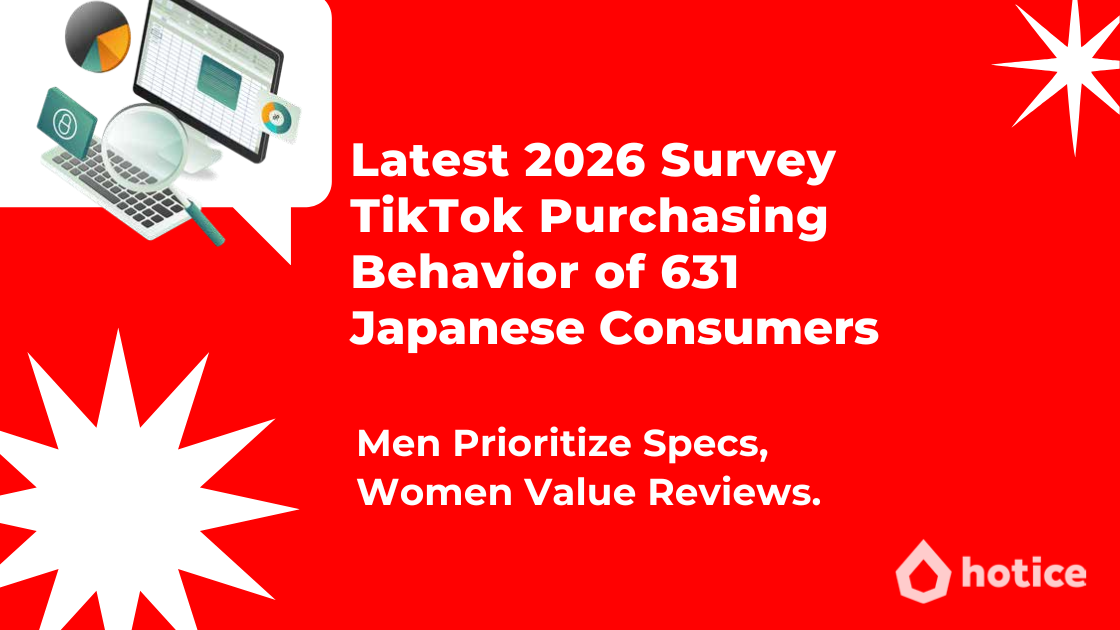
By gender, men tend to emphasize re-searching on search engines (46.19%) and confirming on official websites (41.70%), logically verifying the validity of prices. In contrast, for women, the rate of saving posts was high at 37.29% (66 people), and review searches within SNS were also frequent at 29.94% (53 people), revealing a tendency to use the real-life experiences of others as a basis for judgment.
Familiar Food is the Center of Purchase Categories
When investigating which categories are actually being purchased, “food, beverages, gourmet mail-order, and gifts” was the most common at 33.00% (132 people). This was followed by “beauty, cosmetics, and skincare” at 29.75% (119 people), and “household goods and interior decor” at 29.00% (116 people), showing that genres with strong visual appeal maintain high purchase rates in 2026.
By age group, Japanese people in their 10s showed very high figures for both beauty/cosmetics and fashion at 42.86% (21 people), utilizing TikTok as a primary information source for self-improvement. In contrast, for those in their 40s and older, utilitarian genres occupied the top spots, with household goods and interior decor being the top category for those in their 60s at 36.11% (13 people), indicating that practical items are selected as age increases.
By gender, while beauty/cosmetics were prominent for women at 44.07% (78 people), men did not lean toward a specific genre; besides food, home appliances and gadgets showed high figures at 26.46% (59 people). In the 2026 Japanese market, the reality has come to light where “TikTok-driven sales” are occurring in areas tailored to respective preferences: self-improvement for women and hobbies and technology for men.
Summary Videos Under One Minute Are the Deciding Factor
As a result of investigating the factors that served as the deciding factor for purchase, “key points being summarized in a short video of one minute or less” was the most common at 41.50% (166 people). The high level of time-performance (Taipa), allowing for efficient information gathering in a short time, is directly linked to the purchasing desire of Japanese people in 2026. This was followed by “trendiness, where many people are saving or liking the post” at 36.25% (145 people).
By age group, 51.95% (40 people) of those in their 30s emphasize the efficiency of summarized videos, while 40.82% (20 people) of those in their 10s support the honest description of disadvantages. Digital native generations tend to avoid advertising-like production and emphasize real credibility, with 47.22% (17 people) of those in their 50s also valuing honest reviews.
By gender, 38.98% (69 people) of women tend to use trends and popularity as judgment criteria, showing sensitivity to the reactions of those around them. In contrast, 30.04% (67 people) of men seek accurate functional explanations by experts or official sources, showing a tendency to emphasize objective facts and technical support.
Low Unit Prices Under 3,000 Yen Are Mainstream
When investigating the average expenditure per purchase, “1,000 yen or more but less than 3,000 yen” was the most common at 40.50% (162 people). Approximately 85% of total payments were for less than 5,000 yen, showing that in 2026, TikTok continues to powerfully drive “incidental buying” and consumption within price ranges that are easy to try.
By age group, those in their 20s showed the highest expenditure in the range of 3,000 yen or more but less than 5,000 yen at 39.08% (34 people), investing certain amounts in self-investment and trend items. On the other hand, for those in their 40s, the range of 1,000 yen or more but less than 3,000 yen exceeded half at 52.00% (39 people), highlighting the image of Japanese people steadily purchasing practical items.
In a comparison by gender, men showed a tendency to reach for slightly higher-priced products, with expenditures between 5,000 yen and less than 10,000 yen at 12.56% (28 people), surpassing women. This is attributed to men purchasing gadgets and home appliances, while for women, an affordable consumption style centered on beauty products and miscellaneous goods around 3,000 yen has become established.
Market Trends of TikTok in Japan in 2026
The background behind TikTok’s significant influence on Japanese consumer behavior lies in the overwhelming expansion of the platform itself and the subsequent changes in the market environment. Between 2025 and 2026, TikTok dramatically evolved its role from a mere entertainment app into a lifestyle infrastructure governing purchasing and searches. Here, we organize the latest market data and structures indispensable for crafting marketing strategies.
A Massive User Base of 42 Million Domestic Users
In the Japan of 2026, TikTok has solidified its position as a social infrastructure used daily by all generations. According to officially released data, the number of Monthly Active Users (MAU) in Japan, which had already exceeded 9.5 million prior to 2025, continues to grow as a platform on the scale of 42 million users as of 2026.
This expansion of the user base has completely rewritten the platform’s former image, turning it into a powerful medium capable of reaching Japanese people of all ages. For companies deploying influencer marketing, this population of 42 million represents a target for appeal with an impact comparable to, or even greater than, television commercials. In the 2026 Japanese market, its presence as a platform supporting overall lifestyles is increasing against the backdrop of this vast user base. By connecting a massive number of users with diverse content, it has become possible to establish contact in a natural way through influencers, even with segments that were previously difficult to reach.
source : TikTok、日本の月間アクティブユーザー数が4,200万を突破!
Market Size Reaches 110 Billion Yen
The market size of influencer marketing in Japan is projected to reach approximately 110 billion yen in 2026. According to a joint study by CyberBuzz and Digital Inpact, this is the result of maintaining a high annual growth rate of over 10% from 74.1 billion yen in 2024.
Driving this growth is the shift toward “sales-linked (performance-based)” models, which became prominent in 2026. Companies have begun to demand direct sales contributions through SNS, and marketing budgets utilizing TikTok are shifting significantly from traditional advertising slots to influencer initiatives. Particularly in trends by platform, the share occupied by TikTok has continued to expand between 2025 and 2026. Short-form videos have a high purchase conversion rate per view, making it a growth market that Japanese marketers aiming for high ROI with limited budgets cannot ignore.
source : 2024年のソーシャルメディアマーケティング市場規模は1兆2,038億円、前年比113%に伸長【サイバー・バズ/デジタルインファクト調べ】
Shop Functions Change Japanese Consumption
In the Japan of 2026, TikTok Shop established itself as an overwhelming “discovery-based EC,” with approximately 70% of the total Gross Merchandise Value (GMV) being content-driven just six months after the service began. According to the “Japan Market White Paper 2025” released by studio15, the annual domestic transaction volume is predicted to reach approximately 128 billion yen by the end of 2026.
Supporting this rapid market growth is the active utilization by women aged 35 to 54 (the homemaker segment), which differs from TikTok’s overall main demographic. Through daytime live streaming, they are actively purchasing products closely related to daily life, such as apparel, beauty appliances, and food, forming the core segment of shop users since the 2025 launch.
In terms of share by category, as of January 2026, apparel (30.3%), beauty appliances and cosmetics (19.8%), and home appliances and gadgets (23.7%) account for more than 60% of the market. Especially in the beauty genre, the convenience of being able to transition immediately from a video demonstration by an influencer to a shop page has become a standard new purchasing experience in Japan in 2026. By early 2026, the number of domestic shops exceeded 50,000, and the number of registered creators expanded to over 200,000. For marketing managers, affiliate collaboration through influencers has become an indispensable strategy for generating explosive sales, even more so than operating their own accounts.
source : 【市場動向調査】studio15が「TikTok Shop日本市場白書2025」を発表。日本市場は2026年に約1,280億円へ成長の予測
TikTok Marketing to Win in Japan in 2026
With an overwhelming user base exceeding 42 million and the establishment of seamless purchasing experiences through TikTok Shop, influencer marketing in Japan has now reached an unprecedented turning point. It is necessary to perceive this tectonic shift not merely as a market change, but as a strategic opportunity to maximize a company’s brand value.
What is crucial for conquering TikTok in 2026 is a complete shift from static metrics like follower counts to dynamic designs that turn algorithms into allies. Now that explosive reach to non-followers has become commonplace through advanced AI recommendations, the equation for victory lies in how to hack the impulses of potential audiences.
Thorough Execution of “VSEO” by Calculating Backward from Search Intent
In the Japan of 2026, TikTok has become a video search engine in both name and reality. What should be emphasized here is the completion of VSEO (Video Search Engine Optimization), where appropriate keywords are strategically placed in posts to occupy the top of search results.
This requires advanced direction that goes beyond simply following trends. One must calculate backward from the concerns or comparison-and-consideration queries held by the target audience and naturally yet powerfully incorporate search words into the influencer’s vocabulary. Capturing high-intent users flowing in from searches is the shortest route to dramatically improving CPA (Cost Per Acquisition).
“Full-Funnel Commerce” Centered on TikTok Shop
The winning pattern established in 2026 is a zero-dropoff purchasing journey that synchronizes TikTok Shop’s payment functions with influencer creative in real time. In-app commerce has solved the problem of “excitement decay” that traditional external site transition models faced.
By placing a purchase button directly within the influencer’s video, the excitement felt during viewing is linked straight to payment. Furthermore, by combining this with the exclusivity unique to live commerce, potential customers are converted into actual customers in an instant. This seamless experience design is an absolute prerequisite for generating overwhelming ROI (Return on Investment) in 2026 promotions.
“Optimization” of Creators through Data Science
The era of casting based solely on sensibility has come to an end. In the marketing of 2026, analyzing the quality of engagement using AI is indispensable. The mainstream approach is to score trends in video completion rates and purchasing signals to scientifically identify the creators expected to deliver the highest conversion rates for each product.
In addition, we thoroughly implement a co-creative style of direction that eliminates corporate-led pushiness and respects the creator’s uniqueness while embedding the brand message at the core. A high video completion rate loved by the algorithm, and honest reviews loved by users—achieving both of these trade-offs at a high level is the essence of influencer marketing.
Consult hotice for Influencer Marketing Here
Conquering TikTok in Japan in 2026 requires precise strategic design. hotice performs unique creator selection through AI scoring to achieve high-conversion matching adapted to algorithms. We provide consistent support, from production utilizing our pipes with Japan’s leading influencers to global initiatives through our multi-language support team. Let us sketch out your strategic steps for 2026 together with hotice.
.png)