The Ultimate Guide to AI Marketing Strategy in Japan: 2026 Edition

- 1. The Current Landscape of AI Marketing in Japan: 2026
- 1-1. Receptivity to AI-Generated Content in the Japanese Market
- 1-2. AI and Japanese Purchasing Behavior
- 1-3. Real-World Applications of AI in Japanese Marketing
- 2. The New Standard: Transforming AI Adoption into ‘Trust’
- 2-1. How Transparency in AI Usage Shifts Brand Favorability
- 2-2. Disappointment and Churn: The Cost of Being ‘Found Out’
- 2-3. Is Disclosing AI Usage a Benefit or a Risk?
- 3. Strategic AI Deployment by Domain
- 3-1. Advertising and Performance Marketing x AI
- 3-2. CRM and Customer Support x AI
- 3-3. Content Marketing x AI
- 4. Treating SNS x AI as a ‘Guiding Line’
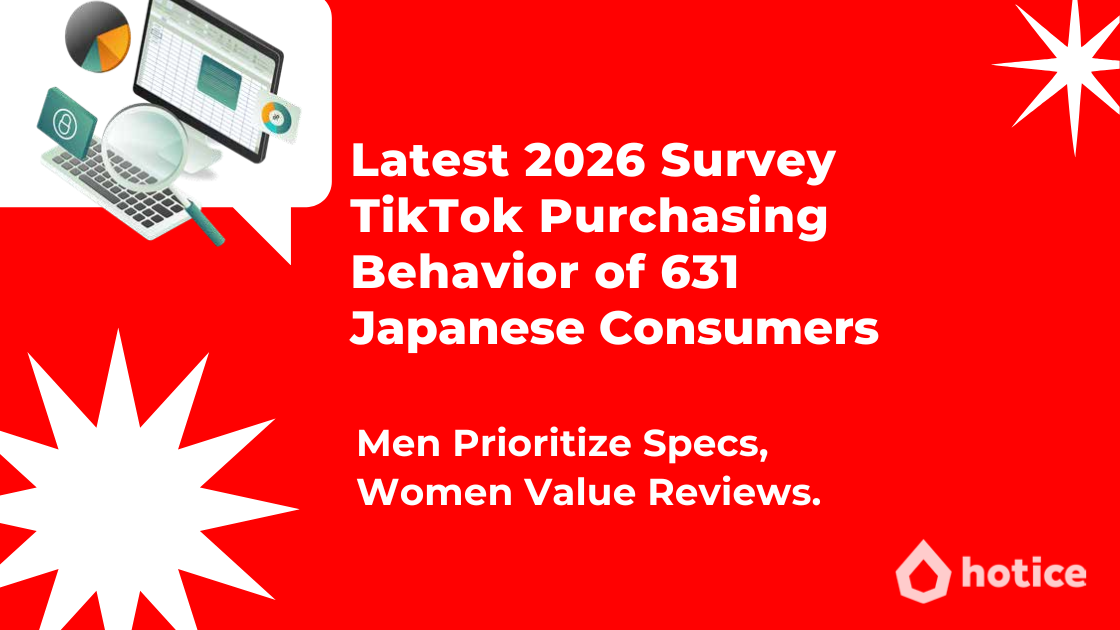
- 4-1. TikTok x AI: Discoverability and Emotional Engagement
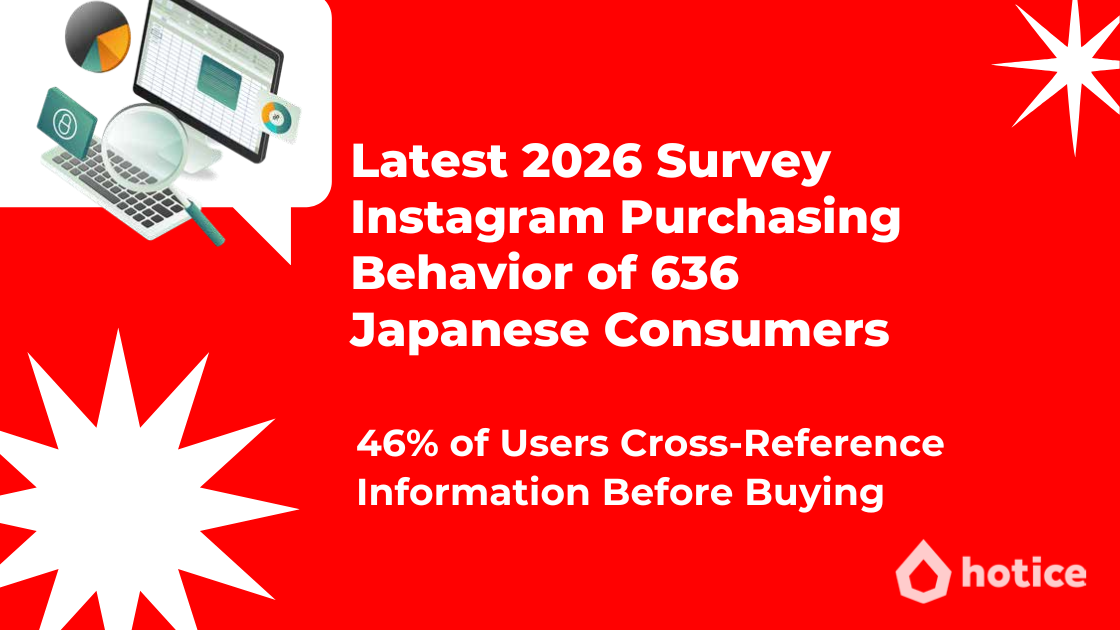
- 4-2. Instagram x AI: Worldview and Continuous Engagement
- 4-3. X x AI: Immediacy and Risk Management
- 5. Harmonizing AI Efficiency with Japanese ‘Sensibility’
The Japanese market in 2026 stands at a highly specific intersection where a keen interest in cutting-edge technology meets distinctive cultural hurdles. While recent surveys indicate that awareness of AI-generated content (AIGC) has reached 77.5%, a significant number of consumers continue to express discomfort regarding its perceived ‘unnaturalness’ and ‘lack of transparency.’ In this environment, deploying AI merely for the sake of efficiency is no longer a viable strategy; in fact, it carries the genuine risk of actively eroding brand trust.
To navigate this complex landscape, this article presents a concrete roadmap based on the latest market data, focusing on ‘optimizing for cultural nuance’ and ‘integrating with influencers.’ By the time you finish reading, you will have a clear understanding of the first step required to break through these uniquely Japanese barriers and successfully expand your market share.
The Current Landscape of AI Marketing in Japan: 2026
In the Japanese market of 2026, AI is no longer viewed as a novelty; it has evolved into essential infrastructure for marketers. However, the critical question remains: do you truly understand how local consumers perceive AI-generated content?
Drawing on the latest data, we will explore the unique receptivity of the Japanese audience and the vital importance of influencers. Let us examine the current reality of the market—the baseline knowledge required for anyone considering entry.
Receptivity to AI-Generated Content in the Japanese Market
Consumer consciousness regarding AI reached a pivotal turning point in 2026. According to the latest research, awareness of AI-generated content has climbed to 77.5% (Source: https://hoticeglobal.com/blog/trends/ai-content-influencer-marketing-japan-survery/). This statistic serves as clear evidence that the presence of AI has become a daily reality for the majority of the population.
However, high awareness does not automatically equate to trust. While consumers appreciate the convenience, they retain a deep-seated wariness regarding the accuracy of information and ethical implications. Entering the Japanese market requires a keen understanding of this ‘gap between awareness and caution.’ Although implementing AI boosts efficiency, it carries the inherent risk of undermining trust if mishandled. Consequently, success in Japan depends less on showcasing technological prowess and more on sincere information disclosure; it is crucial to first interpret the atmosphere of a society where AI has become the ‘norm.’
AI and Japanese Purchasing Behavior
The power of individual voices in the Japanese marketing landscape is impossible to ignore. Research indicates that 68.7% of consumers are influenced by these figures, citing them as the primary trigger for actual purchases
(Source:https://hoticeglobal.com/blog/trends/ai-content-influencer-marketing-japan-survery/). By 2026, we anticipate a skillful fusion of this established trend with AI technology, where influencers leverage these tools to deliver even more refined and sophisticated messaging.
Japanese consumers tend to place far greater weight on the words of ‘trusted individuals’ than on corporate advertising—a direct reflection of a culture that prioritizes a sense of community and empathy. Therefore, the key to success lies not in using AI merely as an automation tool, but in determining how it can amplify the ‘human touch’ that influencers possess. For 2026, a strategic perspective that synergizes individual influence with the efficiency of AI is essential.
Real-World Applications of AI in Japanese Marketing
AI utilization in the Japanese market extends well beyond the confines of social media and simple ad distribution; in reality, we are seeing a staged adoption across a variety of operational fields. Prominent examples include customer data analysis and segmentation, assistance in content creation, optimization of ad delivery algorithms, and handling initial tier-one customer support inquiries.
A distinctive feature of this landscape is the emphasis on using AI with a ‘human-in-the-loop’ premise—where humans retain the final decision-making authority—rather than pursuing full automation. Ignoring this design philosophy by attempting to ‘leave everything to AI’ is often a recipe for internal backlash or the hollowing out of operations. In Japan, AI functions not as the protagonist, but as the support crew working behind the scenes to drive results. Grasping this foundational premise is the critical pivot point leading into our next chapter.
The New Standard: Transforming AI Adoption into ‘Trust’
In the Japanese market of 2026, while the majority of consumers have accepted AI as a valid means of improving efficiency, they have simultaneously become hypersensitive regarding the ‘provenance’ and ‘sincerity’ of the information they consume.
A frequent pitfall in global strategies is the significant erosion of trust caused by ‘opaque operations’—essentially, the attempt to masquerade AI as human. Drawing on the latest research, we will now delve into specific transparency strategies designed to transform AI from a potential liability into a ‘welcomed strategic asset’ within the Japanese market.
How Transparency in AI Usage Shifts Brand Favorability
With 77.5% of Japanese social media users now aware of AI-generated content, market receptivity is rising rapidly. What is particularly noteworthy, however, is the neutral stance taken by the majority of users who feel they ‘do not particularly mind’ the use of AI. This attitude indicates that the Japanese market has matured enough to accept AI as a legitimate tool for efficiency.
The critical decision for marketers, therefore, lies in the choice between concealing the use of AI or explicitly declaring it. Research reveals that transparently stating AI usage actually boosts user favorability by 28.6%
(Source:https://hoticeglobal.com/blog/trends/ai-content-influencer-marketing-japan-survery/).
For brands, transparent disclosure transcends mere regulatory compliance; it serves as a testament to ‘sincerity’ toward the audience and a prime opportunity to strengthen trust. The winning strategy for the Japanese market in 2026 is not to hide behind technology, but to boldly make it public. Taking this step is the key to differentiating your brand from competitors and cultivating a loyal, positive fanbase.
Disappointment and Churn: The Cost of Being ‘Found Out’
As AI precision improves, the boundary between machine-generated and human-created content becomes increasingly ambiguous. However, the primary driver of reader churn is not an inherent aversion to AI itself. Rather, it is the profound disappointment felt when content masquerading as ‘original human insight’ is revealed to be nothing more than generic algorithmic output. The moment readers feel their expectations have been betrayed, brand trust evaporates.
This risk of ‘hidden AI’ is particularly acute in the Japanese market, where consumers place an exceptionally high value on sincerity. While leveraging AI for efficiency is a legitimate modern business strategy, falsifying it as original work can quickly become an act of self-sabotage. Marketers must recognize that in the Japan of 2026, communication lacking in transparency is simply no longer a viable approach.
Is Disclosing AI Usage a Benefit or a Risk?
Explicitly labeling content as AI-generated is not a risk to be feared, but rather a significant ‘opportunity to build trust.’ According to survey data, when content was clearly labeled as AIGC, the most common response regarding the change in impression was ‘no change’ at 57.8%, followed by ‘impression improved’ at 28.6% (Source: https://hoticeglobal.com/blog/trends/ai-content-influencer-marketing-japan-survery/). With only 13.6% reporting a ‘worsened impression,’ the evidence proves that transparent disclosure rarely exerts a negative impact on a brand.
Rather than avoiding disclosure out of fear of skepticism, actively embracing transparency is far more effective. The key is not to conceal the technology, but to confidently articulate why AI is being utilized and what specific added value it provides to the reader. By constructing a narrative where the audience feels that AI is being employed ‘for their benefit,’ marketers can dispel the cold, mechanical perception of the technology and foster warmer, more human communication.
Ultimately, the strategy should be to position the ‘value’ provided—not the technology itself—as the protagonist, thereby achieving a balance between transparency and approachability. This sincere operational approach is the definitive condition for brands aspiring to be the choice of consumers in the Japanese market of 2026.
Strategic AI Deployment by Domain
Can you confidently claim to fully understand exactly ‘where to apply AI’ to ensure success in the Japanese market? Without a firm grasp of the specific trends defining 2026, making such an assertion is a difficult proposition.
In fact, it is not uncommon to see cases where the more a company attempts to automate everything, the further they drift from actual results. The crucial element is to position AI not as the centerpiece, but as a functional component embedded within the process to deliver outcomes.
In this chapter, we will organize the methodology for AI application across key marketing domains, focusing specifically on approaches that function realistically within the unique context of the Japanese market.
Advertising and Performance Marketing x AI
The integration of AI into advertising operations is the most advanced and readily accepted area within the Japanese market. When AI functions as a backend algorithm—handling tasks such as bid adjustments and audience optimization—consumers rarely experience any direct sense of discomfort.
However, a common trap for international marketers lies in setting numerical optimization as the sole objective. In the Japanese market of 2026, a peculiar phenomenon has been observed: dramatic improvements in CTR or CPA often coincide with a decline in brand impression. This paradox occurs because AI algorithms tend to prioritize aggressive expressions bordering on ‘clickbait’ or excessive personalization—tactics that Japanese consumers frequently find intrusive or distasteful.
To prevent this, metrics must be bifurcated at the strategic design stage:
・Short-term metrics: Maximization of clicks, conversions, and ROAS (The domain of AI).
・Mid-to-long-term metrics: Maintenance of brand awareness, trust, and favorability (The domain of human judgment).
While AI is unrivaled in improving numerical performance, it is notoriously poor at judging context—specifically, asking, ‘Does this expression damage the dignity of the brand?’ The winning formula involves entrusting operations to AI while ensuring that the final creative tone and manner are rigorously vetted by local sensibilities. Only by clarifying this division of labor can AI application in the advertising sector generate truly sustainable results.
CRM and Customer Support x AI
CRM and Customer Support represent a highly sensitive domain where the success or failure of AI implementation leads directly to customer churn. While many companies deploy chatbots primarily for cost reduction, countless cases exist where this approach backfires—creating an impression of being ‘cold’ or ‘unresponsive,’ and instantly shattering years of hard-earned customer loyalty. In the Japanese market, effective CRM requires more than mere information processing; it demands an underlying sense of ‘consideration’ or care.
The ideal architecture for 2026 is not a system where AI attempts to resolve everything, but rather a hybrid model where AI serves to ‘politely escort’ the customer until they can be connected to a human representative. Specifically, the following division of roles is recommended:
・The Role of AI: Providing 24/7 initial response, organizing information from vast FAQs, and conducting preliminary hearings of customer needs.
・The Boundary: The moment the AI determines it cannot resolve an issue, it must immediately hand it over to a live agent, accompanied by an empathetic message such as, ‘I apologize for keeping you waiting.’
・The Role of Humans: Handling emotional grievances, offering deep, personalized proposals, and engaging in dialogue that elevates the brand experience.
Japanese consumers experience significant stress not necessarily from waiting, but from the feeling of being blocked by an ‘AI wall’ that prevents them from reaching a human being. The key is to position AI not as a tool that distances the customer for the sake of efficiency, but as a ‘highly competent receptionist’ who treats them with respect. Designing this careful, courteous pathway is the essence of a CRM strategy that maximizes LTV.
Content Marketing x AI
While AI dramatically boosts production speed in content marketing, this is also the domain where ‘dissonance’ is most easily exposed. AI serves as an unparalleled partner for laying the groundwork—creating outlines, conducting multifaceted research, and summarizing information. However, content where the final writing is fully delegated to AI is easily detected in the Japanese market, leading to a loss of brand authority. Trust in content here hinges heavily on ‘who is speaking’ and ‘with what level of passion.’
This is particularly true given the evaluation criteria of Google algorithms and social media platforms in 2026, which increasingly demand unique perspectives based on actual experience. Relying solely on the ‘generic consensus’ generated by AI is no longer sufficient to move readers’ hearts, let alone secure a top spot in search results. Therefore, the successful workflow divides the labor as follows:
・Accelerate with AI: Trend analysis, extraction of target audience pain points, and creation of logical SEO outlines.
・Complete with Humans: Insertion of unique anecdotes, conversion into an ’emotional tone’ that resonates with Japanese consumers, and fact-checking against the latest legal and ethical standards.
Ultimately, AI should be the ‘capable assistant,’ but the Editor-in-Chief must always be a ‘human.’ What readers seek is not merely information organized by a machine, but a ‘sense of conviction’ regarding how that information will change their lives. Balancing the overwhelming quantity provided by AI with the overwhelming quality provided by humans is the secret to mastering content marketing in the Japanese market.
Treating SNS x AI as a ‘Guiding Line’
Selecting the right platform is paramount when targeting the Japanese market. It is now established that over 80% of users have already encountered AI-generated content on social media, and psychological resistance to it is fading.
Amidst this shift, the decisive factor separating promotional success from failure is the ability to tailor AI usage to the specific characteristics of each platform. We must view AI not as the entirety of the content, but as a ‘guiding line’ that supports and enhances the strategy for each specific channel.
https://hoticeglobal.com/blog/trends/ai-content-influencer-marketing-japan-survery/
TikTok x AI: Discoverability and Emotional Engagement
Among major social media platforms, TikTok stands out for its exceptionally positive reception of AI-generated content. Research indicates that 32.1% of users report that ‘AI content accelerates their purchase decisions’ (Source: https://hoticeglobal.com/blog/trends/ai-content-influencer-marketing-japan-survery/). This data underscores how the intuitive and speedy delivery of information generated by AI is actively speeding up the consumer decision-making process.
The core strength of TikTok’s algorithm lies in its ‘discoverability’—serving as a venue for users to encounter unexpected favorites. By multiplying this feature with the overwhelming production capacity of AI, marketers can flood the market with a diverse array of visuals in a short timeframe. This strategy is particularly effective in fast-moving sectors like food and fashion, where high-frequency exposure using trending audio and editing styles is crucial.
Given the nature of short-form video, viewers are driven less by logical judgment and more by emotional stimuli triggered by a ‘rapid succession of rhythmic visuals.’ The winning formula for AI on TikTok in 2026 is to relentlessly provide visuals that ‘hit the mark right now,’ thereby stirring users’ latent desires. By maintaining this constant stream of stimulation, brands can subconsciously imprint themselves on the viewer’s mind and effectively guide them toward impulsive purchasing behaviors.
Instagram x AI: Worldview and Continuous Engagement
Instagram serves as the critical channel where consumers immerse themselves in a brand’s worldview and mature into long-term fans. Research confirms that categories demanding emotional value and visual perfection—specifically Fashion (with a purchase experience rate of 63.1%) and Beauty/Cosmetics (56.9%)—remain overwhelmingly dominant (Source: https://hoticeglobal.com/blog/trends/ai-content-influencer-marketing-japan-survery/). Users are not merely seeking information; they are exploring ‘aspirations’ and ‘narratives’ that add color to their lives. Consequently, AI application in this space demands impeccable quality that strictly adheres to the brand’s established tone and manner.
The true value of AI here lies in its ability to generate fantastical scenes that are difficult to shoot in reality, or to instantly propose hundreds of styling variations. For instance, by generating diverse outfit combinations on models or immersive backgrounds that anticipate seasonal shifts, brands can deeply and continuously embed themselves into the consumer’s ‘comparison and consideration’ process.
We must define AI not as a ‘tool for cost reduction,’ but as a ‘creative partner that expands the limits of expression.’ The key to maximizing conversion rates is to utilize high-precision AI visuals that compel users to stop scrolling and build a deep engagement—one where they can vividly superimpose the brand’s worldview onto their own daily lives.
X x AI: Immediacy and Risk Management
Among major platforms, X boasts the highest awareness of AI content at 91.7%, meaning AI-generated material has already settled in as part of the ‘everyday scenery’ for users. In this environment, there is no need to conceal the use of AI. User interest has consolidated around whether the content is ‘interesting or useful in this moment,’ rather than its origin. In fact, with 57.1% of users responding that they are ‘indifferent or do not mind,’ an attitude of openly mastering technology is often welcomed as a sign of a progressive brand image (Source: https://hoticeglobal.com/blog/trends/ai-content-influencer-marketing-japan-survery/).
To capitalize on X’s characteristic viral speed, ‘immediacy’ is indispensable—specifically, using AI to instantly create and post creatives in response to trending keywords and breaking news. We are seeing that influencers who openly declare their use of AI as a powerful production tool to explosively increase creative variations are likely to garner strong support from users who prioritize information freshness.
The crucial strategy for 2026 is to maximize user contact time by maintaining an ‘overwhelming posting frequency’ powered by AI. While carefully managing the risk of backlash, seizing the initiative on the timeline with a speed that only AI can provide will be the decisive factor in fostering purchase intent on X.
Harmonizing AI Efficiency with Japanese ‘Sensibility’
In the Japanese market of 2026, the ruthless efficiency of AI and the local sensibility that prizes deep emotion are by no means opposing forces. On the contrary, the singular key determining business success or failure lies in how effectively one can integrate these seemingly contradictory elements at a high level.
We must move beyond viewing AI as a mere tool for automation. Instead, it should be mastered as a ‘professional enabler’ designed to maximize local passion. The following section details the concrete, practical strategic steps required to achieve this synthesis.
Category-Specific AI x Influencer Tactics
When combining AI with influencers, the fundamental premise you must grasp is that the ’emotional temperature’ of information sought by readers differs radically across industries.
For instance, in the Beauty sector, where visual intuition is paramount, AI becomes a powerful weapon for high-precision skin diagnostics and personalized product proposals. By having AI work in the background to ensure comprehensive information coverage while the influencer maintains their established aesthetic, brands can maximize the follower’s conviction that ‘this product truly fits me.’
Conversely, in the Lifestyle sector, which is deeply rooted in daily living, storytelling that generates ’empathy’ is far more critical than mere functionality. Here, AI should be used to analyze real-time trends and latent frustrations, enabling the influencer to deliver those insights in their own voice at the optimal moment. It is this ‘data-driven human touch’ that truly moves the hearts of followers.
Furthermore, in Education and Professional fields, the correct approach is to multiply the accuracy of AI with the credibility of an expert. Viewers are seeking ‘concrete, reliable information’ to solve pressing problems. Therefore, you should build a scheme where AI is utilized as a tool for fact-checking and data extraction, while the expert guarantees its validity. Because the same method does not apply across all industries, the ability to ‘discern’ the right approach—one that deeply integrates into the user’s daily flow and presents value naturally—is essential.
Short Videos that Resonate with Japanese Sensibilities
In the Japan of 2026, short-form video has established itself as the most effective means of awareness and acquisition, yet the competition is fiercely intense. On platforms like Instagram Reels and TikTok, whether a viewer stops scrolling depends entirely on the ‘first split-second.’
The greatest merit of utilizing AI here lies not merely in the efficiency of editing or caption generation, but in the ‘thorough structural analysis of success cases.’ By using AI to scientifically analyze the pacing and visual hooks that increase retention rates from a vast archive of past hits, it is possible to sublimate those elements into your own brand style.
However, a crucial warning is necessary: the sense of color and the appreciation for ‘negative space’ (Ma) preferred by Japanese users are highly unique. Creatives generated by global AI models often carry risks—they can appear too loud, too high-contrast, or simply ‘distasteful’ and ‘overly commercial’ to the Japanese eye.
The key is not to leave everything to AI, but to perform a delicate ‘balancing act’ that reflects local trends. For example, a single choice of font or a slight adjustment in color saturation can dramatically alter the sense of trust a user feels. The secret to bridging the gap between AI speed and Japanese sensibility lies in using AI-mass-produced materials as a base, but adding that final ’emotional essence’ by human hands to ensure the content connects.
How to Create ‘Useful Information’ with AI
What Japanese consumers seek on social media is not a mere list of data, but ‘reference material’ that tangibly improves their lives. While AI enables the rapid extraction of beneficial knowledge from vast datasets, simply posting AI-generated text will not resonate with readers. This is because raw AI output often lacks the crucial context: ‘Why is this information necessary for you?’
Marketers must prioritize the process of translating raw data obtained from AI into ‘solutions’ tailored to the reader’s specific pain points. You should clearly demonstrate the concrete benefits of adopting the information and pursue visual clarity using logical frameworks like the PREP method (Point, Reason, Example, Point). Furthermore, it is indispensable to cite public data or reliable sources to provide evidence for your claims.
Redefine AI not as a simple text generation tool, but as a ‘verification and deep-dive tool’ designed to enhance the quality and reliability of information. It is only when the breadth of information collected by AI fuses with the depth of interpretation provided by a human perspective that sustainable content value—the kind that makes a reader think, ‘I am glad I read this’—is born.
Roadmap for Market Share Expansion in Japan
Once the unique characteristics of the market are understood and the strategic framework is solidified, the critical focus shifts to the transition into the execution phase. The Japanese market of 2026 moves with blistering speed; a single misstep carries the genuine risk of cementing a negative brand image that is difficult to reverse.
To achieve steady market share expansion and sustainable growth, it is essential to draw a coherent roadmap that spans from the optimization of internal resources to the selection of partners who intimately understand local sensibilities. In this section, we propose the ideal organizational structure and partnership model required to place the final piece of the puzzle for victory.
Action by Phase: From 2026 Entry to Establishment
Entering the Japanese market is not a short sprint aiming for a fleeting boom, but a marathon dedicated to building long-term trust.
In the Initial Phase, focus on ‘thorough testing’ to gauge market receptivity. Introduce AI partially to accumulate data on which channels and what tone of voice elicit reactions from Japanese users. Prioritize the speed of learning over massive budget allocation at this stage.
In the subsequent Mid-term Phase, fully expand influencer tactics based on the accumulated insights. While pursuing efficiency, establish your brand’s identity as a ‘Japanese iteration’ and disseminate consistent messages aligned with the local context.
Ultimately, the goal is to build a data-driven, autonomous operational structure by the end of 2026. Rushing to automate the entire process at once is the primary cause of brand damage. In each phase, set clear, multifaceted KPIs that go beyond simple sales figures to include the quality of awareness and brand favorability. Taking steady steps and accumulating local trust one by one is, paradoxically, the shortest route to expanding market share.
The Mechanism of Co-creation
It is not uncommon for companies to struggle in the Japanese market even when they possess excellent internal AI teams. The cause often lies in the disconnection between global technological capabilities and a deep understanding of the local context. To emerge as a winner in 2026, you must dramatically optimize the division of roles between your in-house team and local agencies.
Your In-house AI Team should concentrate on providing core technologies, integrating data, and ensuring global consistency. Meanwhile, the Local Specialist Agency should take on the role of adjusting the ‘raw materials’ generated by AI to fit Japanese business customs and the subtle emotional shifts of consumers.
Attempting to complete everything in-house often leads to a divergence from local trends and a slowdown in decision-making speed. Leveraging external expertise is not a cost, but a strategic investment to maximize ROI. Think of it as the in-house team providing the technical ‘engine,’ while local insights serve as the ‘navigator’ guiding it correctly. Respecting each other’s strengths and building an open, cooperative framework enables swift and accurate action in the complex Japanese market.
How to Identify Experts Who Know Trends and Sensibility
Selecting a partner is not merely about choosing a vendor; it is the process of selecting a ‘comrade’ with whom you will share your destiny in the Japanese market.
While following the latest AI trends is a minimum requirement, what must be prioritized above all is ‘deep insight into Japanese culture.’ Speaking the language and understanding what truly ‘strikes a chord’ with Japanese readers are two completely different things. Verify their track record: have they executed strategies that breathe ‘warmth’ into inorganic AI technology by capturing local sensibilities?
Furthermore, whether they share your values regarding data transparency, ethics, and sincerity toward the brand is an indispensable criterion. Do not choose based solely on simple price comparisons or name recognition. Instead, check if they return logical and sincere counter-proposals that grasp your intent when you challenge them with questions.
A Partner to Decipher the ‘Truth’ of the Japanese Market with Data
In the Japanese market of 2026, the fusion of AI and influencers is no longer an option but an inevitability. hotice is a trusted partner that combines unique marketing data accumulated over many years with the latest consumer behavior analysis.
・Multifaceted Market Data: We possess proprietary research data ranging from unique Japanese social media usage trends to detailed consumer psychology regarding AI content.
・Overwhelming Reliability: We have a proven track record of supporting numerous global brands in their entry into Japan, demonstrating solid ROI.
・From Strategy to Execution: We fuse logical roadmaps based on data with creative work that captures local sensibilities.
‘How will our brand be accepted in Japan in 2026?’ ‘Which channels should we invest in?’ The answers lie within our data.
Please, tell the expert team at hotice about your vision. Let us take the first step together.
.png)