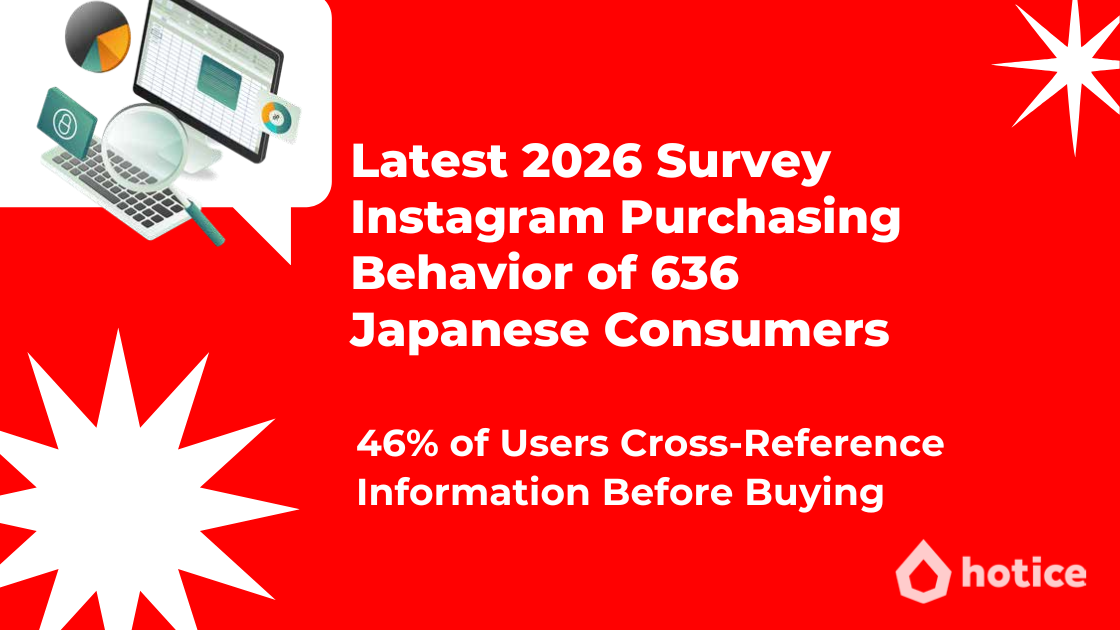
Latest 2026 Survey: X (formerly Twitter) Purchasing Behavior of 631 Japanese Consumers
- 1. How Often do Japanese People Purchase via X (formerly Twitter)?
- 1-1. Approximately 40% of Japanese People Purchase Once a Month or More
- 1-2. Younger Generations Use X as an Everyday Shopping Infrastructure
- 1-3. 40% of Japanese Women Use X for Purchases Continuously
- 2. How Japanese People Move from Discovering Products to Making a Purchase on X (formerly Twitter)
- 2-1. Over 40% of Japanese Users Double-Check via Search Engines
- 2-2. Japanese Users in Their 40s Prefer Thorough Fact-Checking
- 2-3. Approximately 40% of Japanese Women Utilize the Save Function
- 3. Product Categories Japanese People Purchase via X (formerly Twitter)
- 3-1. Household Goods and Beauty are the Top Two Categories
- 3-2. 40% of Japanese Teens Invest in Beauty
- 3-3. 30% of Japanese Men Support Food and Goods
- 4. What are the Decisive Factors for Japanese People Buying on X (formerly Twitter)?
With the widespread use of smartphones, the shopping style of Japanese people has undergone a dramatic transformation. Today, X (formerly Twitter) is no longer just a place to browse tweets; it has become a massive marketplace that directly stimulates the consumer desires of the Japanese public.
In this in-house survey, we thoroughly analyzed the real steps Japanese users take—from how they are inspired by social media posts to their final purchase. Please take a look at the latest purchasing realities of Japanese consumers, which overturn the conventional wisdom that “things don’t sell on social media.”
How Often do Japanese People Purchase via X (formerly Twitter)?
X, which conveys real-time enthusiasm in addition to visual information, has now become an essential “shopping source” for many Japanese people. First, we conducted a detailed survey on the actual activities of Japanese users to determine how frequently they take purchasing actions triggered by posts.
Approximately 40% of Japanese People Purchase Once a Month or More
A survey of 631 Japanese X users regarding their purchasing frequency revealed a broad distribution, ranging from those who buy daily to more cautious consumers. “Weekly or more” was reported by 11.41% (72 people), “2–3 times a month” by 15.37% (97 people), and “once a month” by 13.95% (88 people).
Combining these figures, it is clear that about 40% of Japanese users open their wallets based on information from X at least once a month. Furthermore, 10.78% (68 people) represent a “potential buyer” group—those who have researched details even if they haven’t made a purchase yet—highlighting the platform’s strong influence on the Japanese public.
Younger Generations Use X as an Everyday Shopping Infrastructure
Analyzing the data by age group reveals that X has become a purchasing tool closely integrated into daily life, particularly among younger Japanese people. Among Japanese users in their 20s, the “weekly or more” response reached 24.14% (28 people), the highest figure across all generations. Even in their teens, about 20% of Japanese users purchase once a week or more. For trend-sensitive young Japanese people, X serves as a “shopping window” equivalent to visiting a physical store.
While the frequency tends to stabilize among Japanese users in their 30s and older, those in their 40s still form a significant segment, with 17.24% (20 people) purchasing “2–3 times a month.” Although the number of “never” responses increases as Japanese users age, a certain percentage of those in their 50s and older still engage in regular purchasing, showing that X’s appeal reaches all generations of Japanese people.
40% of Japanese Women Use X for Purchases Continuously
Focusing on gender differences, it was revealed that approximately 41% of Japanese women enjoy shopping via X at least once a month. For Japanese women, “weekly or more” stood at 13.13% (39 people) and “2–3 times a month” at 13.47% (40 people), indicating that X is deeply integrated into their daily life and item selection. This reflects a utilization style unique to Japanese women, who value empathy as much as visual appeal.
Among Japanese men, 9.88% (33 people) buy “weekly or more” and 17.07% (57 people) buy “2–3 times a month,” showing a group of high-frequency users who navigate X with specific purposes. On the other hand, 23.35% (78 people) of Japanese men answered “never,” compared to 19.53% (58 people) of Japanese women, highlighting that Japanese men tend to scrutinize information more carefully. A distinct contrast in Japanese consumer behavior can be seen: Japanese men react strongly to information they trust, while Japanese women gather information broadly.
Pricing, past campaigns, and how contracts and ad-disclosure compliance are handled from start to finish. Ask us anything before you commit to a budget.
Overseas brands welcome. We work in English, Japanese, Chinese, and Korean.How Japanese People Move from Discovering Products to Making a Purchase on X (formerly Twitter)
When Japanese people see an attractive post on X, do they proceed to payment immediately? Or do they combine other methods to conduct a cautious review? Based on a survey of 427 Japanese respondents who answered they had “purchased/used a product at least once,” we investigated the real behavioral path from product discovery to the final decision.
Over 40% of Japanese Users Double-Check via Search Engines
An analysis of the responses from 427 Japanese people with X-related purchase experience confirmed a cautious approach: they do not finalize decisions within the SNS alone but cross-reference multiple sources. The most common action taken by Japanese users was “re-searching the product or brand name on a search engine (Google, etc.),” reaching 46.14% (197 people).
Next, 40.52% (173 people) of Japanese users “check prices and detailed specs on official sites or EC malls (Amazon, etc.),” showing a strong tendency to value factual verification. Additionally, 33.49% (143 people) of Japanese users “save posts to create a list for later purchase,” establishing a style of securing time for deliberation.
Furthermore, 29.27% (125 people) “search for real reviews from the general public using hashtags within SNS,” and 27.17% (116 people) “visit stores to check the actual product before purchasing.” Meanwhile, only 16.39% (70 people) of Japanese users are “immediate deciders” who buy on the spot, highlighting that most Japanese people take multiple steps to gain a sense of certainty.
Japanese Users in Their 40s Prefer Thorough Fact-Checking
Comparing age groups reveals clear differences in the methods used by Japanese people to gain “verification.” Among Japanese users in their 40s, 59.76% (49 people) “re-search on search engines” and 56.10% (46 people) “confirm prices and specs on official sites,” the highest rates across all generations. This underscores the steadiness of adult Japanese consumers who prioritize official, accurate information.
In contrast, 45.45% (25 people) of Japanese teens “save posts for later,” a mainstream style of building a personal catalog within the app. Furthermore, 39.33% (35 people) of Japanese users in their 20s “search for real reviews via hashtags,” an action typical of Japanese digital natives who trust peer voices over corporate messaging.
Additionally, 36.25% (29 people) of Japanese users in their 60s “visit physical stores to confirm the actual product,” reflecting the values of the Japanese senior generation who prioritize real-world experience.
Approximately 40% of Japanese Women Utilize the Save Function
A gender-based analysis revealed significant differences in the decision-making processes and psychology of Japanese men and women. Japanese men have a faster decision-making speed, with 18.78% (46 people) “buying immediately on the spot,” compared to 13.19% (24 people) of Japanese women.
Japanese men also showed a high rate (41.63%, 102 people) for “checking official sites or EC malls,” reflecting a tendency to take immediate action once satisfied with the functionality. On the other hand, 39.01% (71 people) of Japanese women “save posts for later,” meticulously stocking information found during their spare time.
Furthermore, 30.22% (55 people) of Japanese women “visit stores to check the actual product,” surpassing the 24.90% (61 people) of Japanese men. Finally, they want to minimize failure by confirming the quality with their own eyes, which highlights a purchasing psychology unique to Japanese women.
Product Categories Japanese People Purchase via X (formerly Twitter)
What specific categories are Japanese people spending their money on? We investigated how the viral nature and immediacy of X affect the product genres consumed by Japanese people.
Household Goods and Beauty are the Top Two Categories
Responses from 427 Japanese users with purchase experience through X showed that buying occurs across a wide range of genres. The most common category was “Household Goods, Interior, & Kitchenware” at 31.38% (134 people), suggesting that items enhancing daily life stimulate Japanese sensibilities.
Next, “Beauty, Cosmetics, & Skincare” stood at 29.74% (127 people). “Fashion (Clothing, Shoes, Bags, etc.)” and “Food, Beverages, & Gifts” both stood at 29.51% (126 people), showing that X acts as a catalyst in various aspects of Japanese daily life.
These were followed by “Home Appliances & Gadgets” (23.89%, 102 people) and “Dining Out” (23.42%, 100 people). Other categories included “Books & Manga” (20.84%, 89 people) and “Travel & Leisure” (16.39%, 70 people). X has clearly evolved beyond being a mere trend hub to become the starting point for all types of Japanese consumer behavior.
40% of Japanese Teens Invest in Beauty
Analysis by age group highlights how Japanese people use X differently depending on their life stage. Among Japanese teens, “Beauty, Cosmetics, & Skincare” is overwhelmingly high at 43.64% (24 people), making X an indispensable source for self-improvement.
Japanese users in their 20s also show high interest in “Beauty” and “Fashion” (both at 32.58%, 29 people), indicating that younger Japanese generations are more eager to purchase based on trends and appearance. In contrast, the focus of older Japanese generations shifts toward their internal life and living environment.
Among Japanese users in their 40s, “Food, Beverages, & Gifts” reached 43.90% (36 people), showing their pursuit of high-quality “food” via social media. For Japanese users in their 60s, “Household Goods, Interior, & Kitchenware” was the highest at 41.25% (33 people). For selecting items to make “at-home time” more comfortable, X has become an effective catalog for the Japanese senior segment.
30% of Japanese Men Support Food and Goods
Gender analysis revealed a clear difference in the types of information Japanese men and women seek on X. For Japanese women, “Beauty, Cosmetics, & Skincare” was the undisputed #1 at 43.96% (80 people), followed by “Fashion” (31.87%, 58 people) and “Household Goods” (31.32%, 57 people).
Conversely, Japanese men do not focus on a single genre as much as women, showing interest across broader categories. The top categories for Japanese men were “Food & Beverages” (31.02%, 76 people) and “Household Goods” (31.43%, 77 people).
“Home Appliances & Gadgets” also stood at 28.16% (69 people), significantly higher than the 18.13% (33 people) for Japanese women. Additionally, “Books, Manga, & Entertainment” reached 25.71% (63 people) among Japanese men, who use X as a tool for deepening personal hobbies. This reflects the difference between Japanese women seeking emotional satisfaction and Japanese men prioritizing utility.
hotice is a cross-border influencer marketing agency helping overseas brands enter Japan. We handle casting, negotiation, Japanese-language contracts, and ad-disclosure compliance.
Tell us your category, budget range, and timing. We will take it from there.What are the Decisive Factors for Japanese People Buying on X (formerly Twitter)?
What exactly makes Japanese people certain enough to decide, “I’ll choose this”? From the responses of 427 Japanese users with purchase experience, we investigated the specific quality of information that went beyond mere awareness to push them toward payment.
Honest Disclosure of Flaws and Summary Videos
Analysis of Japanese users who actually made a purchase shows that the sender’s sincerity and “Time Performance” are key. The most supported factor was “The sender honestly writes about the ‘disadvantages or flaws’ they felt,” which 37.94% (162 people) of Japanese users prioritized.
Close behind, “The main points (attractiveness) are summarized in a short video under 1 minute” was chosen by 37.47% (160 people), highlighting the Japanese need to gain information efficiently. Furthermore, “The buzz of many people ‘Saving’ or ‘Liking’ the post” was selected by 34.89% (149 people), as the reactions of others provide a sense of security.
Other factors included “SNS-limited coupons” (28.81%, 123 people) and “Personal use by influencers” (27.87%, 119 people). Information that allows one to understand both benefits and risks in a short time is what strongly prompts modern Japanese people to make a buying decision.
Younger Generations Value Honesty
Comparison by generation shows that the deciding factor for purchase differs clearly among Japanese age groups. Notably, among Japanese users in their 40s, 53.66% (44 people) cited “summary videos under 1 minute” as the decisive factor. For busy adult Japanese generations, efficient information intake via video has become a vital element in accelerating consumption.
Meanwhile, younger Japanese people prioritize a more “real” feel to the information. 43.64% (24 people) of Japanese teens chose “honest descriptions of disadvantages,” strictly scrutinizing information for truth over PR.
Also for Japanese users in their 20s, “personal use by influencers” was high at 37.08% (33 people), pushing their purchasing intent. Among Japanese users aged 50 and older, the buzz of others was supported by around 40%, reflecting the Japanese trait of using others’ voices as a benchmark for trust. The targeting according to age groups is extremely important.

Japanese Men Trust Logical Explanations
Gender differences in judgment criteria are stark. 40.11% (73 people) of Japanese women prioritize “disclosure of disadvantages,” working strongly to avoid failure through pre-purchase research. Additionally, 37.36% (68 people) of Japanese women support “buzz within SNS,” relying on community enthusiasm for trust.
In contrast, Japanese men show a marked preference for efficiency and objectivity. “Short summary videos” was supported by 38.78% (95 people) of Japanese men, preferring to understand the essence of a product in the shortest distance possible.
Furthermore, “accurate functional descriptions by experts or official sources” was supported by 25.71% (63 people), which exceeds Japanese women. This highlights the contrast between Japanese women, who value emotional connection, and Japanese men, who seek logical satisfaction.
Average Amount Japanese People Pay per Purchase via X (formerly Twitter)
The amount of money moved in a single transaction is a key indicator of a platform’s economic impact. We investigated the actual average price ranges that Japanese people pay for everything from daily accessories to personal investments.
The 1,000 to 5,000 Yen Range is the Volume Zone
Analysis of 427 Japanese users with purchase experience showed that X contributes most to purchases in easily accessible price ranges. The most common response was “1,000 yen to less than 3,000 yen” at 37.47% (160 people). This was followed by “3,000 yen to less than 5,000 yen” (18.03%, 77 people) and “less than 1,000 yen” (14.75%, 63 people).
In total, payments under 5,000 yen account for about 70% of Japanese users, revealing that products with low psychological hurdles are highly compatible with X. On the other hand, about 14% of Japanese people do not hesitate to spend “10,000 yen or more.” X is used by Japanese users not only for impulsive shopping but also as a place to decide on high-priced items.
40% of Japanese Teens Spend Less Than 1,000 Yen
Comparison by age group shows that life stage and disposable income are clearly reflected in the average purchase price of Japanese people. Among Japanese teens, 40.00% (22 people) spend “less than 1,000 yen,” making them the lowest-spending group. This reflects the steady consumption style of young Japanese people who rely on X to find affordable items within a limited allowance.
Conversely, for Japanese people in their 30s and 40s, the purchase unit price tends to rise. For Japanese users in their 30s, “5,000 yen to less than 10,000 yen” reached 17.05% (15 people), and for those aged 50 and older, responses of “10,000 yen or more” exceeded the overall average. As available funds increase, X changes into a premium window for the Japanese adult generation to encounter high-function products.
Japanese Men Engage in High-Priced Consumption (10,000 Yen+)
Analysis of gender differences in spending revealed a gap in how Japanese men and women perceive single-transaction expenses. Japanese women centered on the “1,000 yen to 3,000 yen” range (42.31%, 77 people), frequently purchasing relatively inexpensive cosmetics and goods.
The combined rate for “under 5,000 yen” was also higher for Japanese women, suggesting a mainstream style of enjoying small purchases. Meanwhile, Japanese men are more likely to make high-priced decisions.
“10,000 yen or more” was 16.33% (40 people) among Japanese men, significantly outpacing the 10.99% (20 people) of Japanese women. Japanese men, who focus on specs with a specific purpose, tend to invest large sums at once when they are satisfied.

Pricing, past campaigns, and how contracts and ad-disclosure compliance are handled from start to finish. Ask us anything before you commit to a budget.
Overseas brands welcome. We work in English, Japanese, Chinese, and Korean.
Focusing on X (formerly Twitter) Where 40% of Japanese People Purchase Monthly
From the results of this survey, it has become clear that X (formerly Twitter) is evolving into a powerful “purchasing infrastructure” for Japanese consumers, going beyond a mere place for information gathering. Approximately 40% of Japanese people enjoy shopping triggered by posts at least once a month. For younger Japanese people in particular, SNS has become established as a daily shopping window equivalent to physical stores or EC sites.
At the same time, it is impressive that many Japanese people do not blindly accept information on SNS; they thoroughly “verify facts” by re-searching on search engines or checking specs on official websites. We found that unique purchasing processes exist based on gender and age—for example, Japanese women use the “Save” function for careful consideration, while Japanese men make high-priced decisions after gaining logical satisfaction.
Furthermore, the fact that “honest disclosure of disadvantages” and “efficient information intake through short videos” are strongly supported as decisive factors is an element that cannot be ignored in future marketing. Sincere and time-efficient information is winning the trust of the Japanese public over exaggerated advertising. To capture the hearts of Japanese consumers, companies must choose appropriate genres that align with each life stage and provide transparent, honest information.